Black and White, 1959, 84m. / Directed by Georges Franju / Starring Pierre Brasseur, Alida Valli, Edith Scob, François Guérin / Criterion (US R1 NTSC) / WS (1.66:1) (16:9)


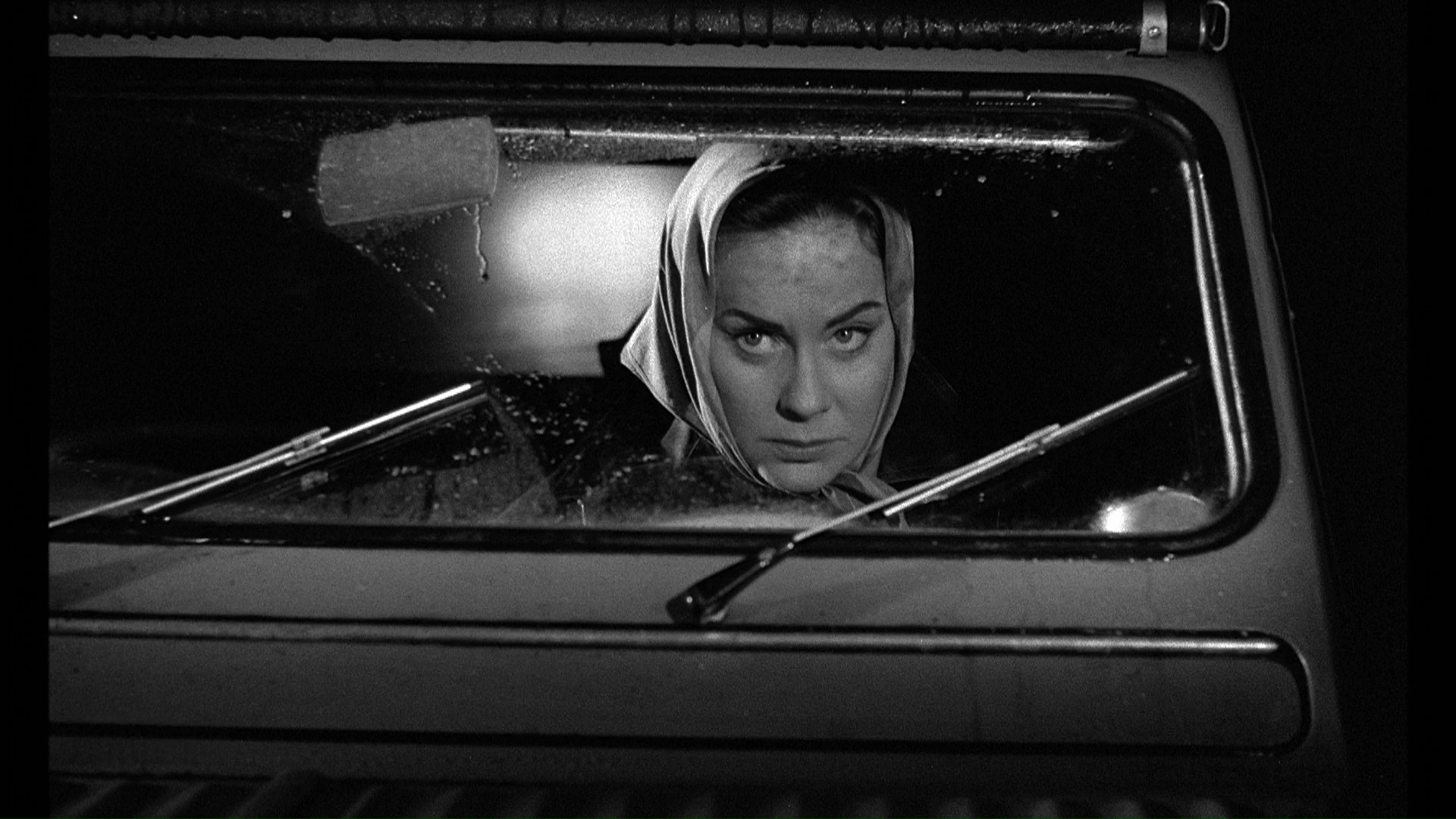
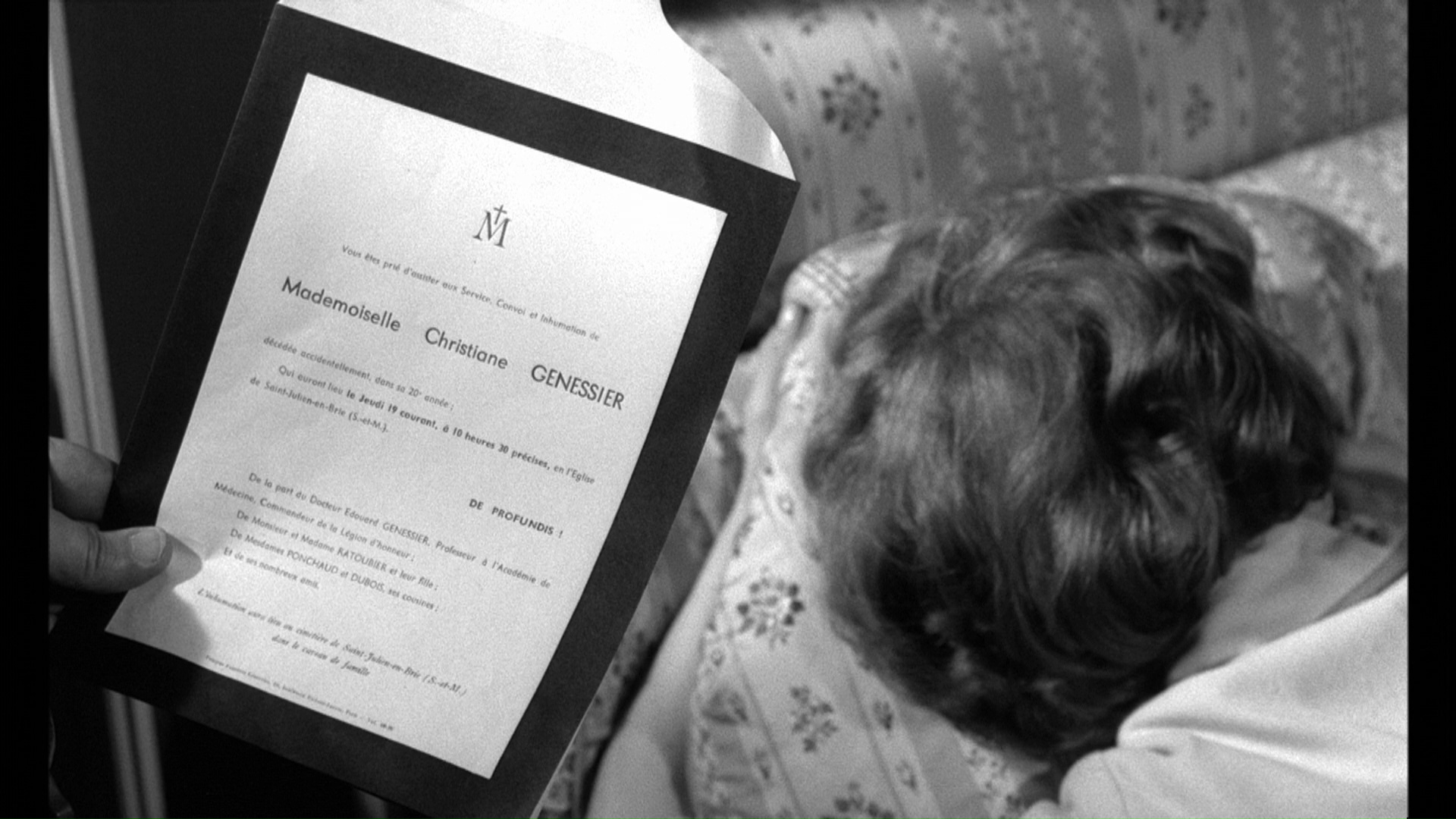
Surrounded by briefly illuminated trees, a car glides through the night under the steady hand of a determined female driver, Louise (Suspiria's Alida Valli), while a dark figure in a fedora and trenchcoat slumps in the back seat. When they pull up to a reservoir, we see that the passenger is in fact the lifeless body of a young girl, dragged and dispatched into the murky water. Cut to a medical conference where the respected Dr. Génessier (Pierre Brassuer) lectures about the benefits of X-ray irradiation in restoring damaged skin. Afterwards he's summoned by the police to identify the same girl's body, recently fished from a river. Génessier identifies the remains as his mysteriously vanished daughter, Christiane, and coldly retreats to prepare for the funeral.

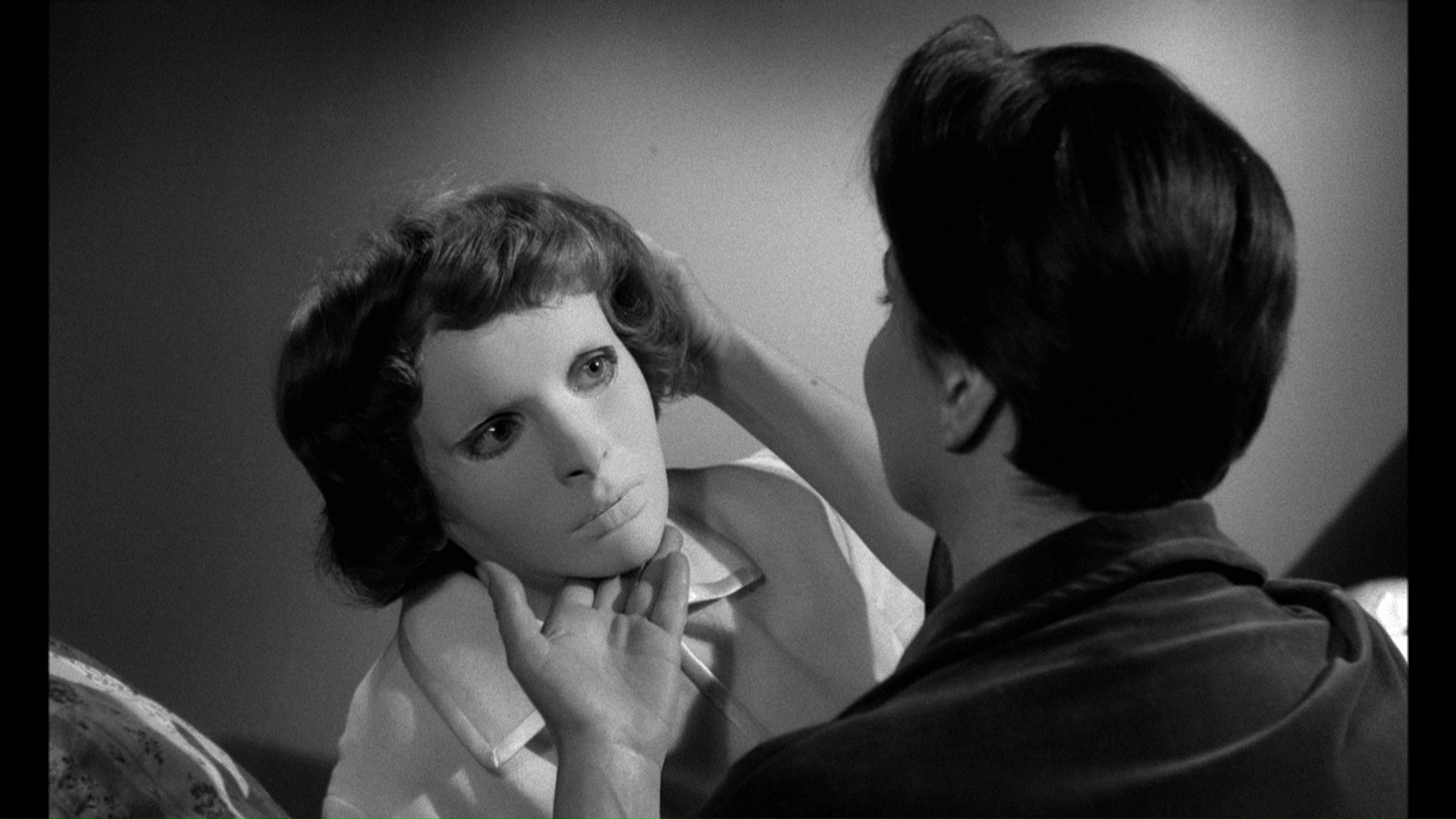
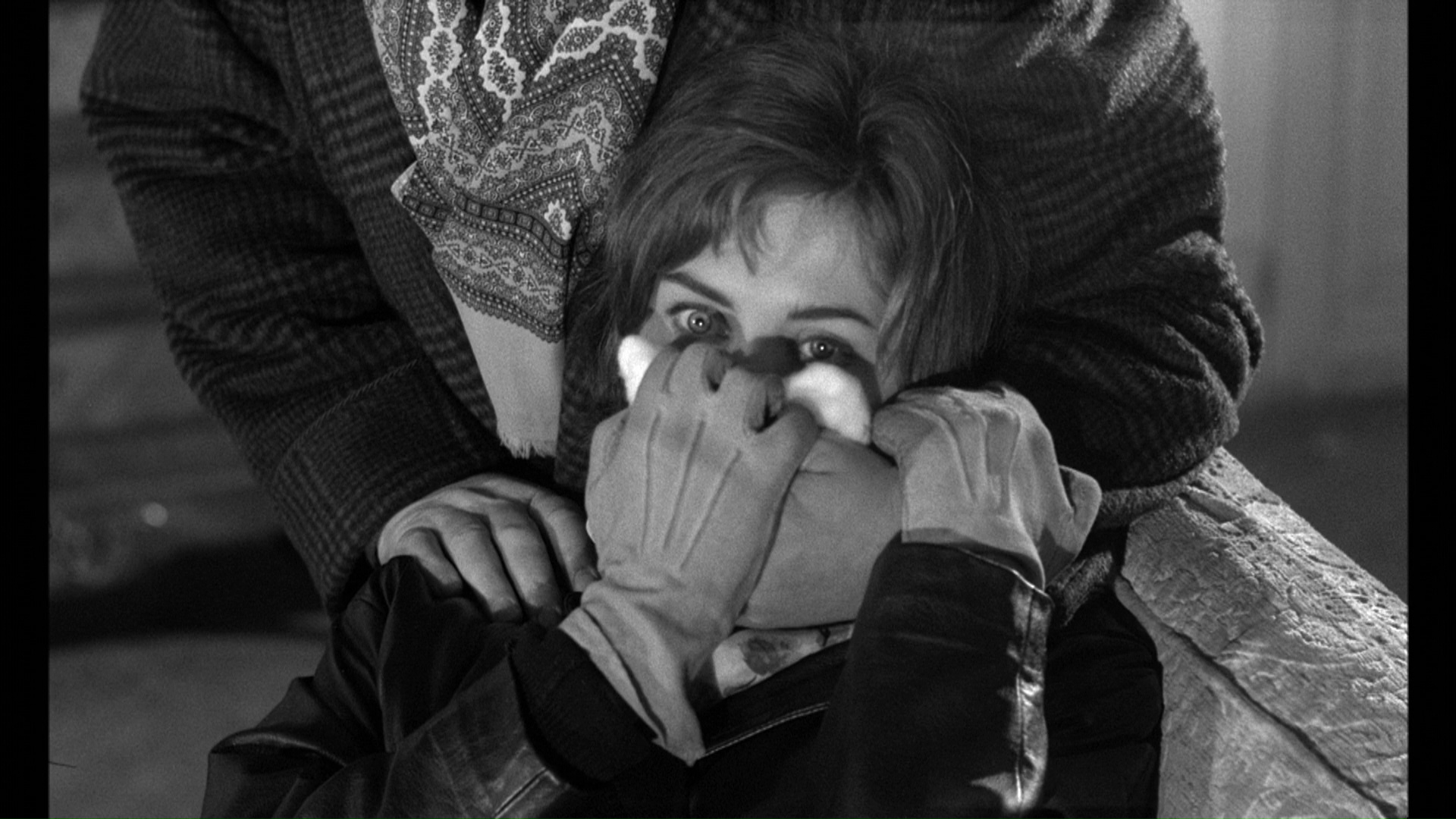
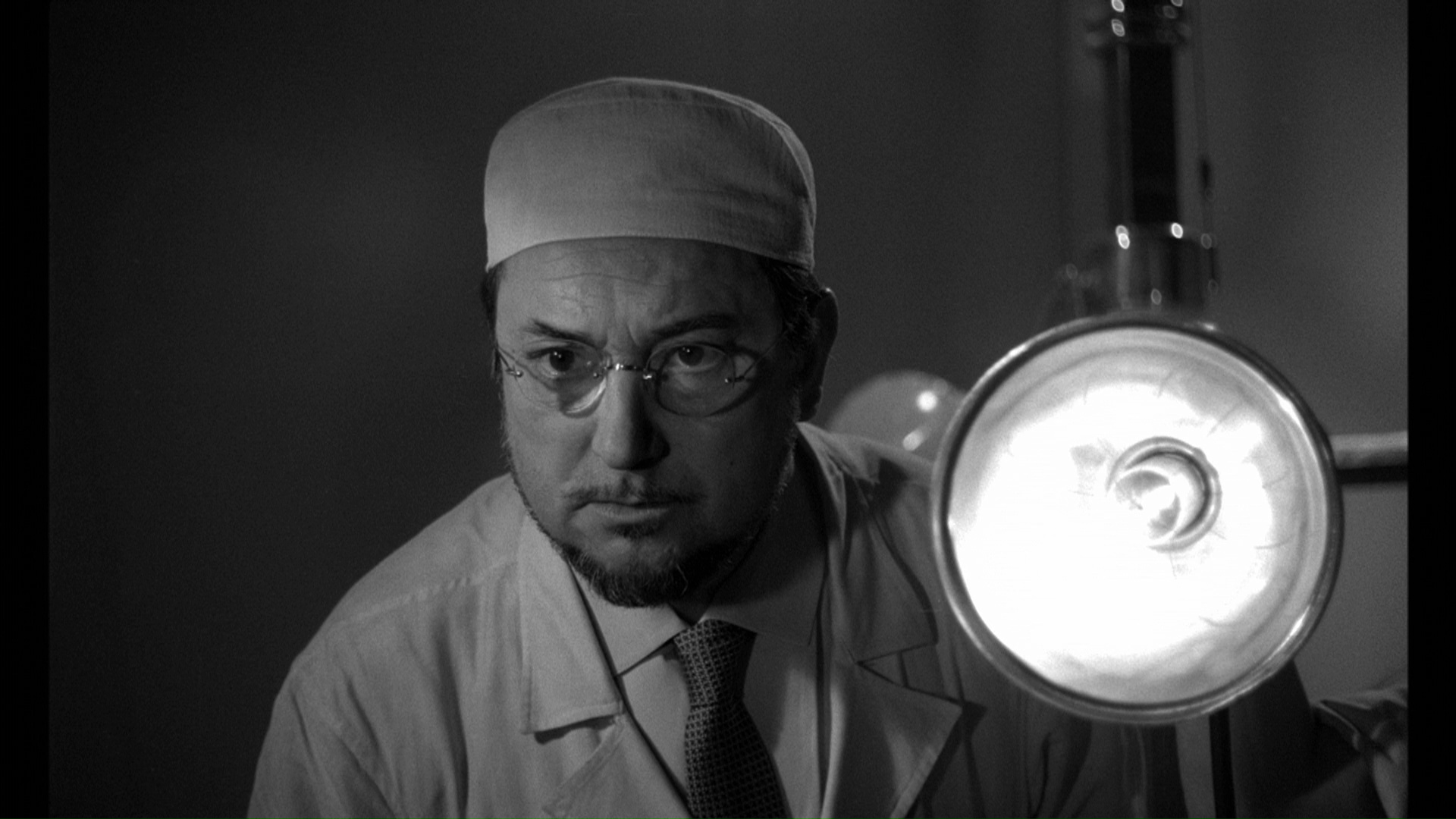
With such an opening, audiences at the time had a fair idea of what to expect; a madman or monster is on the loose, preying on young women with an assistant handy to dispose of the bodies. However, this masterpiece from director Georges Franju (Judex) - still the finest French horror film ever made - upends expectations from start to finish. As we soon learn, Christiane (Scob) is in fact alive and still living in her father's secluded estate, where he clinically attempts skin grafts to salvage his daughter's skinless face. Forced to wear an emotionless mask, she wanders the house as a constant reminder of her father's fallability (the injuries were caused by his hand in a car crash) and has only the captive lab dogs as friends. Meanwhile Louise prowls the city streets looking for new girls to provide as subjects, bringing them back to the doctor each time a graft fails. Meanwhile the police become suspicious and decide to send in their own decoy as one of Génessier's patients, but all does not go as planned.

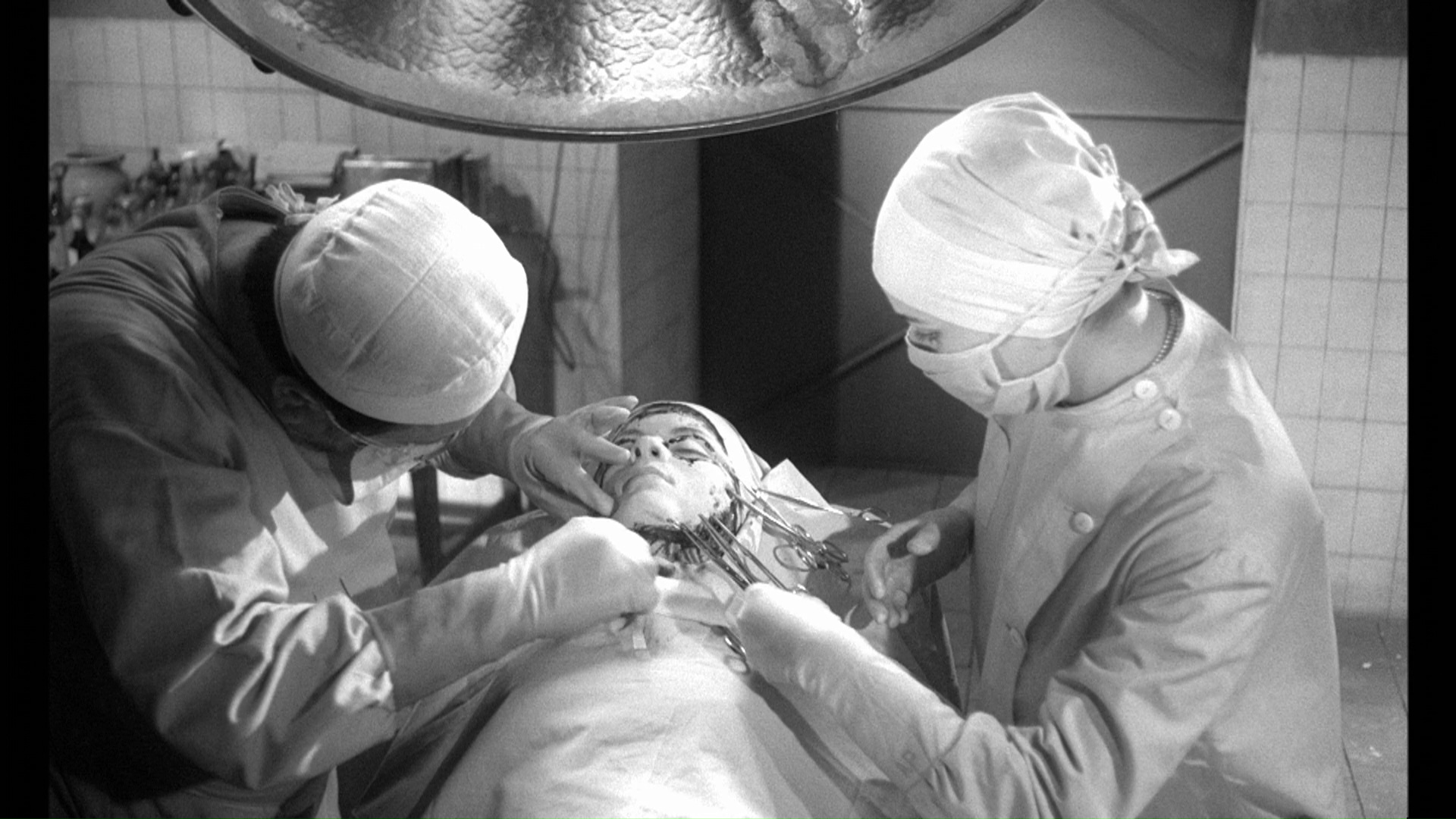
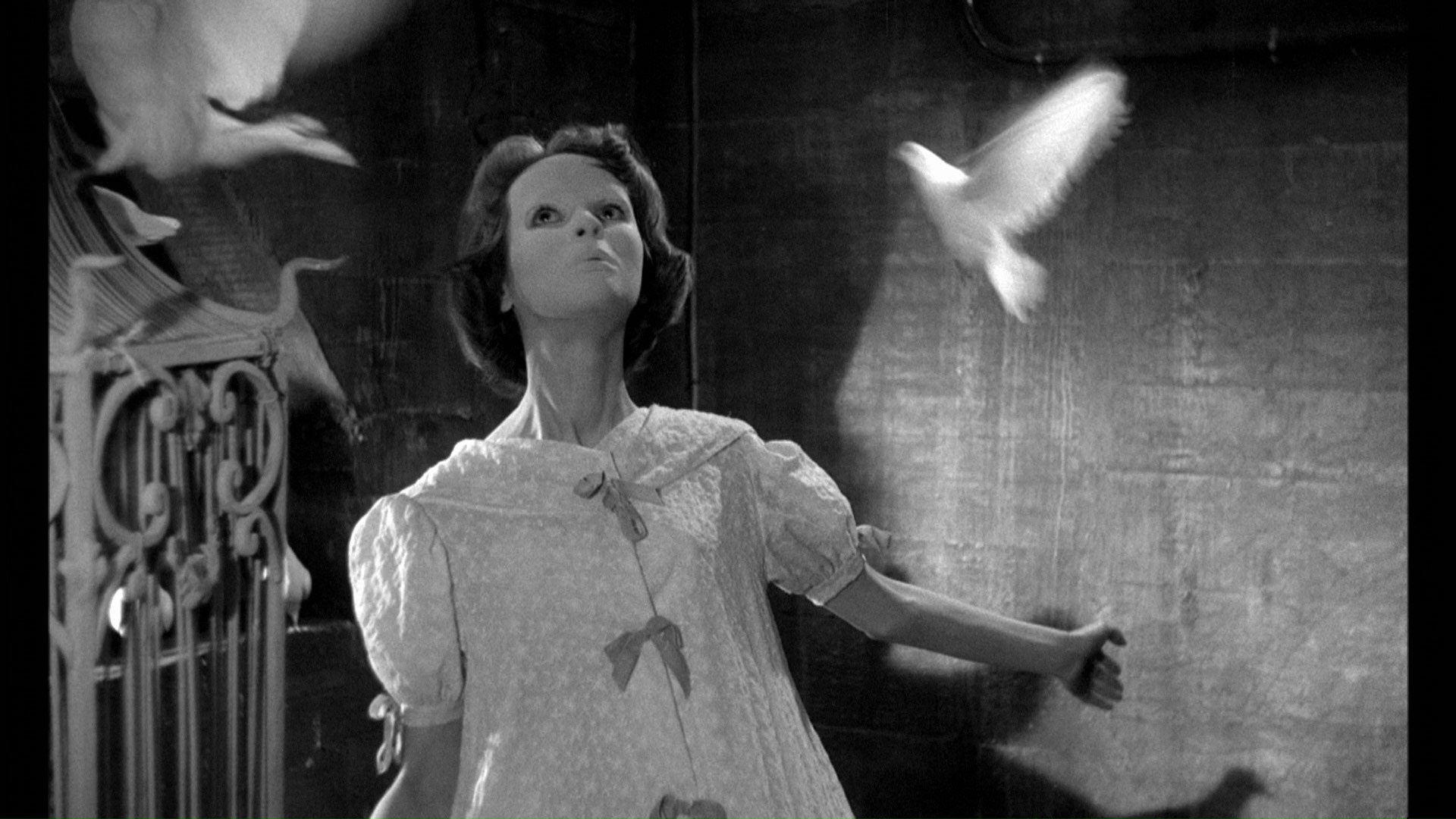
Conceived with beautiful precision sharper than the doctor's scalpel, Eyes without a Face (Les yeux sans visage) marks a vital turning point in the horror genre between gothic imagery (the dark forest around the house, the captive and disfigured daughter, the baying dogs) and modern technological shocks - most obviously the infamous skin graft sequence in which a woman's skin is lifted from her face, still effective for a generation used to the gory thrills of Nip/Tuck. The film also inspired an entire strain of European horror films beginning with Jess Franco's The Awful Dr. Orlof in which a doctor tries to restore a loved one's beauty while inflicting pain on others. Unlike its imitators, Eyes without a Face never feels like exploitation; though marketers tried their best to pass it off as gaudy schlock (including a dubbed version entitled The Horror Chamber of Dr. Faustus in the U.S.), the film's chilling poetry keeps it in a class all unto itself. The indelible images of Scob wandering the house in her mask are difficult to forget, while Brassuer and Valli (whose fate still elicits gasps from audiences) offer complex, multi-layered characters well beyond the traditional good and evil dichotomy one might expect.

A home video staple, Eyes without a Face was slightly trimmed in most territories outside of France, losing a few seconds from the end of the face removal. It's a trade off as to which version is more effective; though more gruesome, the longer version loses the eerie effectiveness of the scene suddenly fading to black as the empty eye-holes are raised towards the camera. In any case, Criterion's disc presents the film in its full, uncensored glory; most surprising is the image quality, which is light years beyond the soft, scratchy prints used for the film's theatrical reissue. Black levels and detail are magnificent, while the image quality is extremely clean and film-like. Also, the often troublesome white-on-white subtitles are now replaced with much clearer optionl English subtitles that improve markedly on past translations. Prepare to be amazed.

The modest but effective extras offer a solid accompaniment to the film, beginng with Franju's notorious 1949 short documentary, Blood of the Beasts (Le Sang des bêtes). A chilling look at Parisian slaughterhouses, the film juxtaposes, beautiful monochromatic images of the city and populace with cold, unflinching footage of the meat source that feeds it.

A section entitled "Dr. Génessier's Clinic" houses the rest of the supplements. "Le fantastique," a segment of the French TV program Cine-parade, features Franju talking about his filmic technique and dismissing the term "cinema fantastique" as too vague. Amusingly, this colorful extra takes place on a colorful lab set complete with gaudy test tubes and a wild-haired host decked out as a mad scientist. The film's screenwriters, Pierre Boileau and Thomas Narcejac (whose novels inspired Diabolique and Vertigo), appears in exceprts from Les Grands-peres du crime, a French mystery documentary in which they discuss their partnership and their favored methods for creating suspense. "Medical Charts" contains a gallery of terrific behind-the-scenes photos and publicity material, and two theatrical trailers are included: the U.S. double-bill pairing (as Faustus) with The Manster, complete with the goriest surgical bits, and the original, far more genteel French trailer with English subtitles.


Mondo Digital Reviews Mondo Digital Links Frequently Asked Questions