 of Vinegar Syndrome's Forgotten Gialli series has been a blessing to fans of Italian thrillers and their neighboring
  (mostly Spanish) cinematic cousins, and volume three proves to be no exception with one prime, oft-requested heavy hitter, a familiar but neglected and frequently bootlegged fixture of '70s and '80s TV, and an oddball obscurity from the subgenre's sleaziest period in the late '70s. So what's in store here? Read on and find out.
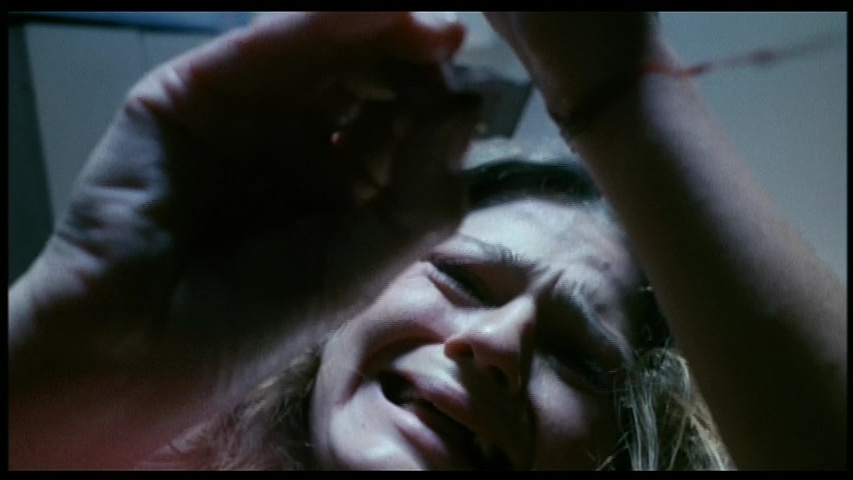
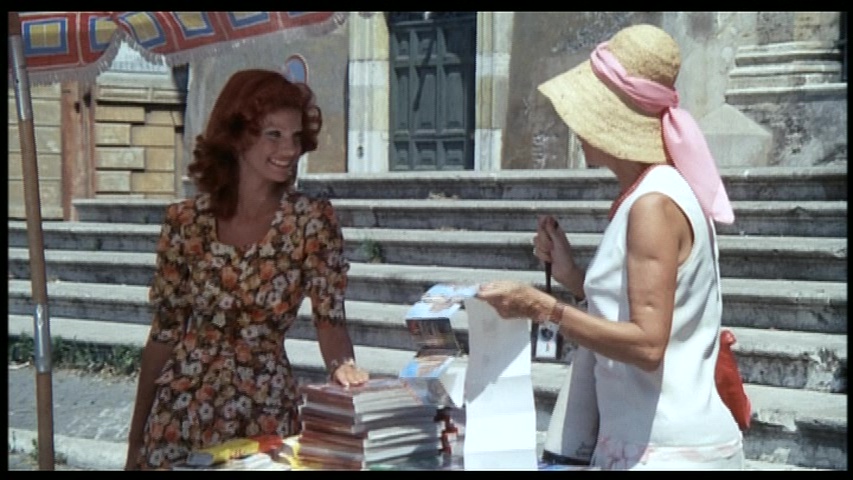
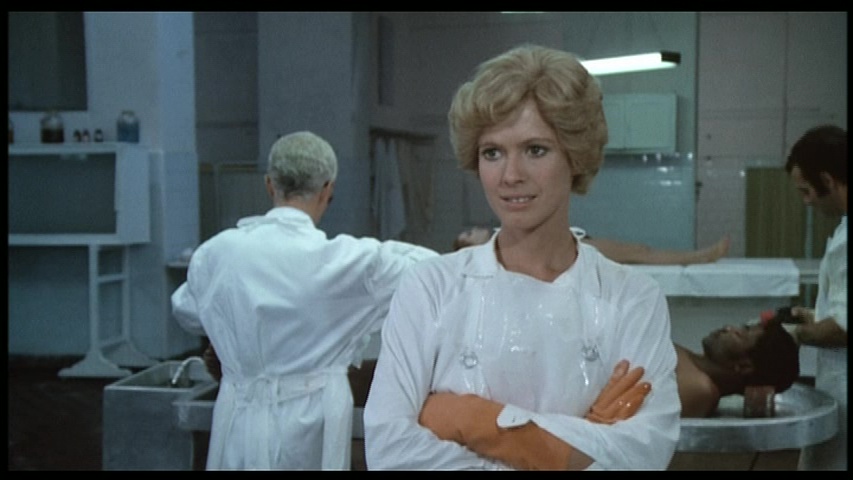
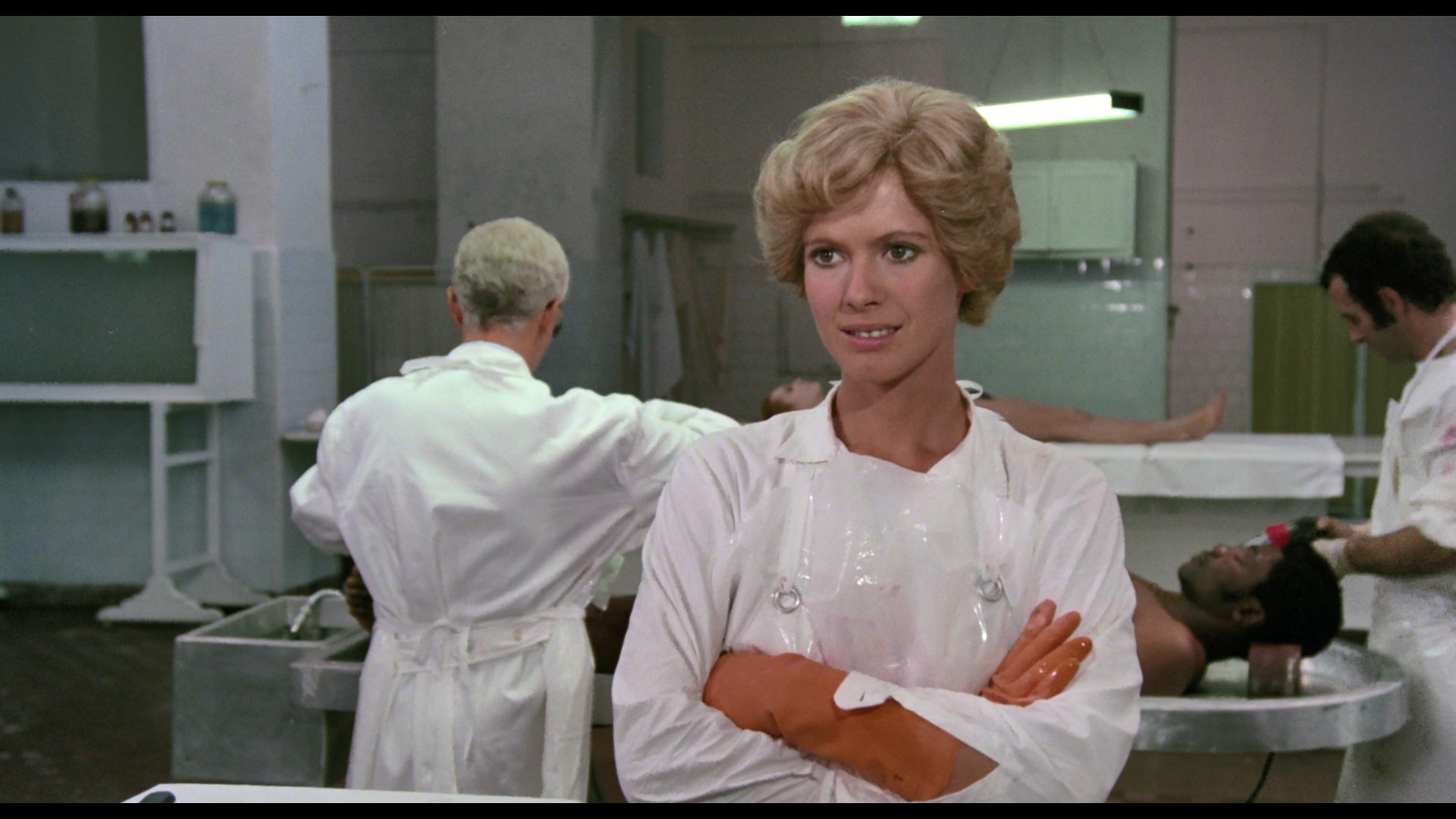
When a stifling heat wave strikes Rome and sends many of the denizens fleeing into the countryside, a wave of suicides provoked by sunspots(!) causes more activity than usual in the local morgues. Sensitive pathologist Simona (Four Flies on Grey Velvet's Farmer) is working on a thesis examining real versus staged suicides, and her work begins to get to her. Simona's disturbing hallucinations feature the fresh, mutilated corpses rising from their slabs, 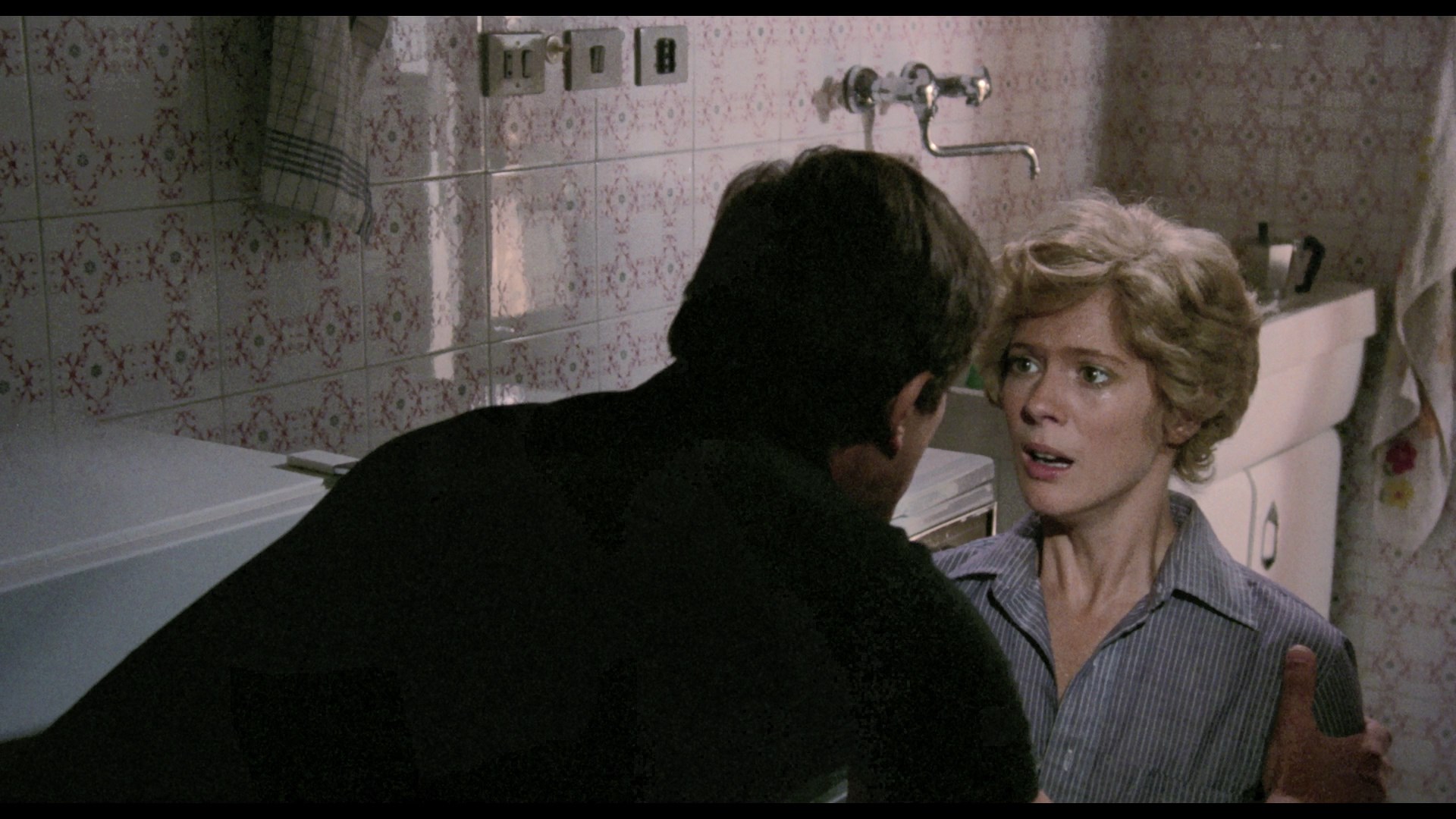 mugging
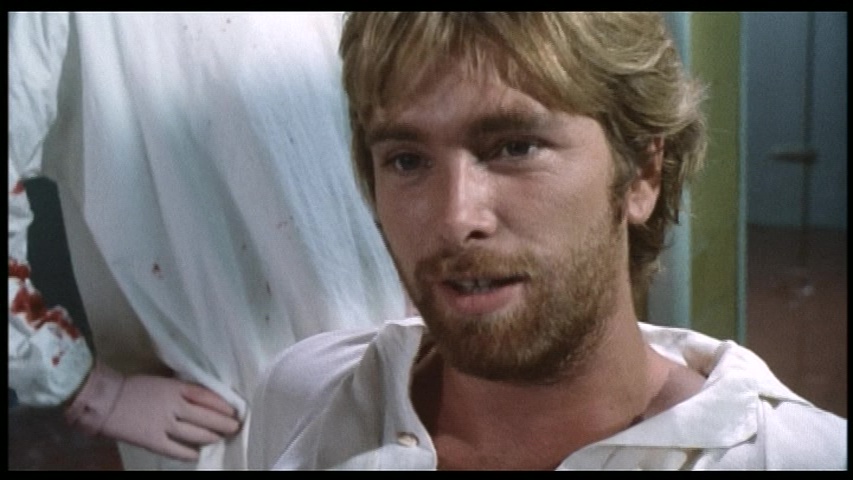
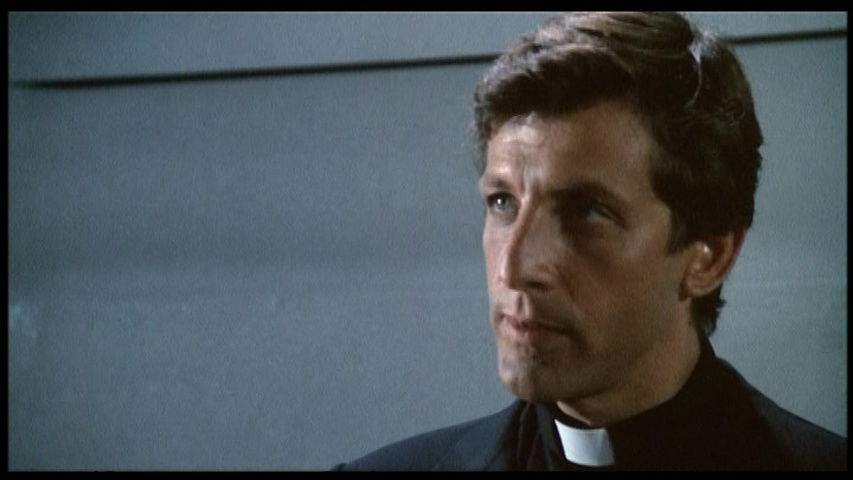
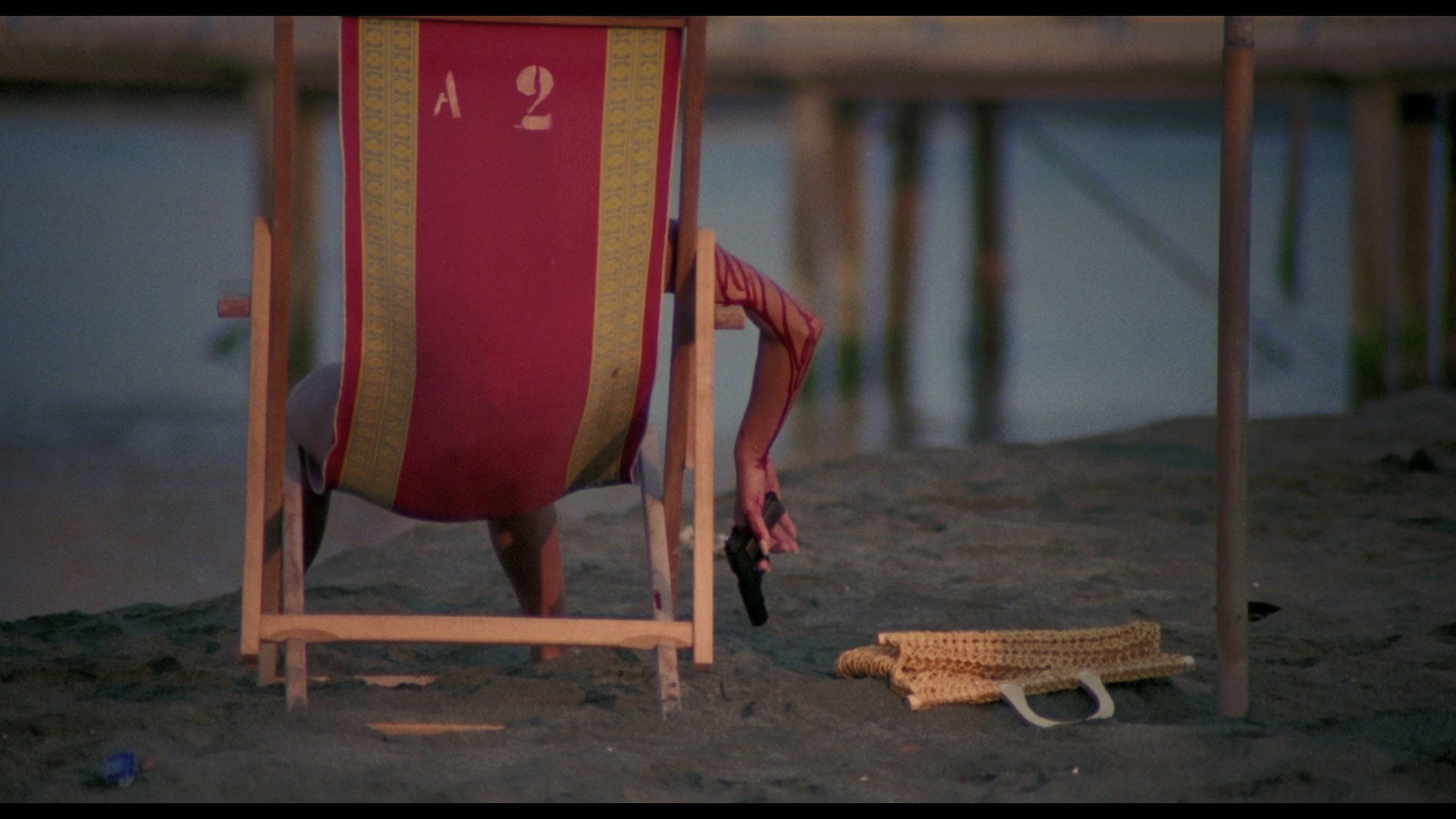
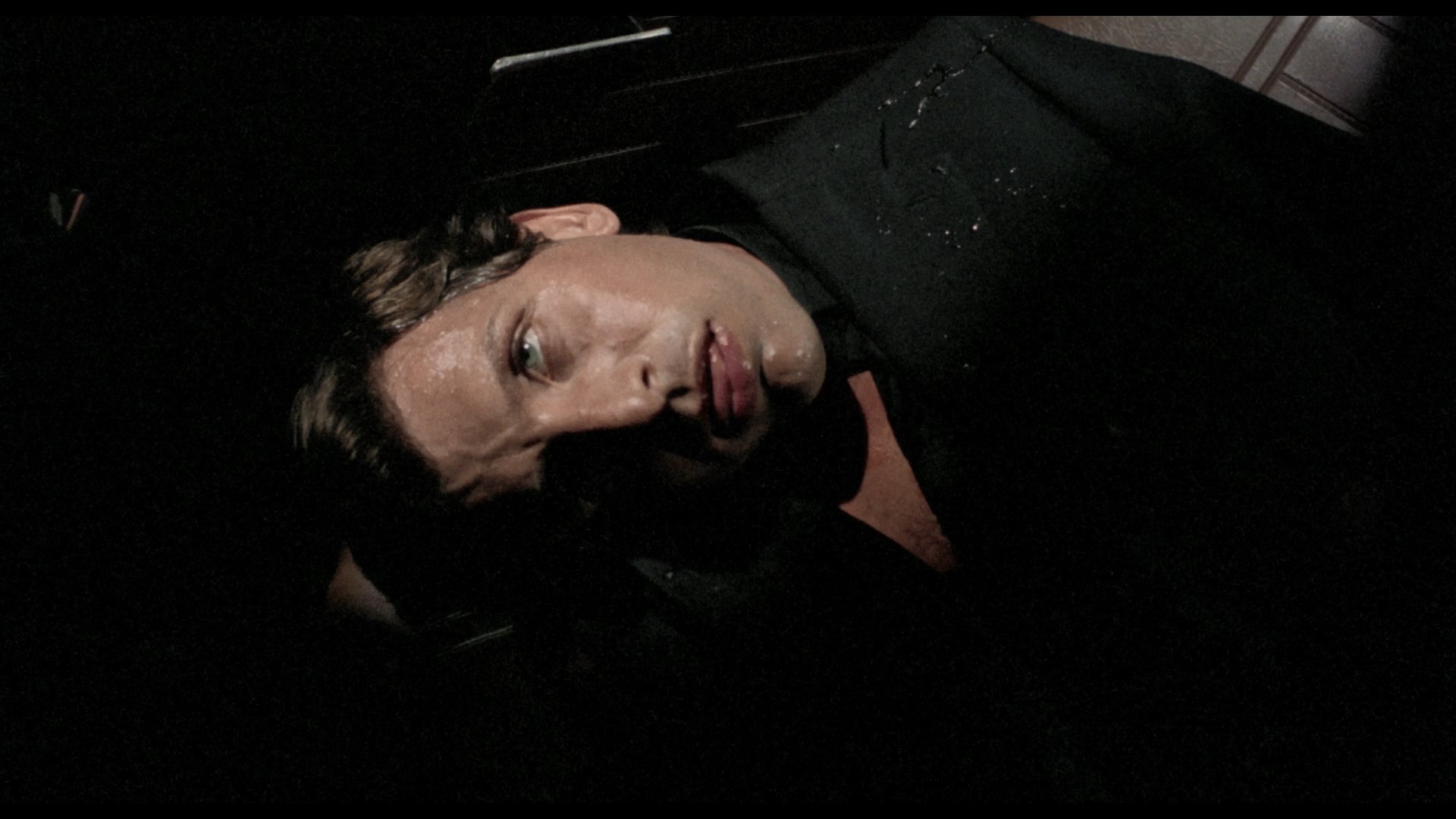
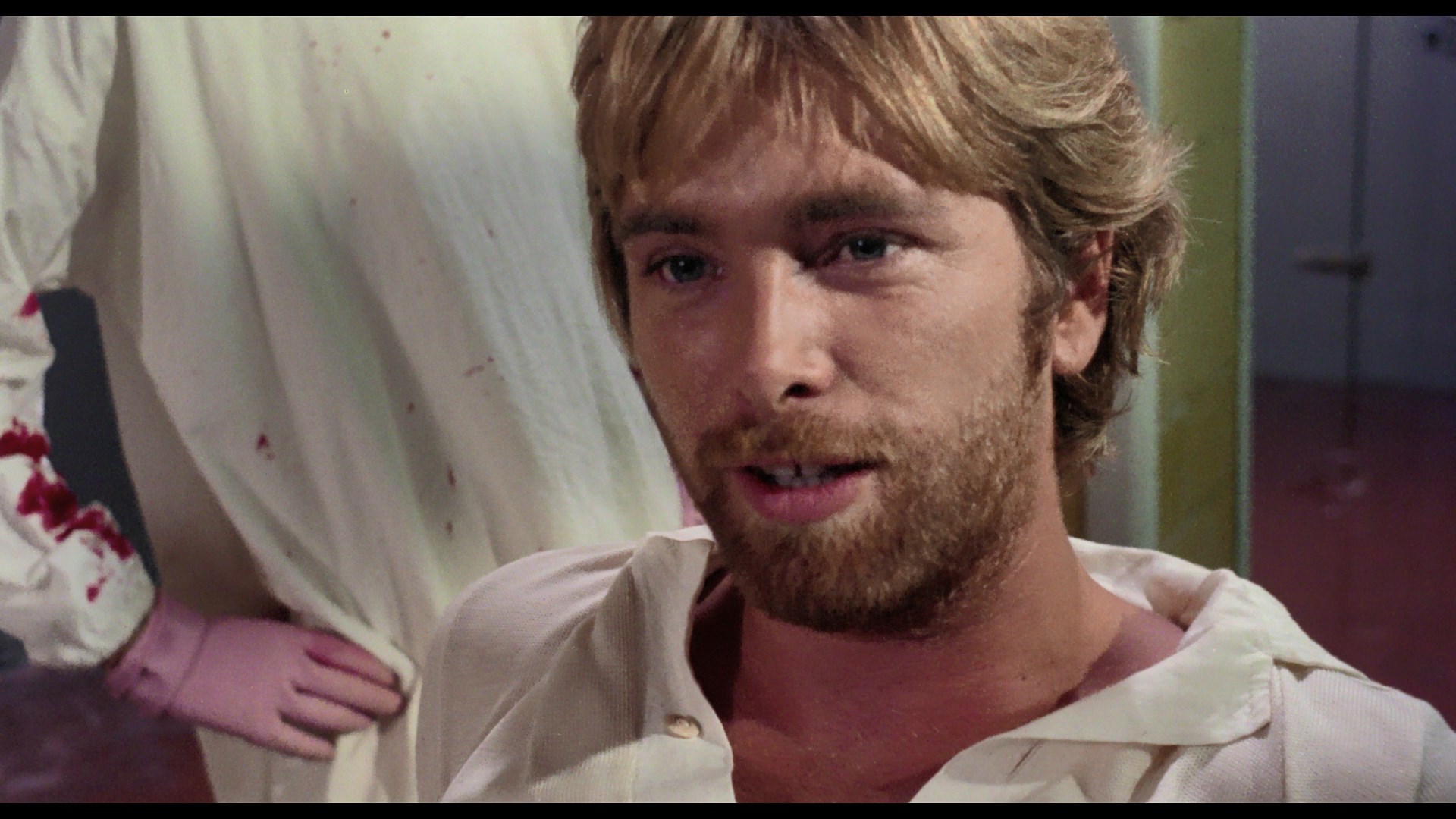
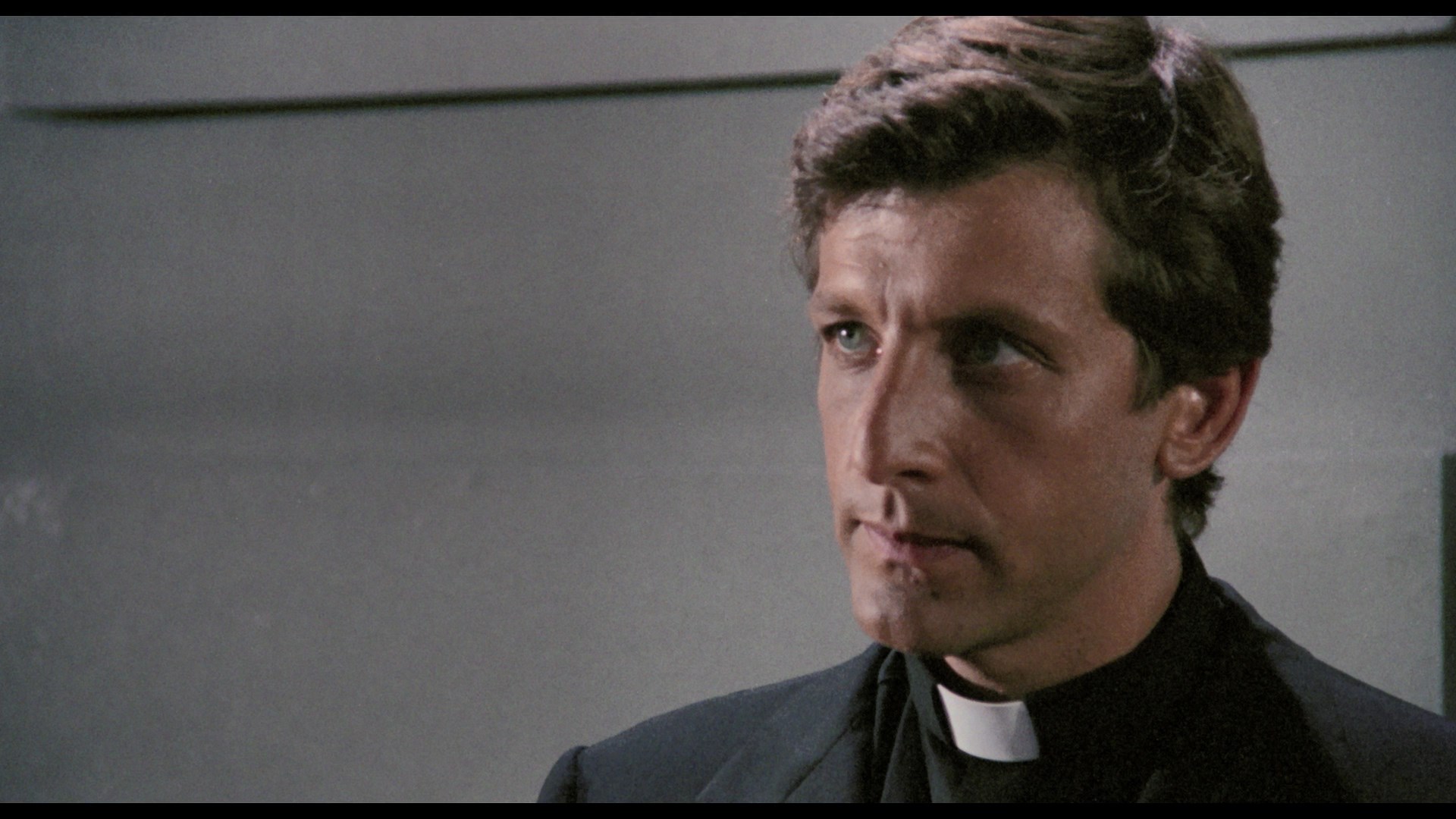
 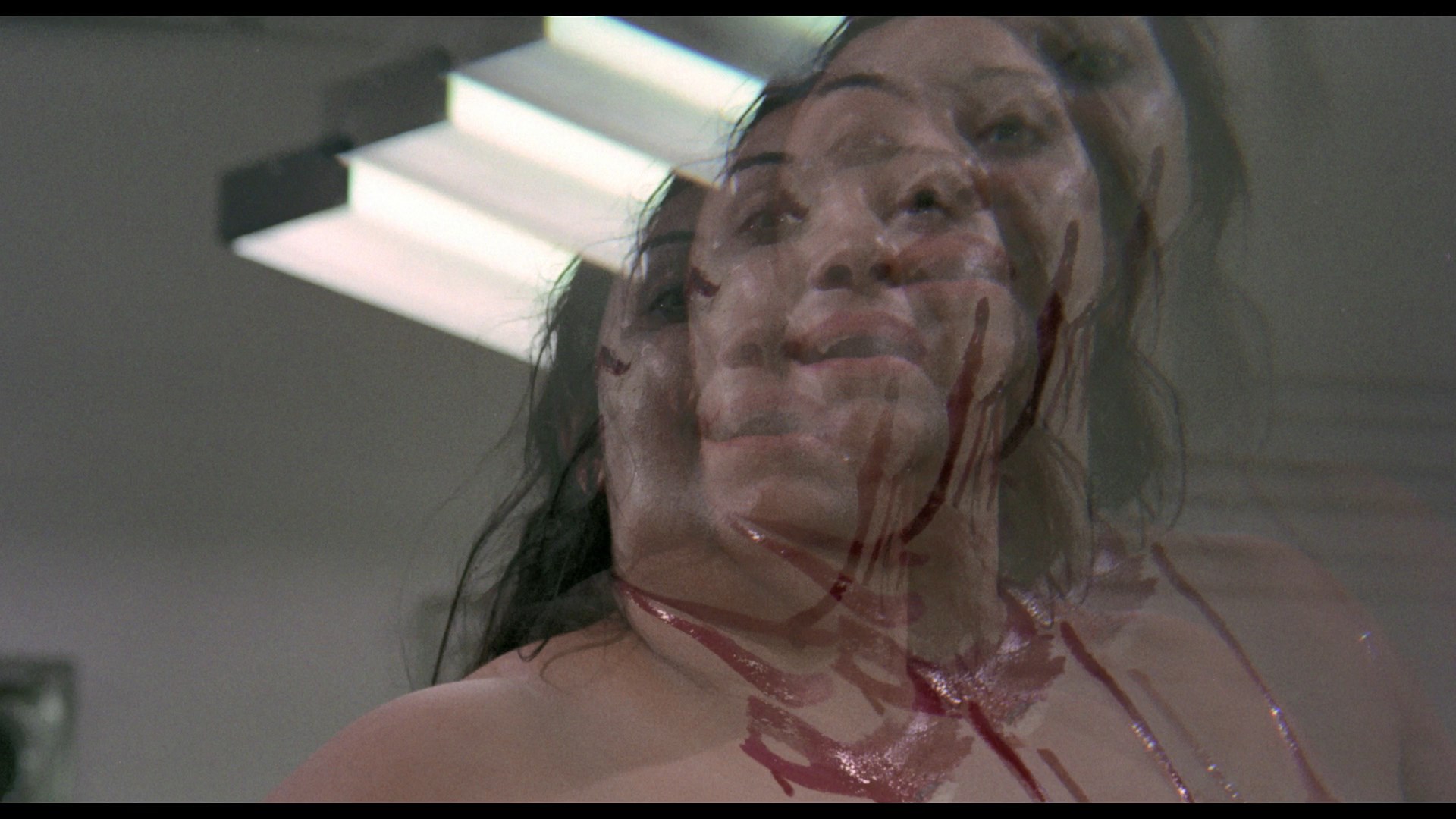 for the camera, and even having sex on the morgue floor! Simona's piggish boyfriend, Ed (Lovelock, still sporting his beard from The Living Dead at Manchester Morgue), is peeved when her visions interfere with their sex life. One day a gunshot suicide victim found on the beach is wheeled in, and Simona recognizes the victim as a beautiful woman she had seen earlier. The brother of the deceased, a slightly dubious priest (Primus), believes the woman's death was actually murder, and Simona's research indicates he may be correct.
The second trip into the macabre from director Crispino (The Dead Are Alive), this film was originally released as Macchie Solari and, according to the apparently erroneous press materials, was listed with an inflated running time of 125 minutes! Brenner picked the film up for the U.S. and recut the opening sequence to omit the main titles, instead cutting new credits with an unforgettable funky beat (Johnny Pearson's "Fugitive") into the harrowing suicide montage that kicks off the film. Several dialogue trims were made, and the entire end credits wound up on the floor as well with Brian Bennett's "Quantum" tracked over the final scene. Running a far tighter 84m52s, the result wasn't substantially different in its particulars but obviously has a significantly perkier pace. Farmer's jittery, shrill performance is another in her unforgettable line of cinematic neurotics (see also The Perfume of the Lady in Black for another stellar example), while one can only wonder what she sees in the shifty Primus, one of the 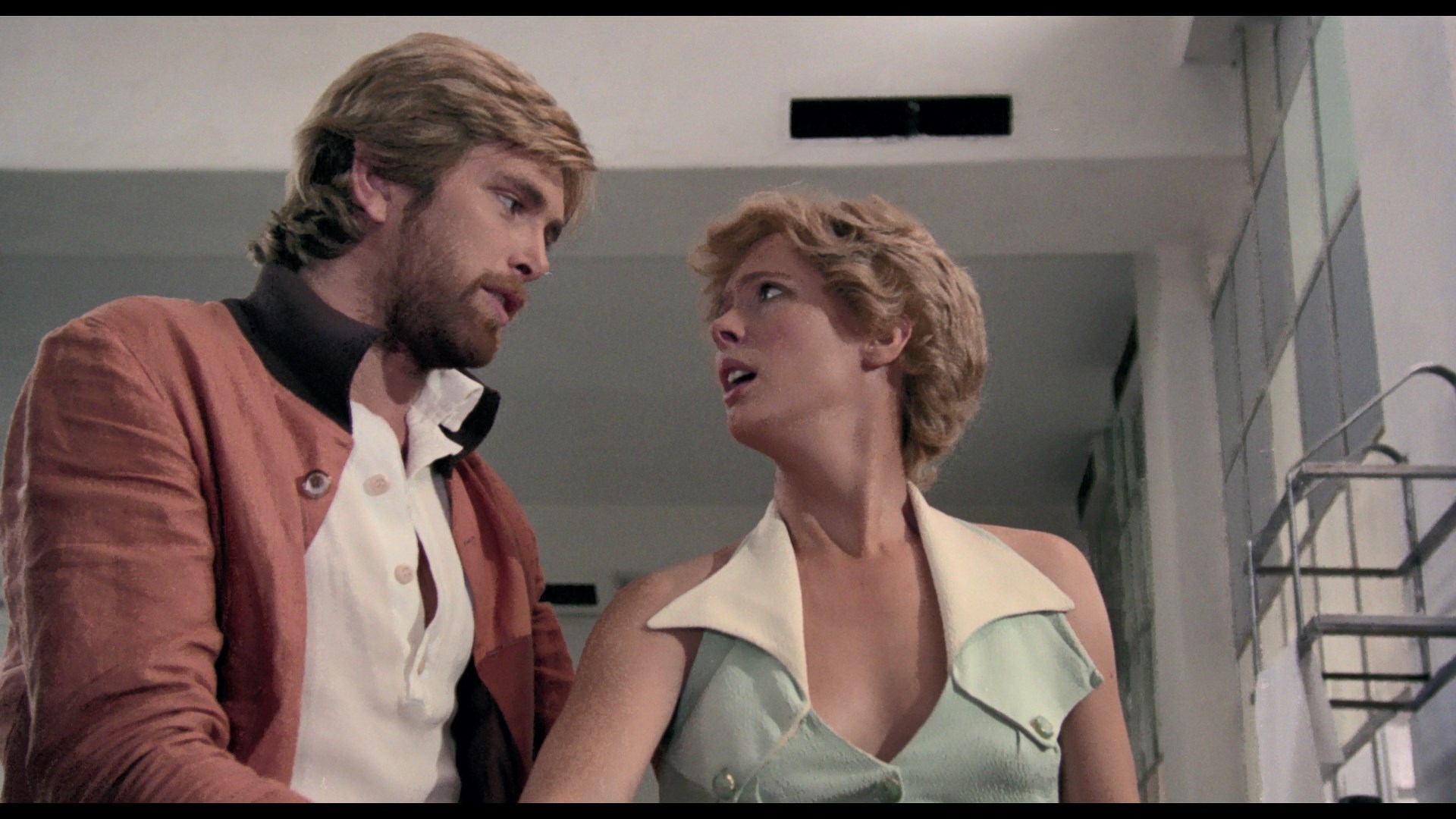 screen's
 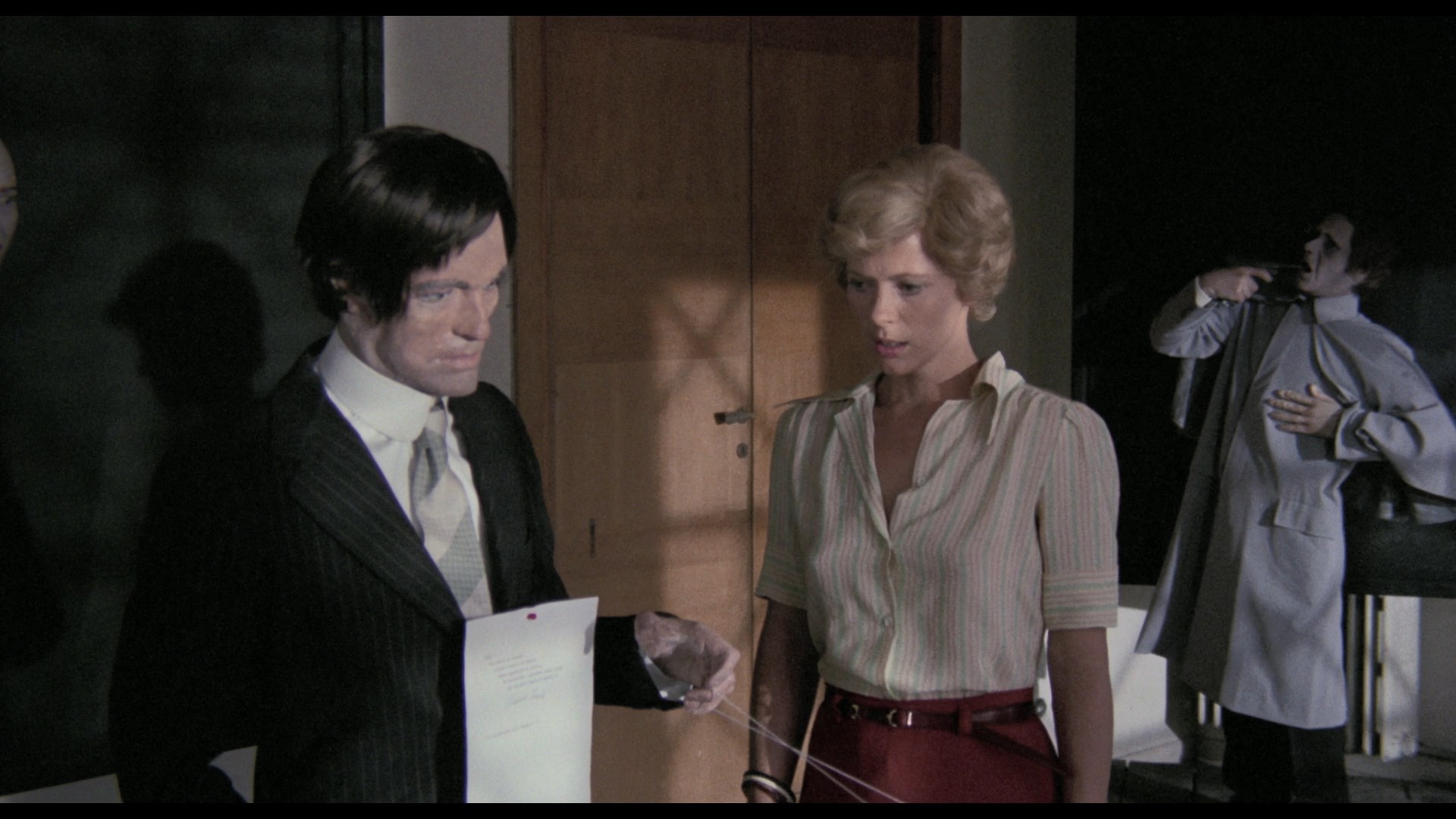 most unlikely men of the cloth. Lovelock delivers 100% as usual, with his sexist pig getting all of the most memorable lines. The film is astoundingly graphic at times, particularly during some revealing sex scenes and a chilling, explicit peek inside a crime museum that isn't easily forgotten. (How the film squeaked by with an R rating with those post mortem photos intact is anyone's guess.) Some of the film rambles on a little more slowly than it should, but that's '70s Italian mysteries for ya. Ennio Morricone also contributes a lovely, haunting main theme, which was stupidly left off the initial soundtrack album and most memorably accompanies the film's final poetic scene.
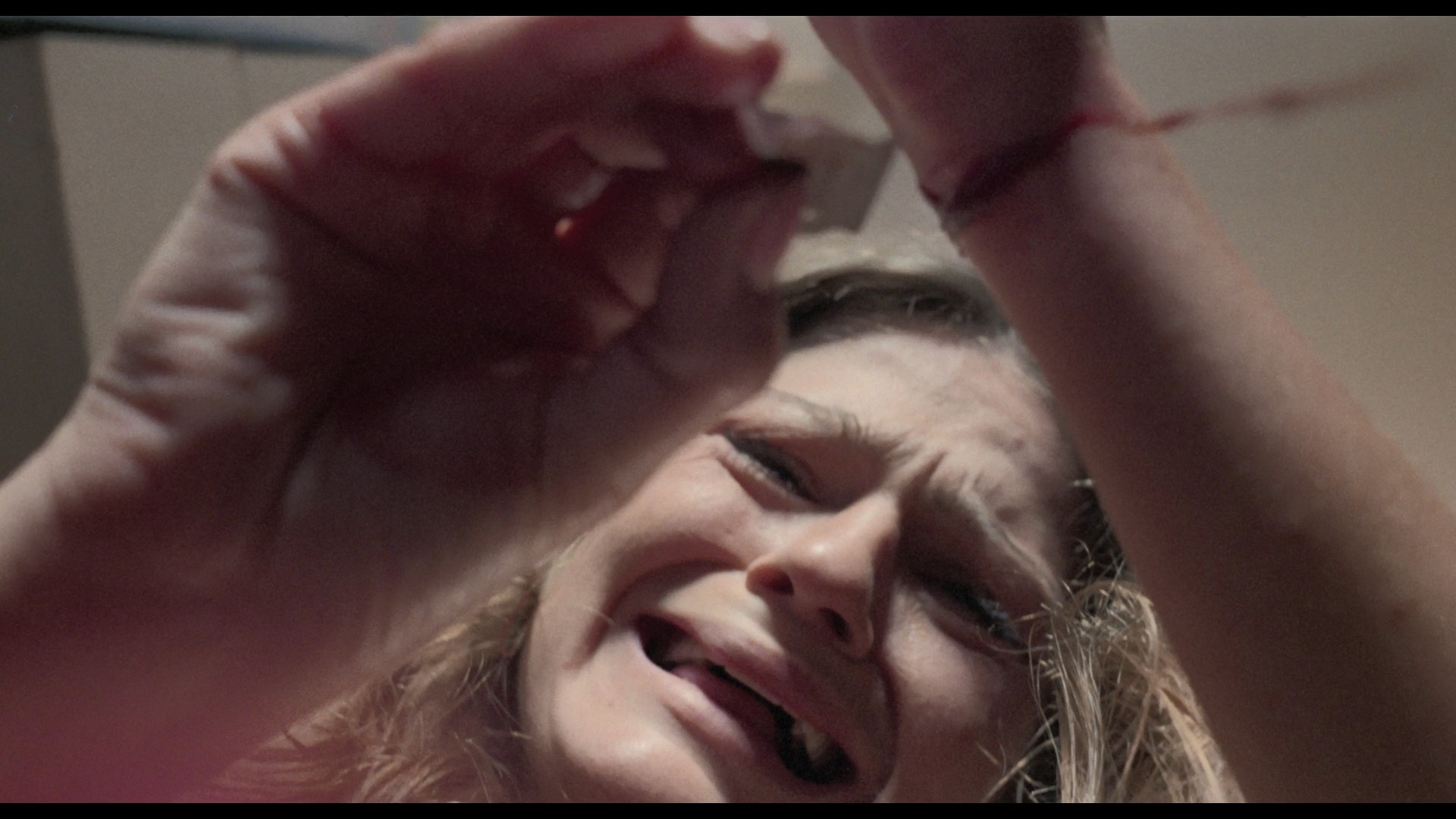
Long unavailable in its edited U.S. cut on VHS from Prism, Autopsy first appeared completely uncut on DVD in 2000 from Anchor Bay. A complete letterboxed edition was previously available on Japanese VHS, but that version was marred by optical censoring of all frontal nudity (which is a lot in this film) and an Italian-only track. The disc also includes an alternate Italian language track-- pretty much useless without any subtitles-- as well as the very explicit U.S. trailer (which blows the entire ending) and a European trailer as The Victim. After that and a port of the same material from Blue Underground in 2006, the film essentially went out of circulation for several years until it surfaced in 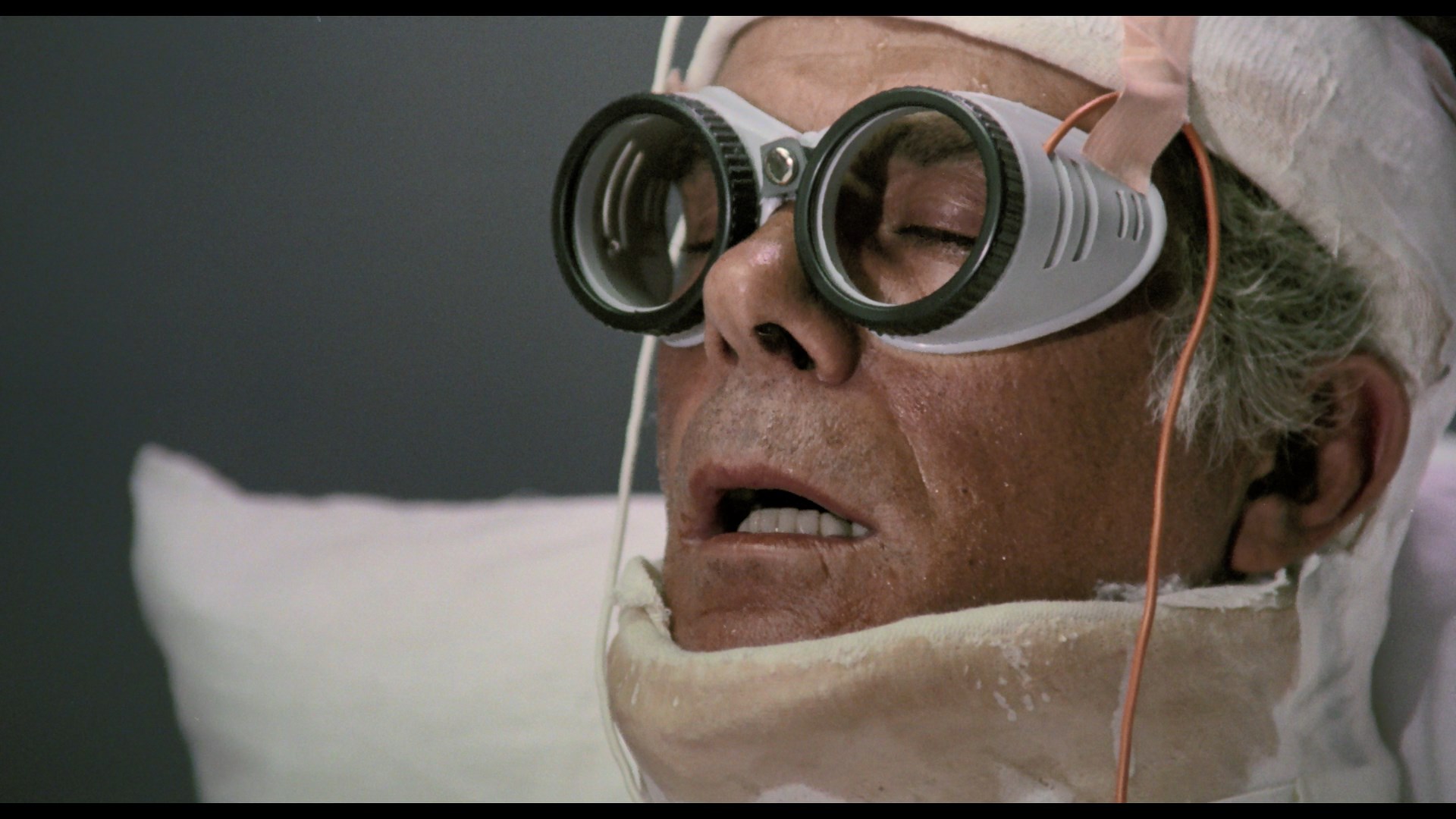 this set on Blu-ray from Vinegar Syndrome, featuring a new 2K scan from the original camera negative. It looks wonderful here with organic film grain and much improved detail, as well as a warmer color scheme than the DVD and more vibrant colors to boot. The
 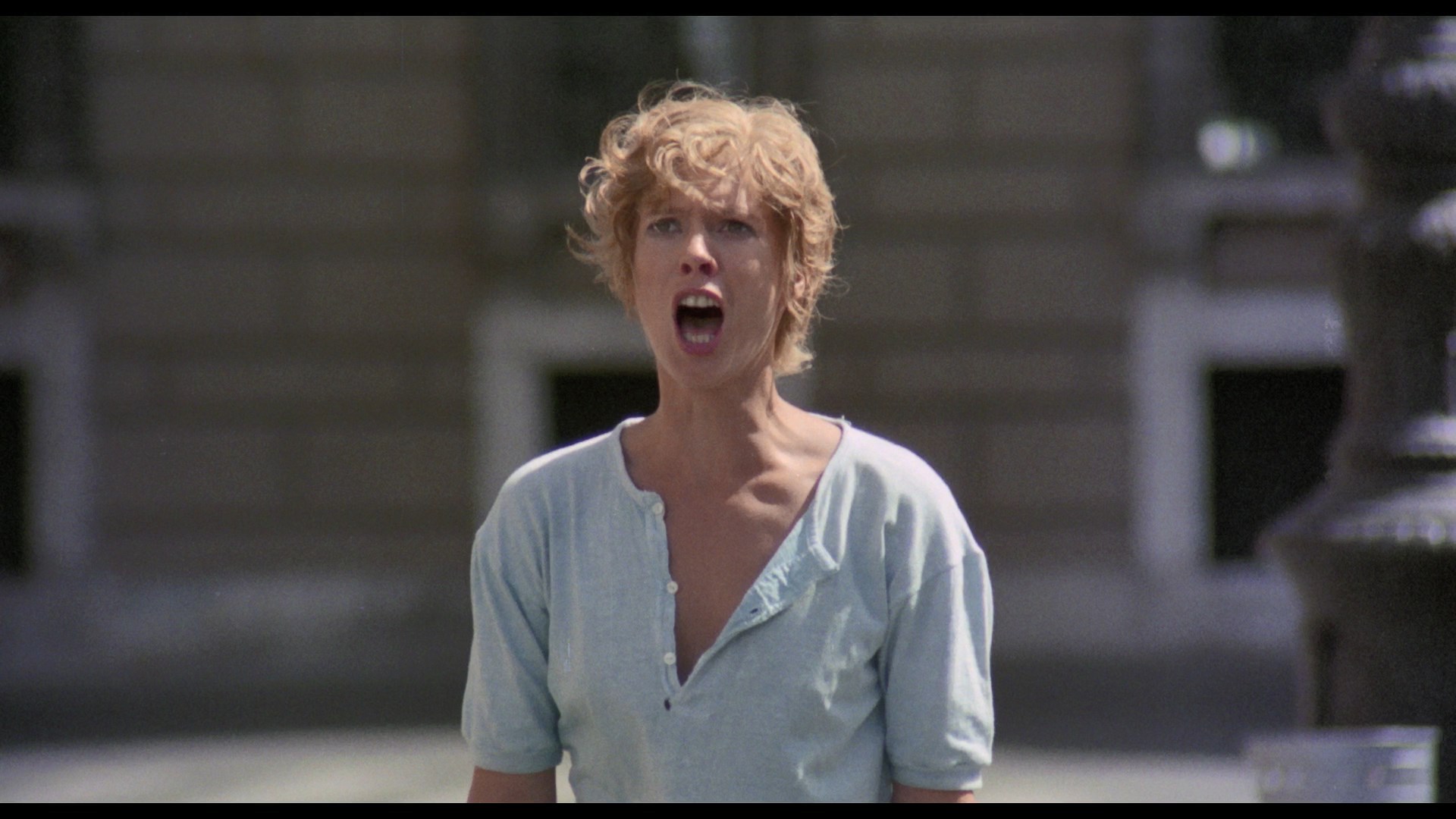 usual English track and the Italian dub are included here (both DTS-HD MA mono) with newly translated English subtitles. As expected, it's the uncut European version bearing The Victim as its on-screen title, and the European trailer is also included in SD along with the Italian main and end titles. An archival SD video intro with Crispino from an Italian screening (4m40s) including comments about the amusing mask gimmick used for initial domestic screenings and the idea behind the sunspots angle, followed by "Editing & Rhythm" (11m42s) with editor Daniele Alabiso chatting with Crispino's son, Francesco, in a park about the director's tendency to shoot more than he needed for greater editing flexibility and their work together on both this film and Commandos. Then Francesco Crispino goes solo for "The Autopsy Papers" (9m54s), an analysis of the film's evolution during the scripting phase from an early 1972 treatment (called Don't Kill Your Neighbor) through its English iteration as Sun Spots, with this intended to be the first part of a trilogy with The Dead Are Alive and an unrealized film called Apparitions. He also shows some of the handwritten notes about the audition process, Morricone's score, and plenty more, offering a unique glimpse into the film's creation. Finally, Francesco Crispino turns up again for the broader "Black Hole Sun"
(38m39s) with an overview of the filmmaker's life and career from his early days rubbing shoulders with Raf Vallone through his ascension in postwar Italian cinema, his key films, and a few projects that fell by the wayside along the way. He also goes further into the involvement of Morricone, including his own memories of first hearing the recording of that unforgettable theme.
usual English track and the Italian dub are included here (both DTS-HD MA mono) with newly translated English subtitles. As expected, it's the uncut European version bearing The Victim as its on-screen title, and the European trailer is also included in SD along with the Italian main and end titles. An archival SD video intro with Crispino from an Italian screening (4m40s) including comments about the amusing mask gimmick used for initial domestic screenings and the idea behind the sunspots angle, followed by "Editing & Rhythm" (11m42s) with editor Daniele Alabiso chatting with Crispino's son, Francesco, in a park about the director's tendency to shoot more than he needed for greater editing flexibility and their work together on both this film and Commandos. Then Francesco Crispino goes solo for "The Autopsy Papers" (9m54s), an analysis of the film's evolution during the scripting phase from an early 1972 treatment (called Don't Kill Your Neighbor) through its English iteration as Sun Spots, with this intended to be the first part of a trilogy with The Dead Are Alive and an unrealized film called Apparitions. He also shows some of the handwritten notes about the audition process, Morricone's score, and plenty more, offering a unique glimpse into the film's creation. Finally, Francesco Crispino turns up again for the broader "Black Hole Sun"
(38m39s) with an overview of the filmmaker's life and career from his early days rubbing shoulders with Raf Vallone through his ascension in postwar Italian cinema, his key films, and a few projects that fell by the wayside along the way. He also goes further into the involvement of Morricone, including his own memories of first hearing the recording of that unforgettable theme.
After that we jet off to Spain for Murder Mansion, an entertaining chunk of Gothic nuttiness first released in the U.S by Embassy Pictures and issued on dozens of gray market labels over the years, mostly ripped from its Unicorn Video VHS release. Fortunately you can forget those fuzzy, murky presentations 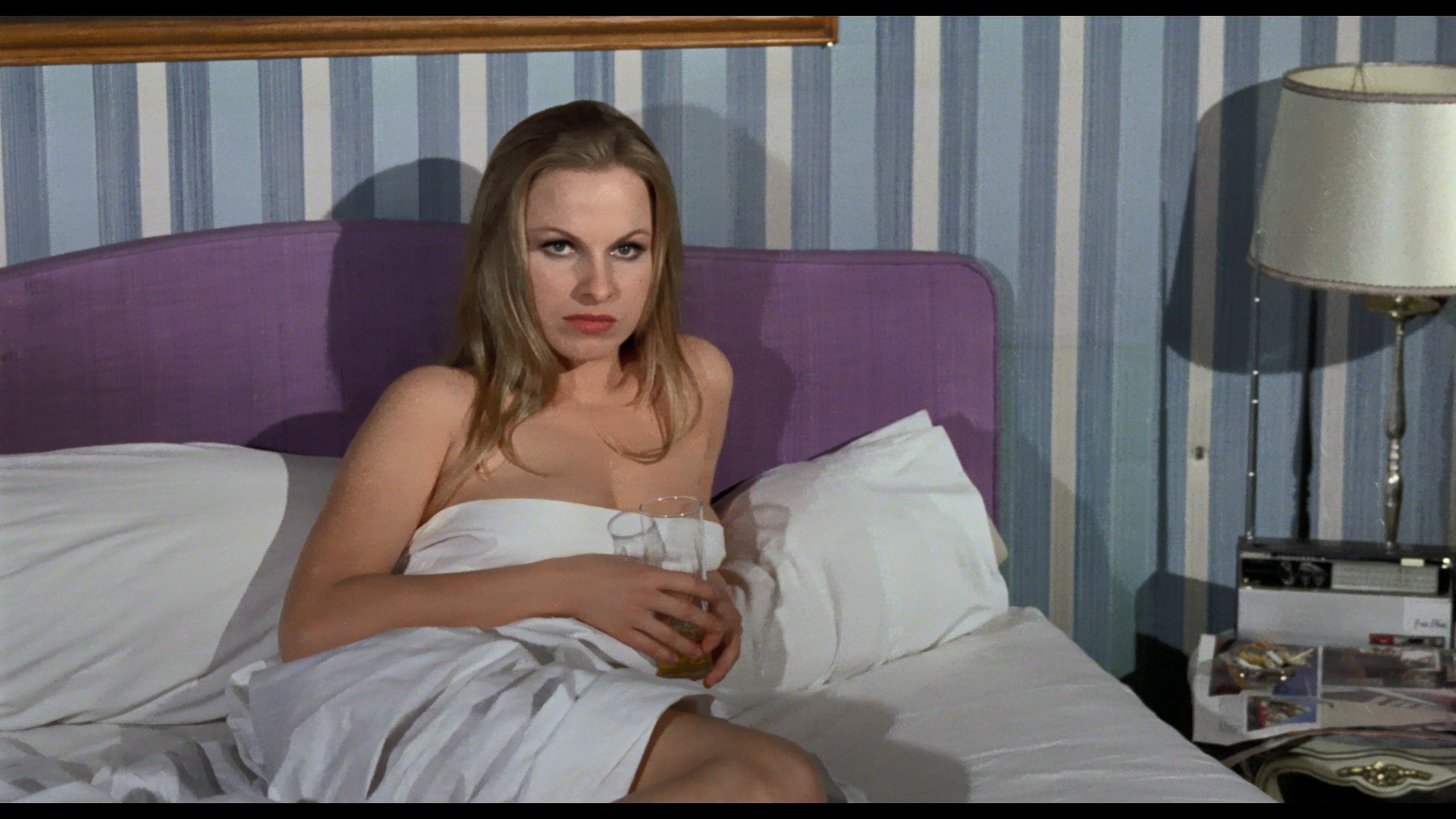 thanks to this new 4K restoration from the
 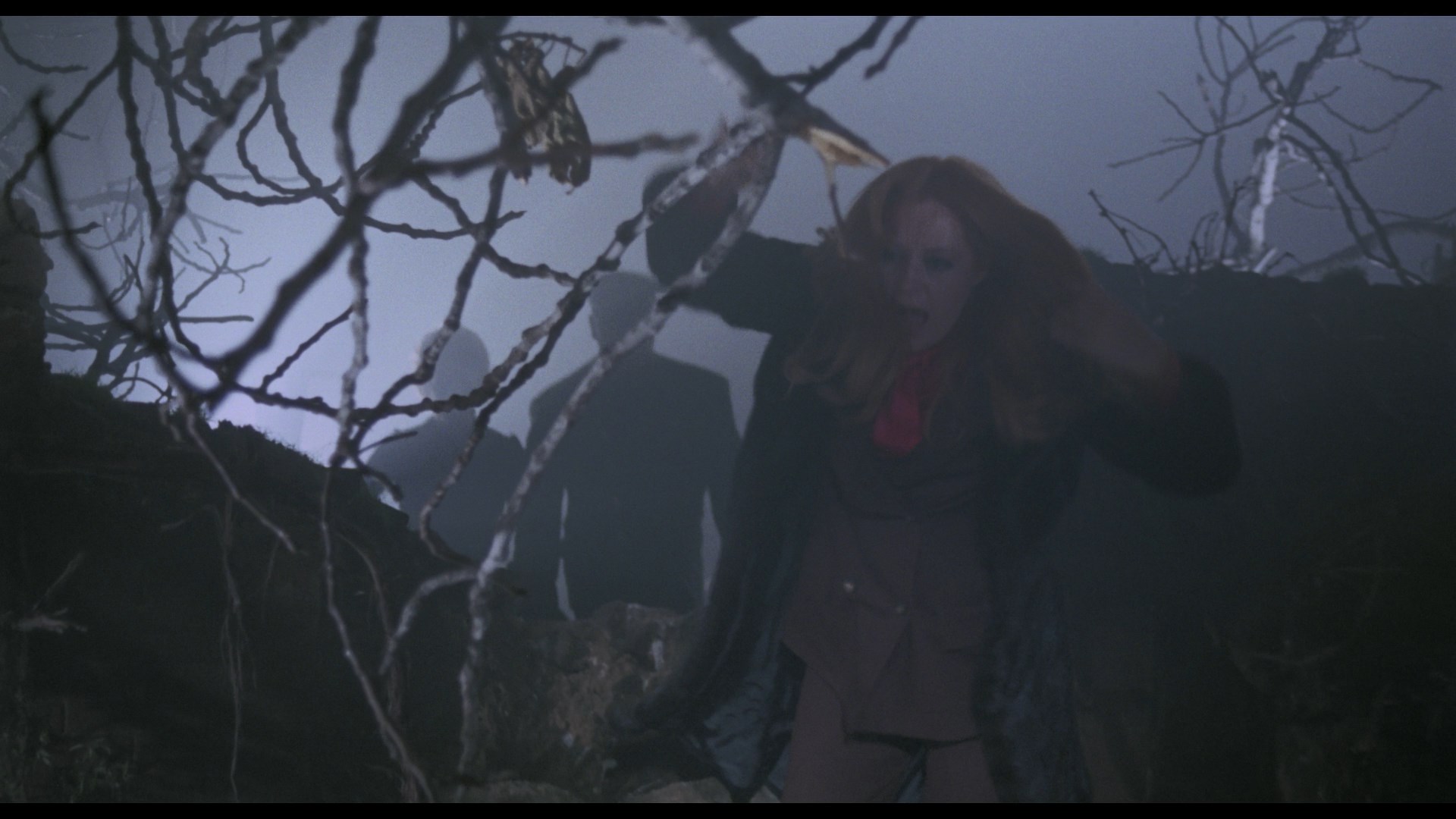 original camera negative, which is truly a different and far more enjoyable viewing experience. Originally released as La mansión de la niebla (or "The Mansion of Fog"), this film by Francisco Lara Polop (who went on to a slew of sexy offerings like Christina) is an atmosphere-drenched old dark house thriller with graveyards, bare branches, copious fog, and wild murderous plot twists all over the place.
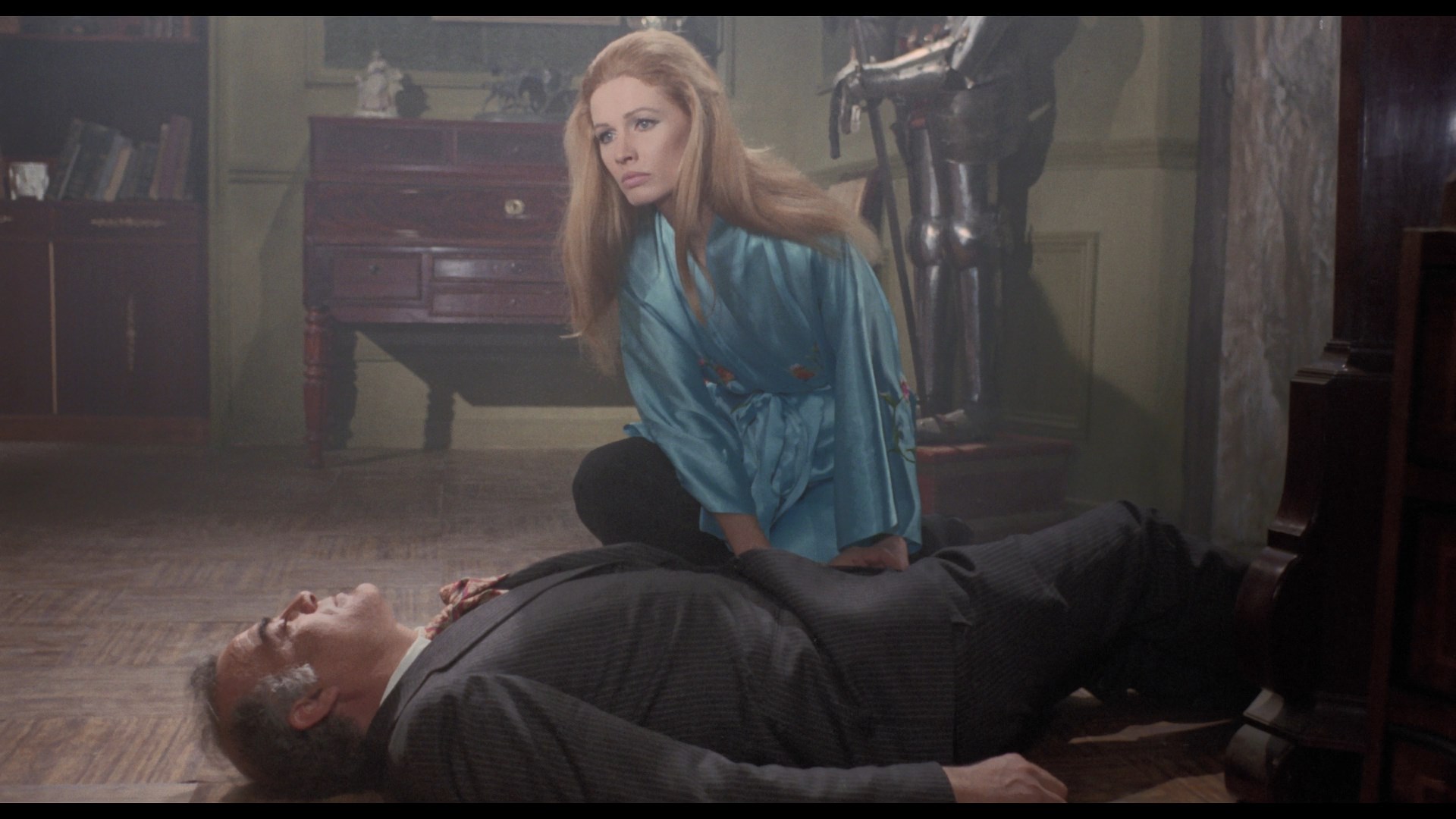
Escaping from a bad ride she hitched in the country, young Laura (Nardi) jumps on a motorcycle with Fred (Seven Murders for Scotland Yard's Resino) after hitting it off with him in a diner. While out and about, they evade the grumpy aristocrat Mr. Porter (Fantasia) and cross paths with bourgeois Elsa (Gadé) and Ernest (Dalbés) before various machinations end up putting everyone at the home of Martha (giallo veteran Stewart), where the fog and general inaccessibility keep them for the night. Unfortunately Elsa's already been scared witless by seeing the apparently spectral figures of a chauffeur and Martha's ancestor outside, but that's just the beginning of a night of terror involving murder plots and possibly supernatural shenanigans.
Despite its Italian co-financing, this one is most definitely in line with the Spanish Gothic tradition, a convoluted but entertaining psychodrama with lots of spooky trappings and only moderate amounts of bloodshed and sexiness compared to its European neighbors. The most Italian element here is definitely the 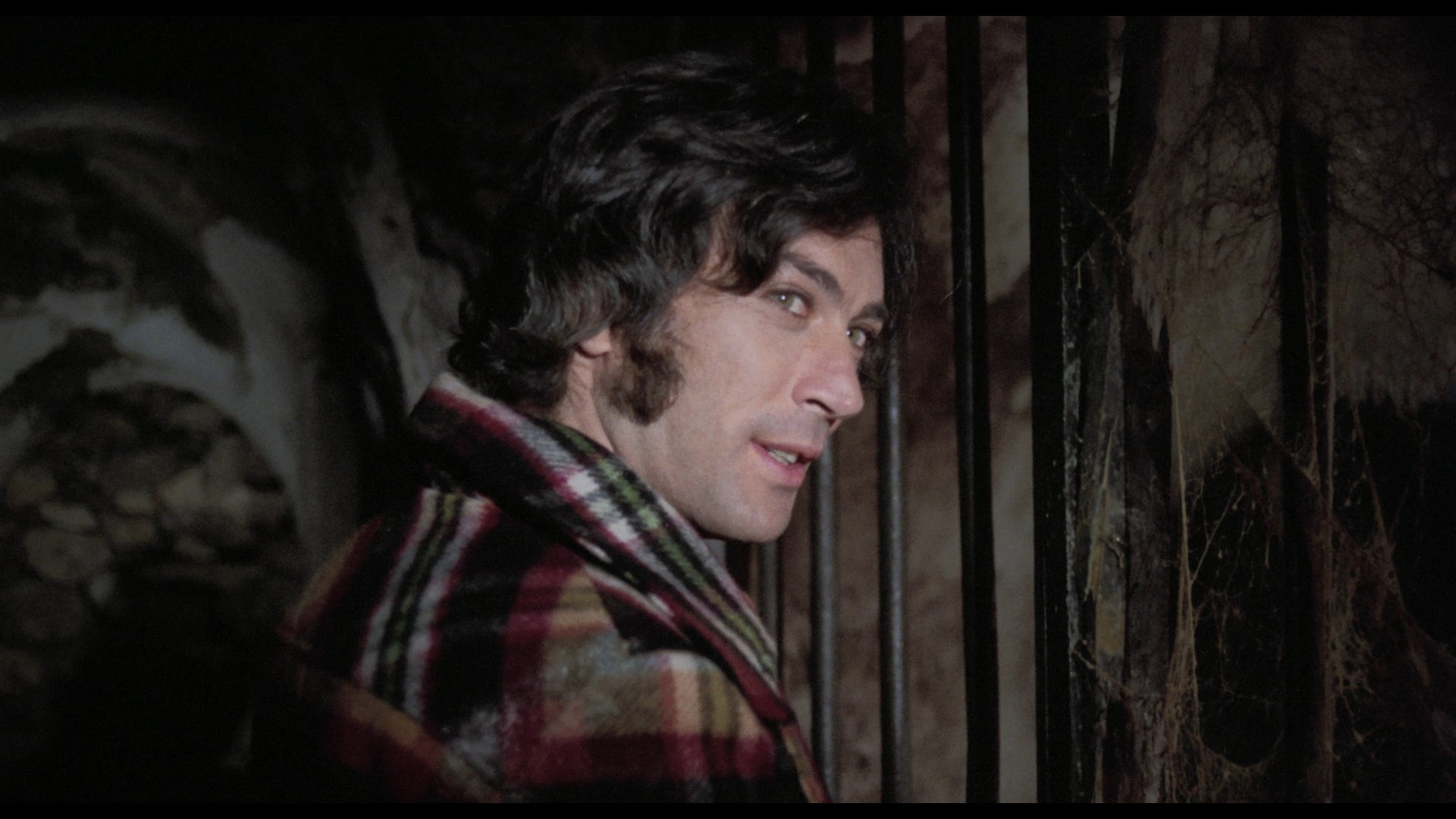 terrific, wild music score by Marcello Giombini, who had mostly been doing
  westerns and peplums before this before then launched into Knife of Ice, Enter the Devil, and a crazy electronic period with The Beast in Space, Anthropophagus, and Erotic Nights of the Living Dead. If you love '70s Euro horror, this one's a real treat if you just switch off the logical part of your brain and enjoy.
In addition to featuring radically improved image quality, the Vinegar Syndrome disc is also a great audio presentation since it gives you the Spanish track (with optional translated English subtitles), the very familiar English dub, and the elusive Italian track for good measure. The Spanish one (which has the best mixing and overall sound quality of the three) is really the way to go since that's the language almost everyone was speaking, and it really shows the film off to its best advantage. (Unfortunately, as with the earlier Blu-ray of My Dear Killer, a lot of the subtitles are timed far too fast to read.) In the one video extra, "Lady of the Mansion" (19m58s), Stewart (credited under her real name, Ida Galli) talks about her previous experience filming in Spain got her cast in the film, her fondness for the story, her work on other gialli, the mechanics of shooting death scenes in different genres, and her memories of the cast and crew including her director, whom she hadn't met before.
Finally we get to the most obscure entry in the set by a long shot, 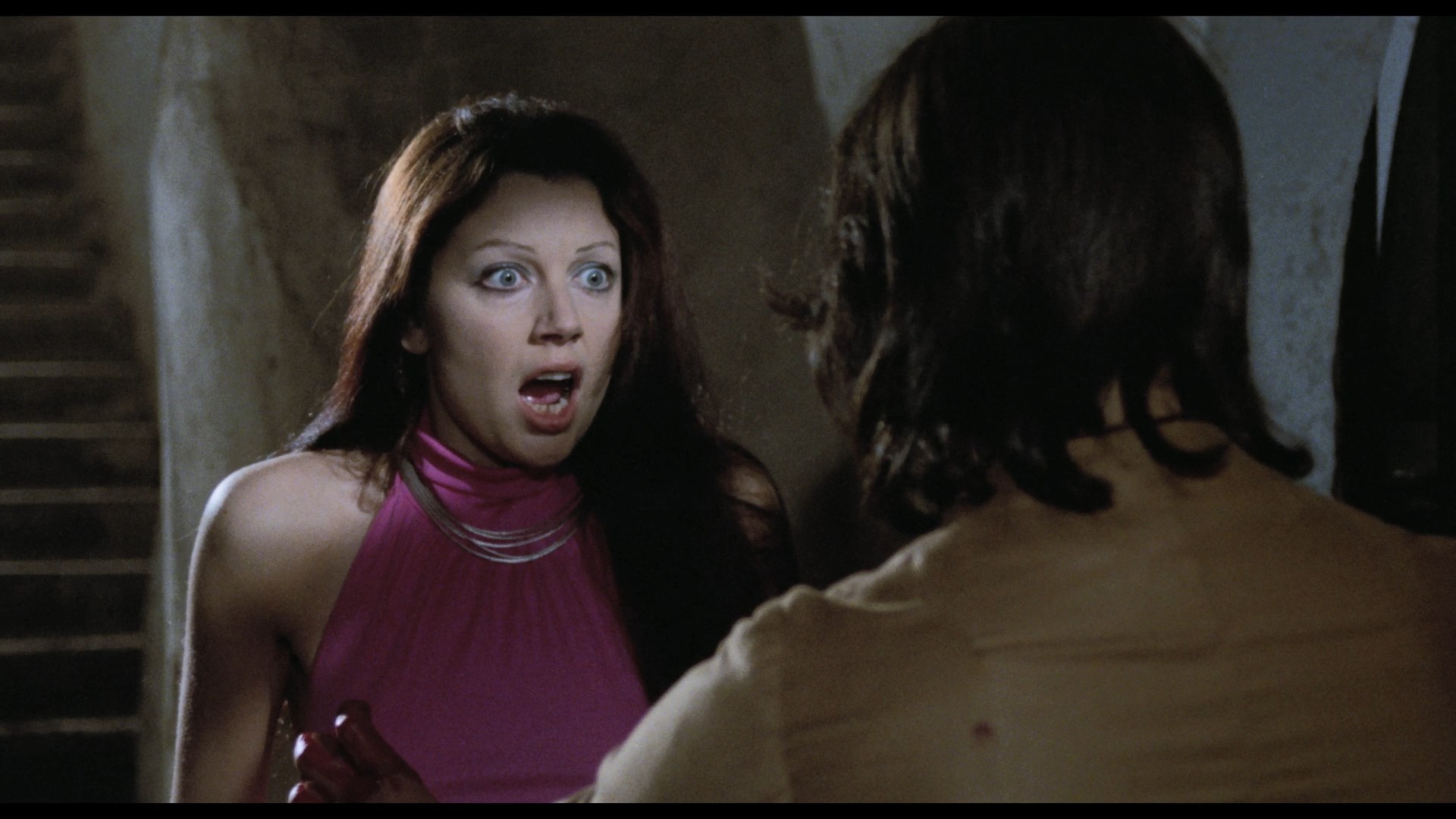 Crazy Desires of a Murderer, originally titled I vizi morbosi di una governante (or "Morbid
  Vices of a Governess"). By the time this was released in 1977 (after evidently sitting on the shelf for a while), the giallo was skidding heavily into sexploitation territory, a trend that would reach its apotheosis with films like The Sister of Ursula, Giallo in Venice, and Play Motel. This one was obviously made a bit earlier in the more genteel warm-up stages, but it still gets its sleazy moments in with plenty of nudity and murderous mayhem.
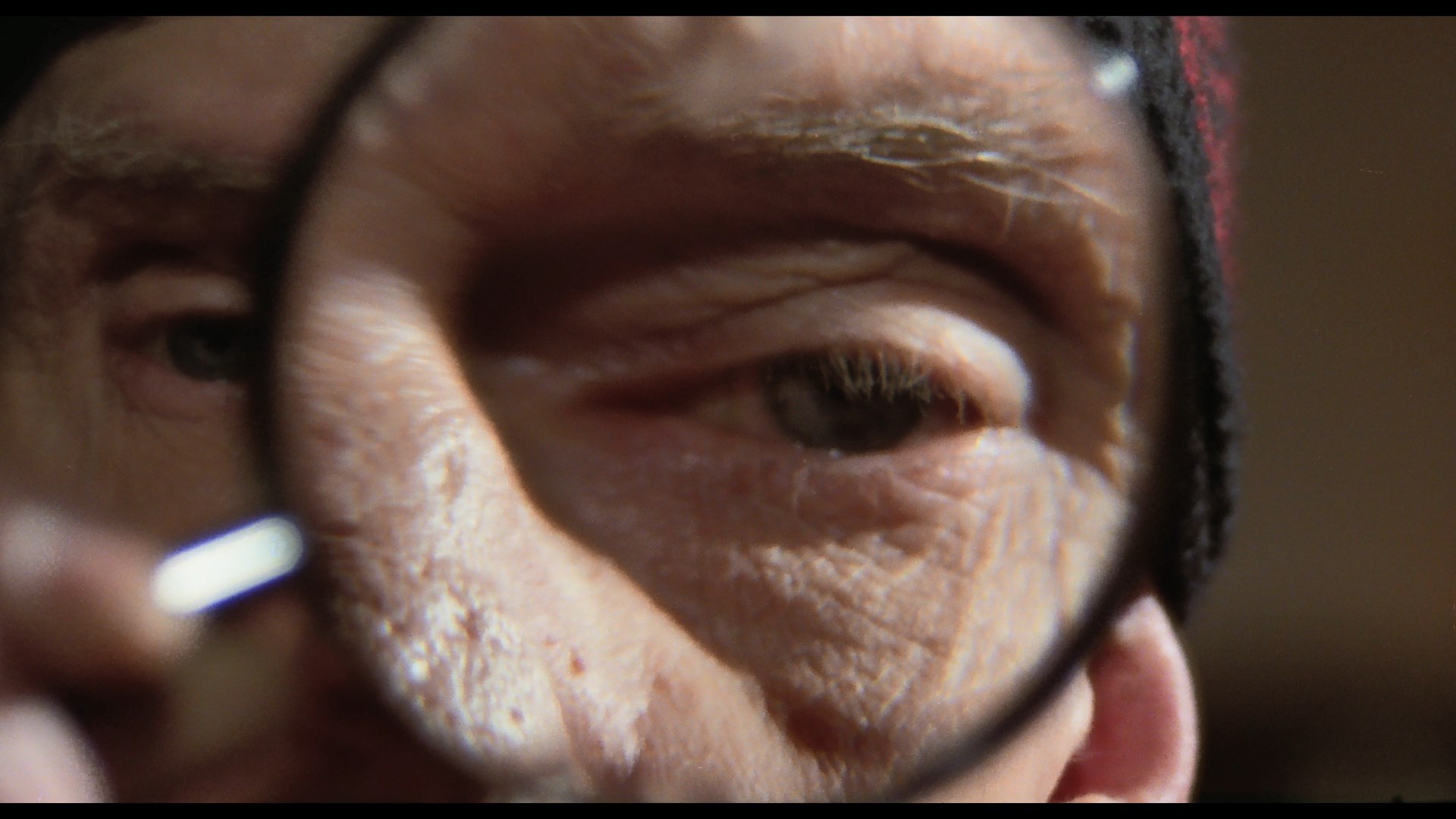
Here we have the saga of bleach blonde Countess Ileana De Chablais (Black Emanuelle's Marchall), who decides to celebrate after a trip abroad in China by inviting a bunch of her decadent acquaintances (who are roped in with things like mob debt and drug smuggling) to spend the weekend at her family castle. In fact, two of the guests, Bobby (Russo) and Pier Luigi (Zattin), are running some smuggling with the vases Ileana's brought back as a gift for her paralyzed dad, but things quickly get more alarming when another arrival, Elsa (Emanuelle's Revenge's Gori), gets stabbed in the chest and has her eyes sliced out during the night by a maniac (with her bloody eyeballs plopped into a plastic baggie for good measure). Enter a police inspector (The Eroticist's Gaipa) to get to the bottom of the 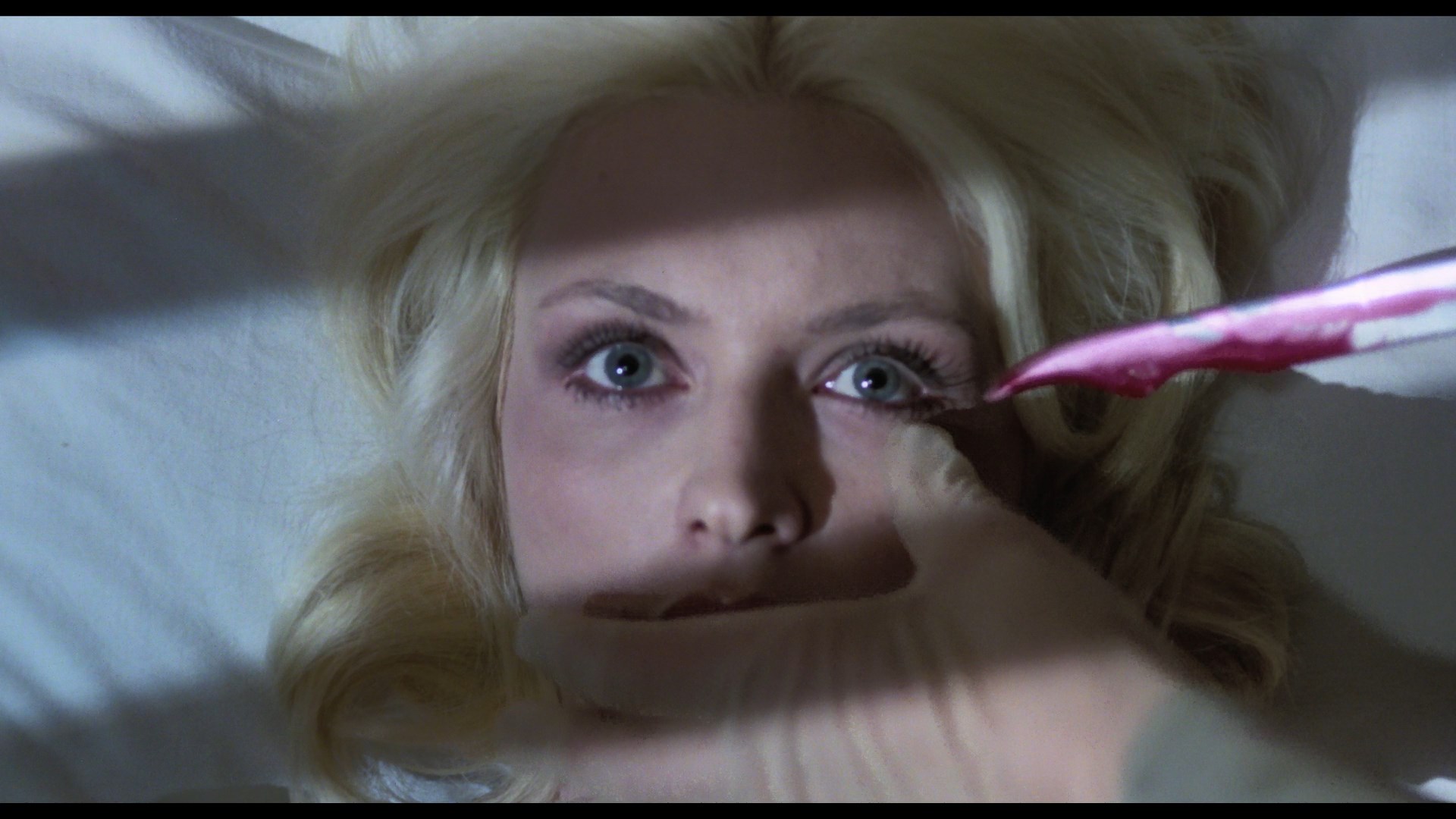 mystery, but not before the castle is soon strewn with more bloody eyeballs and sinister clues involving a
 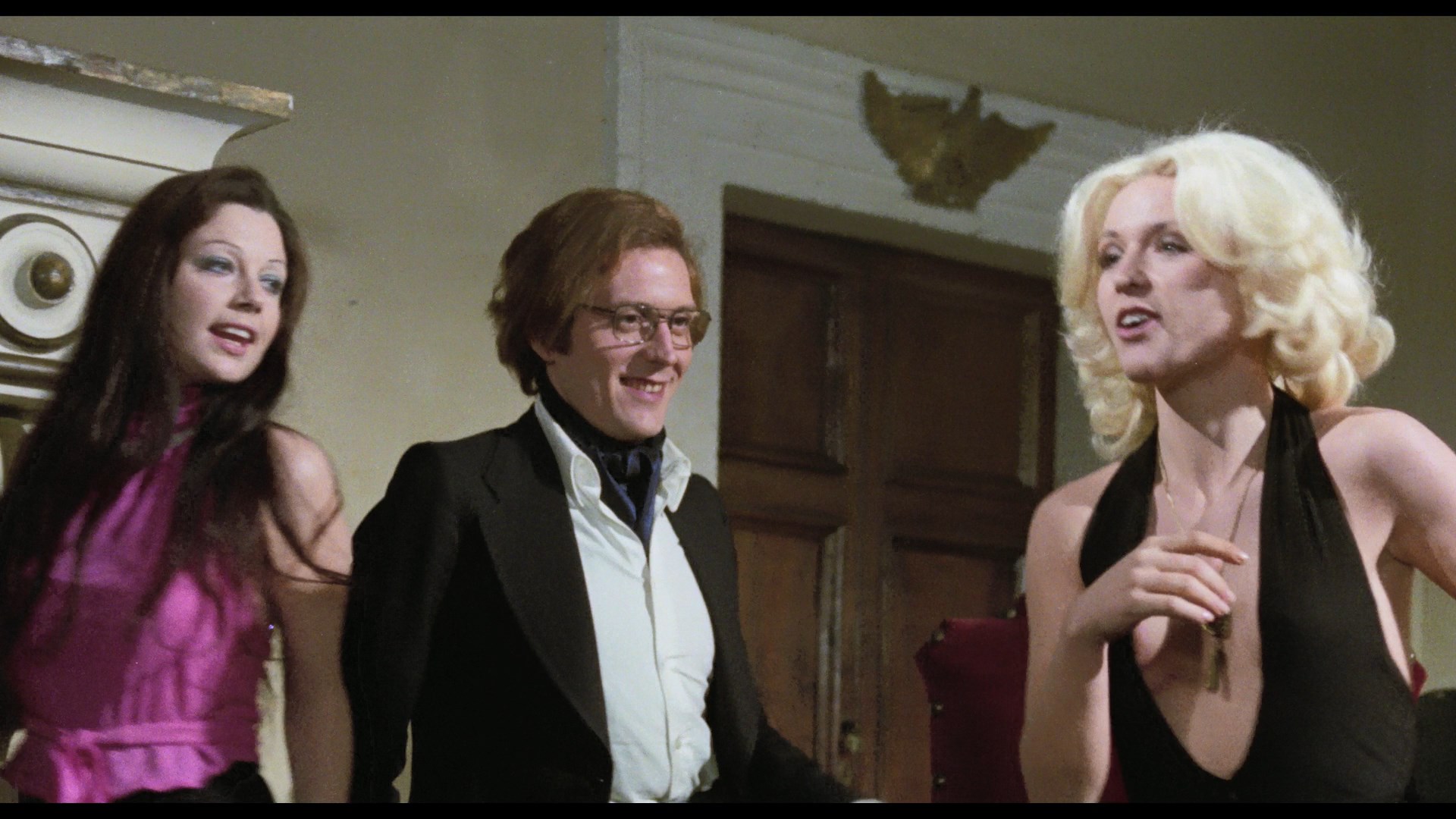 precious jewel, taxidermy, and some shifty servants.
Never dubbed into English for export and mostly overlooked until it was given a censored British VHS release from Redemption, this one grabs you right off the bat with a moody prologue featured a bloody-handed mystery figure prowling through the castle at night before the dreamy music score by the great Piero Piccioni kicks in gear. The requisite sex scenes are diverting enough as well, though one moment at the 33-minute mark involving a candle seems to have been scissored down before release for obvious reasons. None of the actors are required to do anything too stressful here given the cardboard nature of the characters, but you do get a few great lines here like "Can you imagine Nixon and Mao solving their issues through cockfighting?" (Yes. Yes, we can.)
Completely bypassed during the DVD era, Crazy Desires of a Murderer gets a new lease on life courtesy of the very vivid presentation here courtesy of a 4K scan from the camera negative. There's nothing to really fault here at all apart from the occasionally ragged nature of the film itself, and the Italian DTS-HD MA mono track is also in fine shape (with optional English translated subtitles provided). The one extra is "Crazy Memories of an Actor" (15m8s), a video interview with actor Giuseppe Colombo who talks about some clashes with director Filippo Walter Ratti (who had earlier made the interesting Night of the Sexual Demons, a.k.a. Night of the Damned). He also goes into his memories of "sophisticated Parisian" Marchall, his own distraction during the shoot with an eye on producing, and the fretting over finances that ran throughout the whole experience. As with the previous two sets, all three of these films are worth a look for giallo fanatics (albeit for very different reasons) and really shine their brightest thanks to these transfers. Bring on volume four!
AUTOPSY: Vinegar Syndrome (Blu-ray)
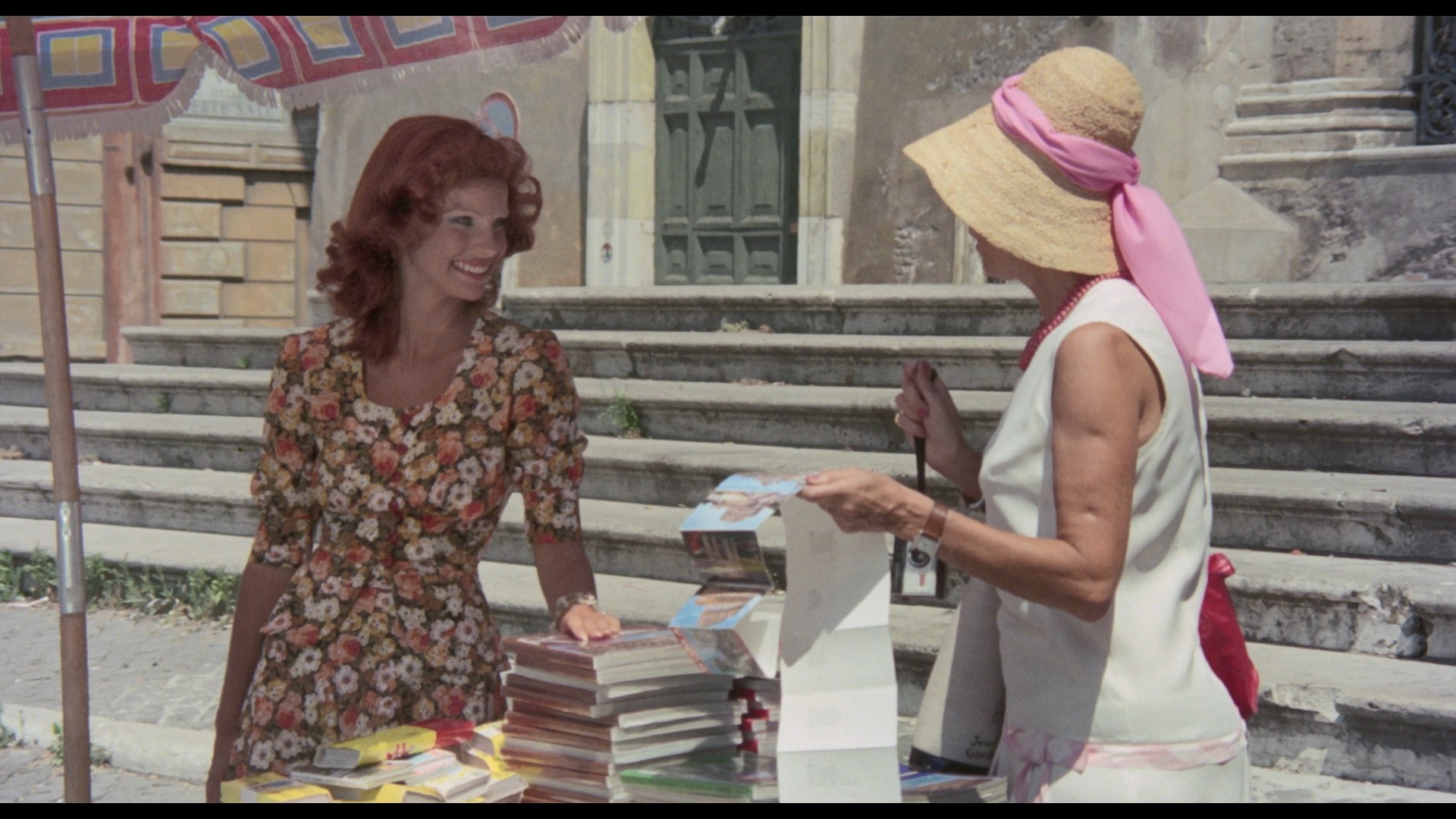
AUTOPSY: Anchor Bay (DVD)