

SAKURAN
Color, 2007, 110 mins. 50 secs.
Directed by Mika Ninagawa
Starring
Anna Tsuchiya, Kippei Shîna, Yoshino Kimura, Hiroki Narimiya, Miho Kanno, Minami
88 Films (Blu-ray) (US/UK R0 HD), TC Entertainment (Blu-ray & DVD) (Japan RA/R1 HD/NTSC), Ica (DVD) (UK R0 PAL) / WS (1.85:1) (16:9)
HELTER SKELTER
Color, 2012,
126 mins. 56 secs.
Directed by Mika Ninagawa
Starring Erika Sawajiri, Nao Omori, Shinobu Terajima, Go Ayano, Kiko Mizuhara
88 Films (Blu-ray) (US/UK R0 HD), Intercontinental (Blu-ray & DVD) (Hong Kong R0 HD/NTSC) / WS (1.85:1) (16:9)
If you want to know what it would feel like to have your optic nerves fried with cotton candy, look no further than the films of pioneering "girlie" photographer-turned-filmmaker 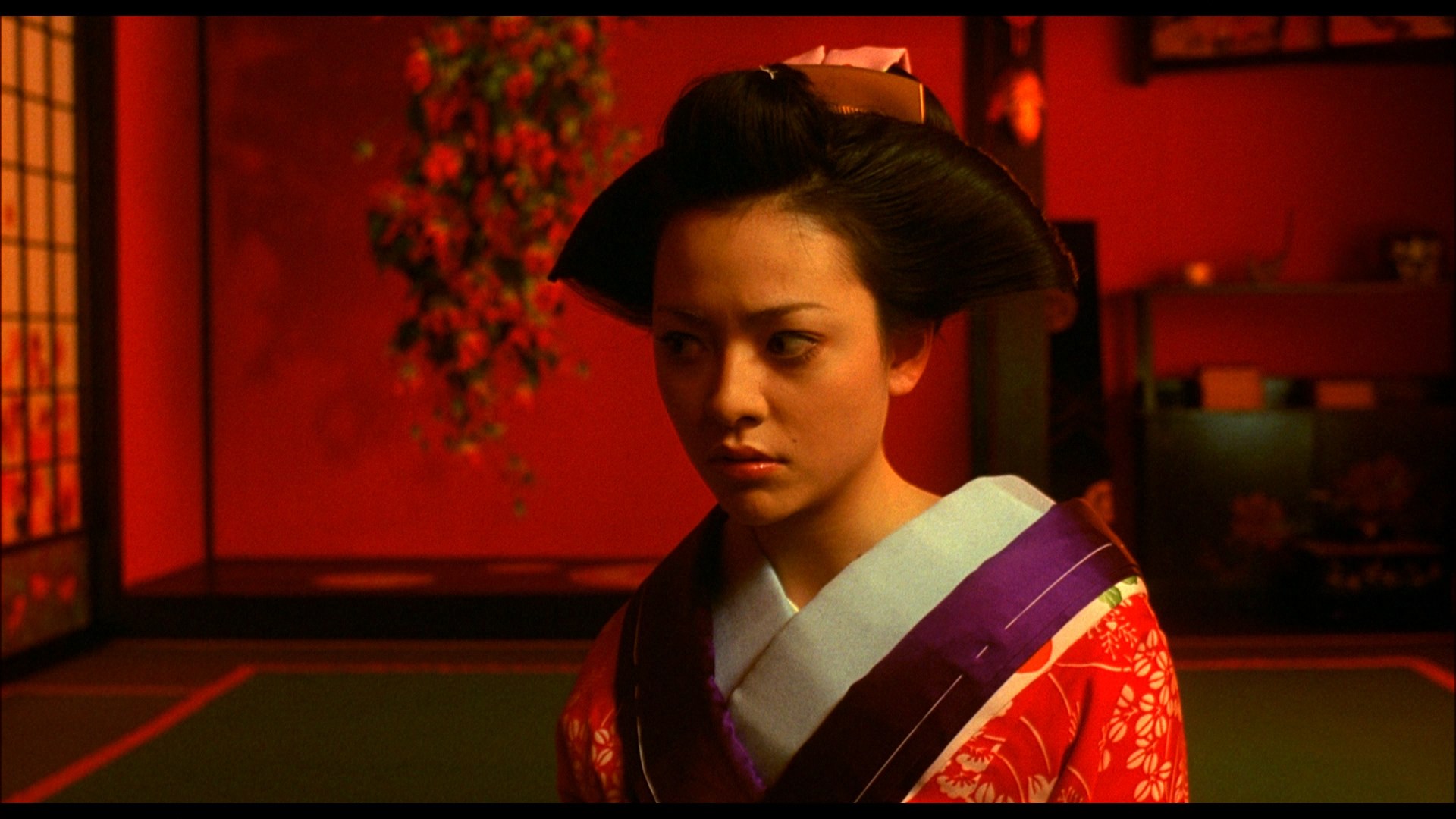 Mika Ninagawa, whose colorful and borderline hallucinatory aesthetic is unlike anyone else's. Whether dipping
 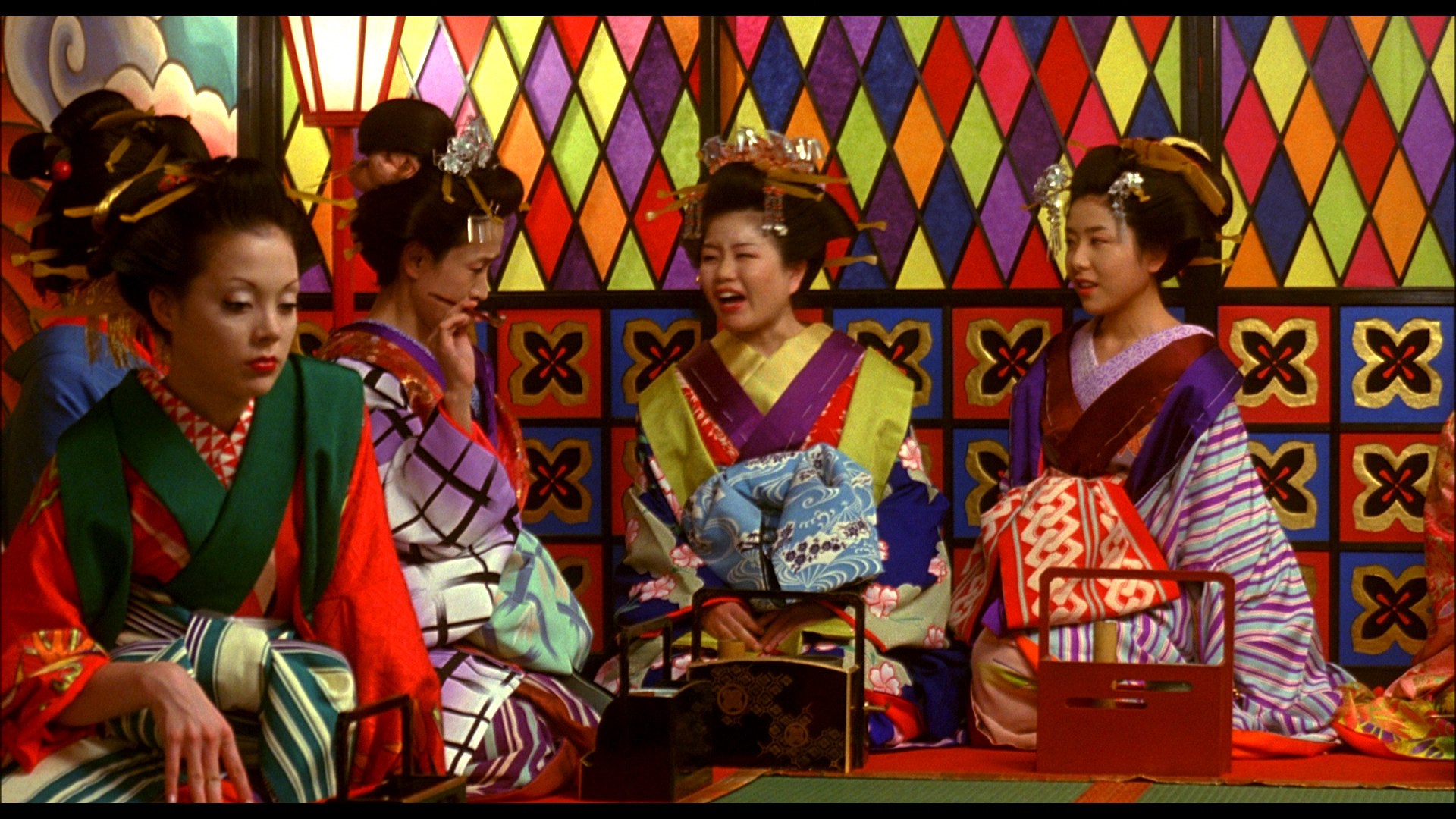 into melodrama, comedy, or horror, her approach brings something special with everything from production design to costumes working in unison to create a deliberately artificial and beguiling world. Two of her key films have been brought to Blu-ray in the U.S. and U.K. from 88 Films, offering a fine gateway to a body of work that will hopefully get further exposure.
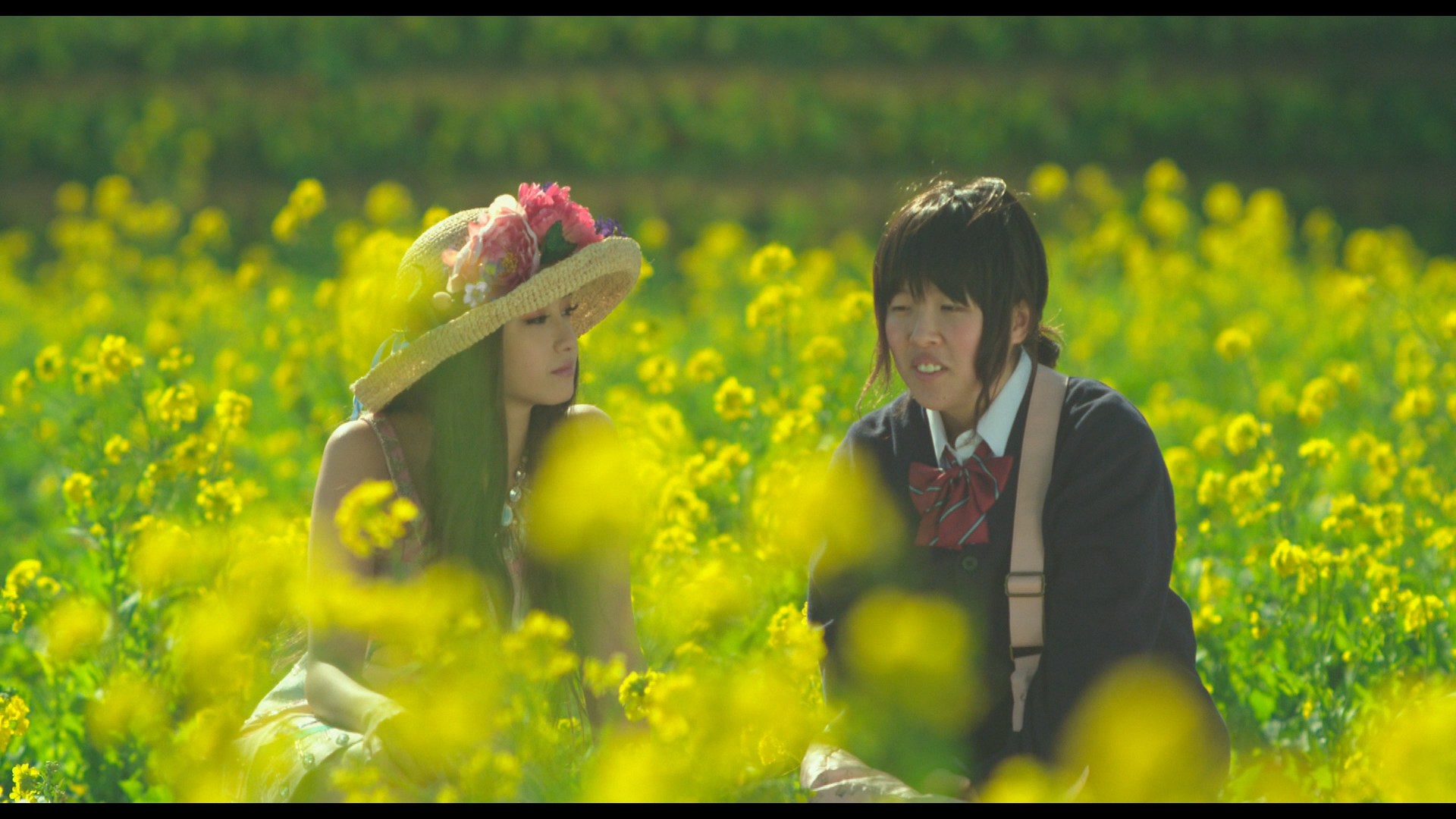
First up is her debut feature, the subversive drama Sakuran based on a well-known manga by Moyoco Anno. Here we follow the delirious experiences of young Kiyoha (singer Anna Tsuchiya, also in the earlier Kamikaze Girls) who's forced into life as a courtesan growing up in a Yoshiwara brothel. Accompanied by frequent pop music interjections from Shiina Ringo (who released a tie-album at the same time) and recurring symbolic imagery of goldfish, Kiyoha climbs the hierarchal ladder within the brothel thanks to her fierce personality-- putting her in the cross-hairs of the older, threatened Takao (Kimura) and duplicitous colleague Wakagiku (Minami). One possible way out could be a respected young merchant, Sojiro (Narimiya), if she truly wants to change her life.
In addition 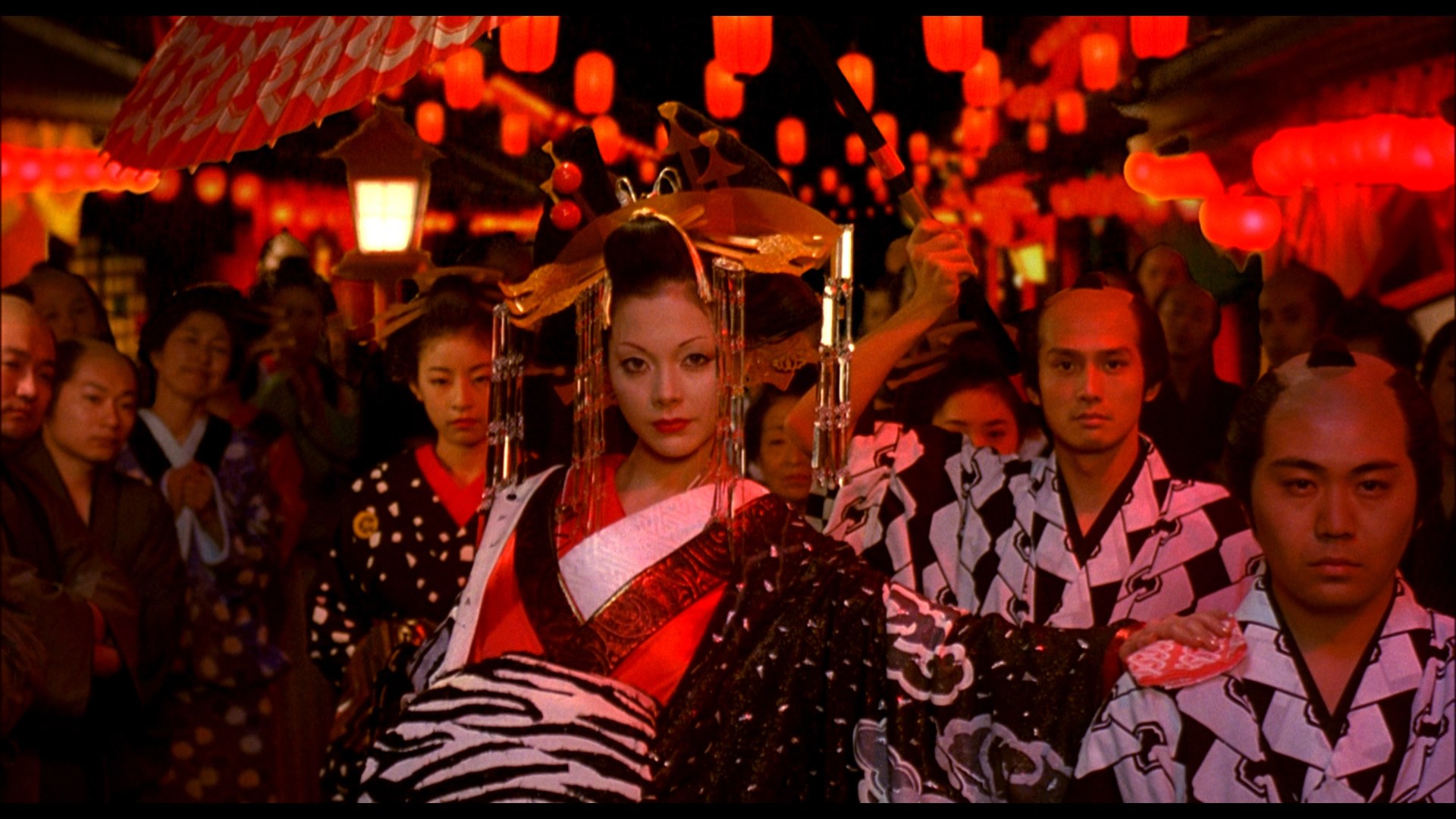 to Ninagawa's flamboyant and highly accomplished style, the real star here is the magnetic Tsuchiya who makes something truly special out of a character quite different from the usual steely prostitute character we've seen for
 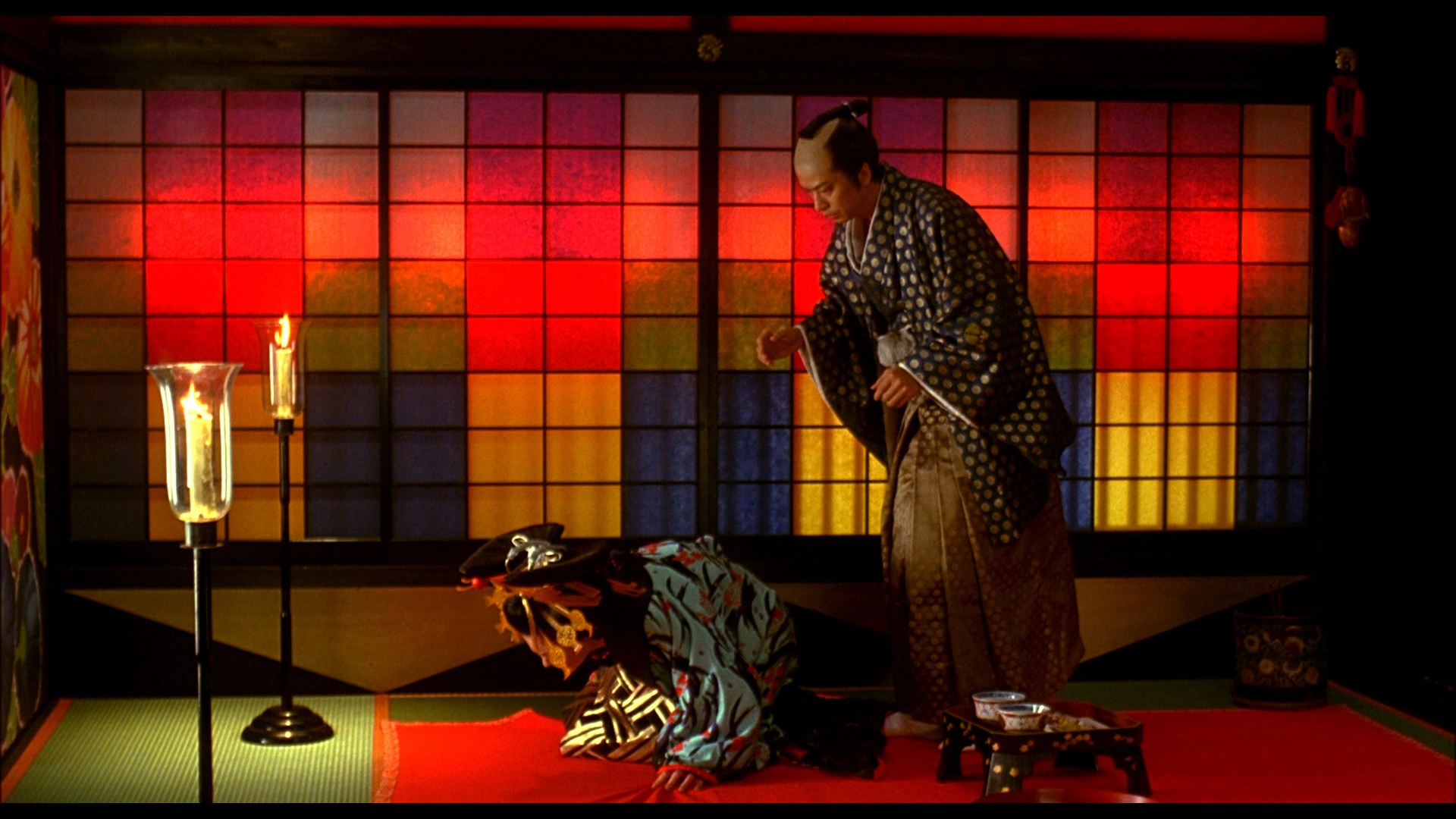 centuries. Appropriately, her character feels quite modern which lines up with the catchy soundtrack (another big strong point here) and helps make each scene a bit surprising. Even a simple house meeting or parade turns into an extravagant feast here, and you'll probably be rewinding or freeze framing a few times to figure out how some of the shots were put together with so many elements at play.
Like most of Ninagawa's films, this one has been tricky to see outside of Japanese home video for a long time unless you were quick enough to jump on an occasional chance like the British DVD years ago. The 88 Films release (likely from the same source used for the Japanese Blu-ray) looks stunning with reds and oranges that will knock you out on any sized screen, and both the original 2.0 and 5.1 DTS-HD MA audio options sound excellent with the music in particular getting some nice channel separation. Optional English subtitles are provided, and a new audio commentary by Josh Slater-Williams covers all the bases including the manga source material, the local reaction to Memoirs of a Geisha, the release of the sort-of soundtrack album, and much more. There are some lengthy silent gaps here though (especially in the second half) so prepare to fast forward a bit. A new filmed introduction by Amber T. (22m58s) is an enthusiastic appraisal of Ninagawa's work, cross-media aesthetic, and common elements and themes of her films, followed by a 2m2s stills gallery and six trailers. The disc also includes an insert with an essay 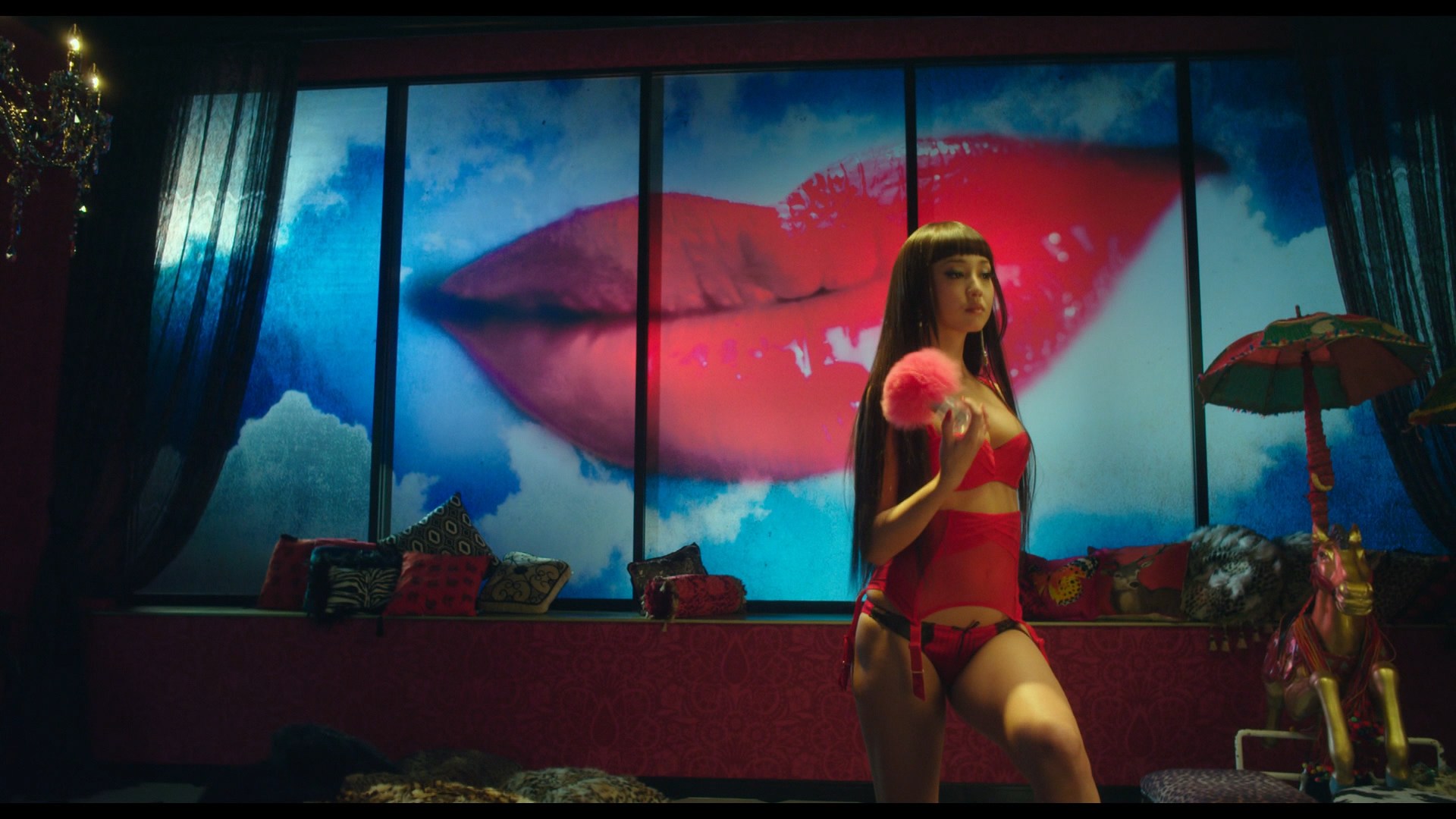 by Jasper
  Sharp going further into the importance of the manga and its cinematic translation.
Then we jump to the present day with 2012's Helter Skelter, also adapted from a manga (by Kyoko Okazaki) and delving more or less into the horror genre filtered through pop culture idol worship a la The Substance and Death Becomes Her (and quite possibly serving as an influence on the final stretch of Smile 2). Having no connection to Charles Manson or The Beatles, the story charts the disturbing experiences of popular model Lilico (Sawajiri, also a singer and model) who has had extensive procedures throughout her face and body to attain what is perceived as physical perfection. However, the shiny and deferential world built up around starts to crack as her own body and surroundings supported by celebrity, luxury, and indulgence give in, leaving her open to younger, hungry competitors as well as the press and an unpredictable fan base.
Subtle it definitely is not, but Helter Skelter isn't even remotely trying to be with its intense, garish color scheme and soundtrack approximating the feeling of being in a nonstop whirlwind of beauty-defined life in the public eye. Sawajiri is quite good here and utterly convincing in her character's march towards a particularly memorable press conference climax, while Ninagawa shows even more confidence here with a dizzying array of camera lenses and locations keeping your senses busy at all times. It never overloads you though, and while the idea of undermining unrealistic beauty standards is a well-worn one by now, you've never seen it done quite like this.
Even more 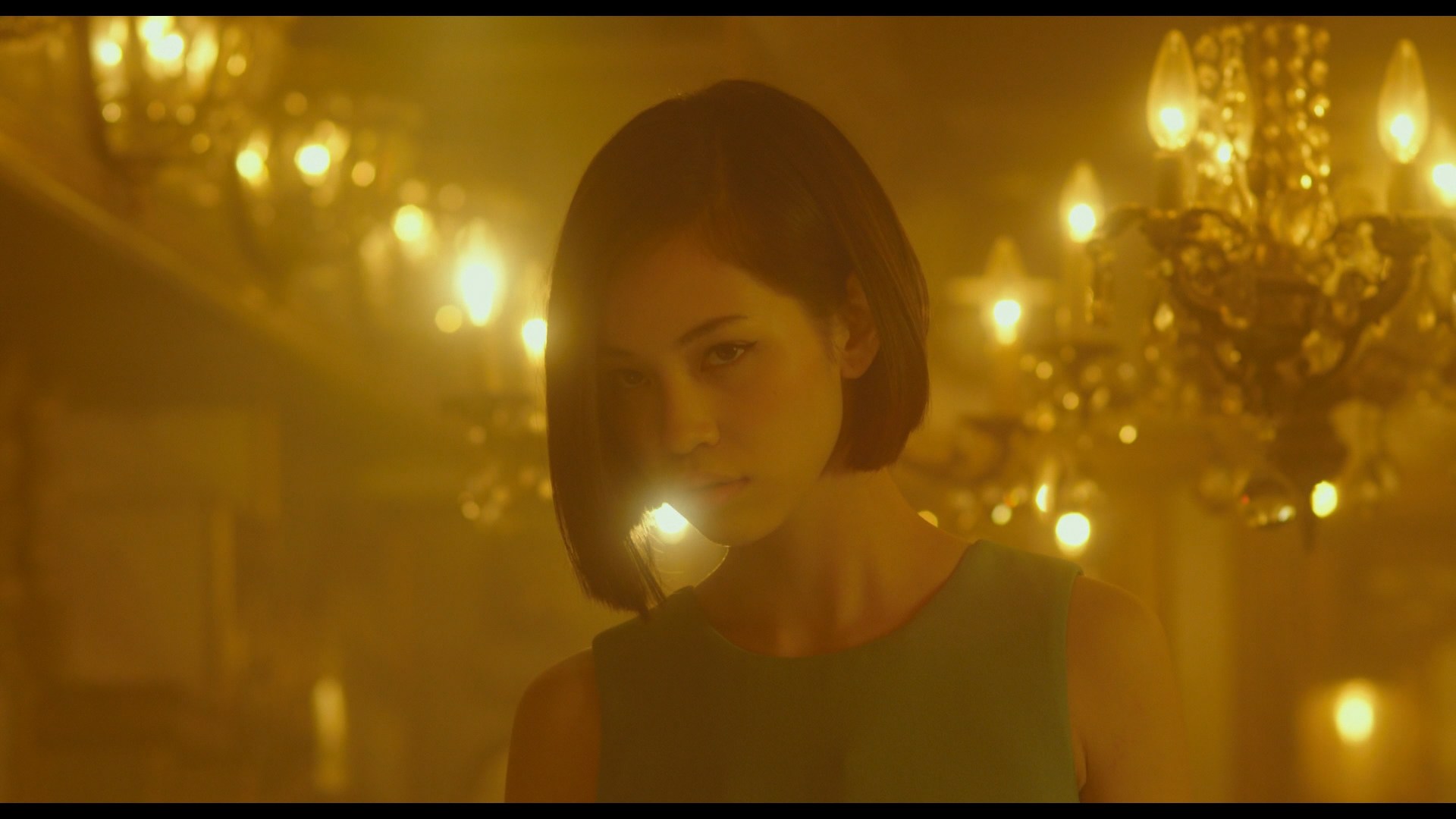 challenging to see for several years than its companion release, Helter Skelter looks magnificent on the 88 Films Blu-ray release with sharp
 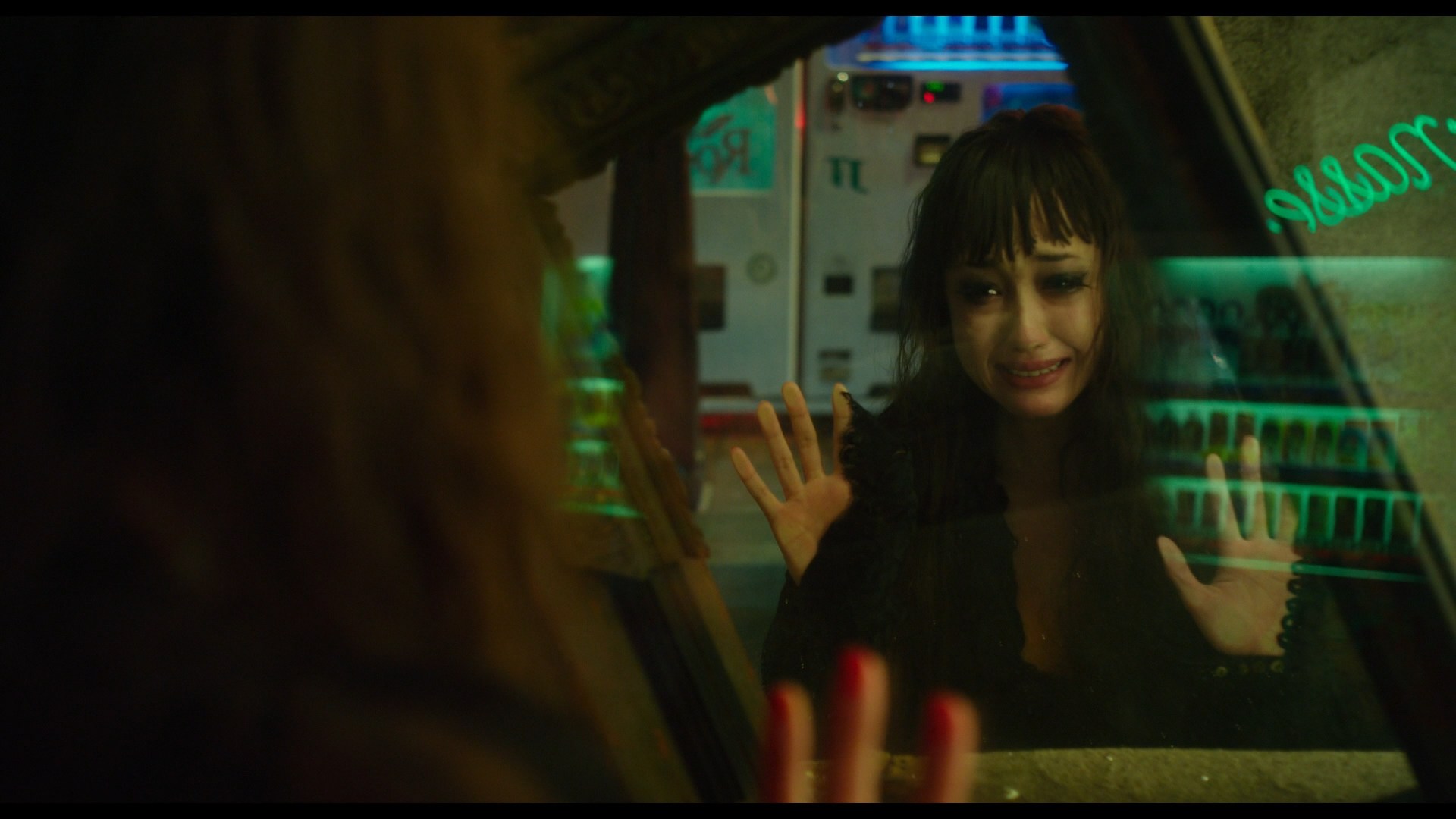 detail and a crazy spectrum of colors throughout. Again the DTS-HD MA Japanese 5.1 and 2.0 stereo options both sound excellent with the former going nuts a few times with the separation effects, and the optional English subtitles are solid. Amber T. returns here, this time doing audio commentary duties along with a similarly enamored Tori Potenza to energetically analyze the film's treatment of the pitfalls of beauty standards, the translation from manga to screen, the connections to Ninagawa's other work including her photography, and the cultural mores at work here that a Japanese audience could appreciate. Also included are EPK-style interviews with Sawajiri (5m50s) and Ninagawa (6m22s), some raw behind-the-scenes footage (12m3s), the Japanese premiere stage greeting with the cast and crew (10m49s), an opening day stage greeting (15m40s) with most of the same gang, a Taipei Film Festival intro by the director (5m19s), some sample rehearsal footage (12m54s), a 2m5s stills gallery, and a teaser and trailer, plus an insert with a new essay by Violet Burns further studying the transition from manga to candy-colored cinematic freak out.
Reviewed on March 12, 2026
