

 American animation whose impact has largely been forgotten today, Fritz the Cat was a bombshell in
 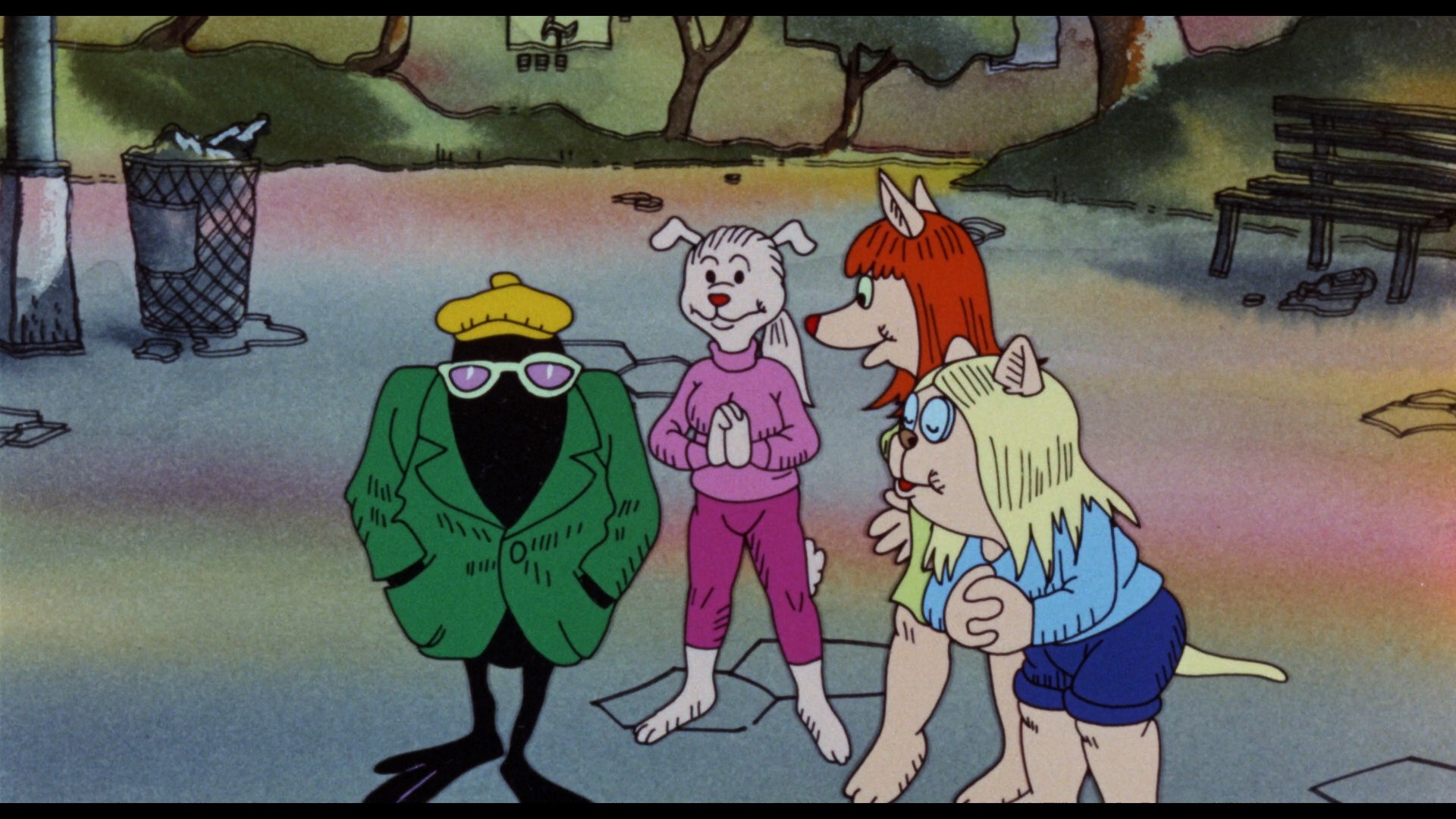 1972 delivering an X-rated animated look at the turbulent politics and social attitudes of the era ranging from racial and religious tensions to Vietnam. Featuring a funky score and an episodic storyline perfect for turned-on college students, the film put young animator Ralph Bakshi on the map and paved the way for his later films including Heavy Traffic, Wizards, and Fire and Ice. That X rating turned out to be a big commercial selling point for exploitation distributor Cinemation, though it raised expectations for something a lot more sexually explicit than expected. (Even with the occasional drawn animal genitalia and urination, you can see far more explicit material now on South Park and Family Guy.) Combined with a lot of topical satire, it was a major hit despite the vocal misgivings of R. Crumb, creator of the original comic strip, who was so irritated with the direction the film ultimately took that he killed off the character for good in the print version. That didn't stop producer Steve Krantz from turning out a sequel two years later without Bakshi or Crumb's involvement, released by AIP with an R rating and almost universally regarded as vastly inferior. As the last chapter of the Fritz
  pop culture saga it's still noteworthy though, showing the jaded and dissatisfied flipside of the mid-'70s party mindset that morph into
 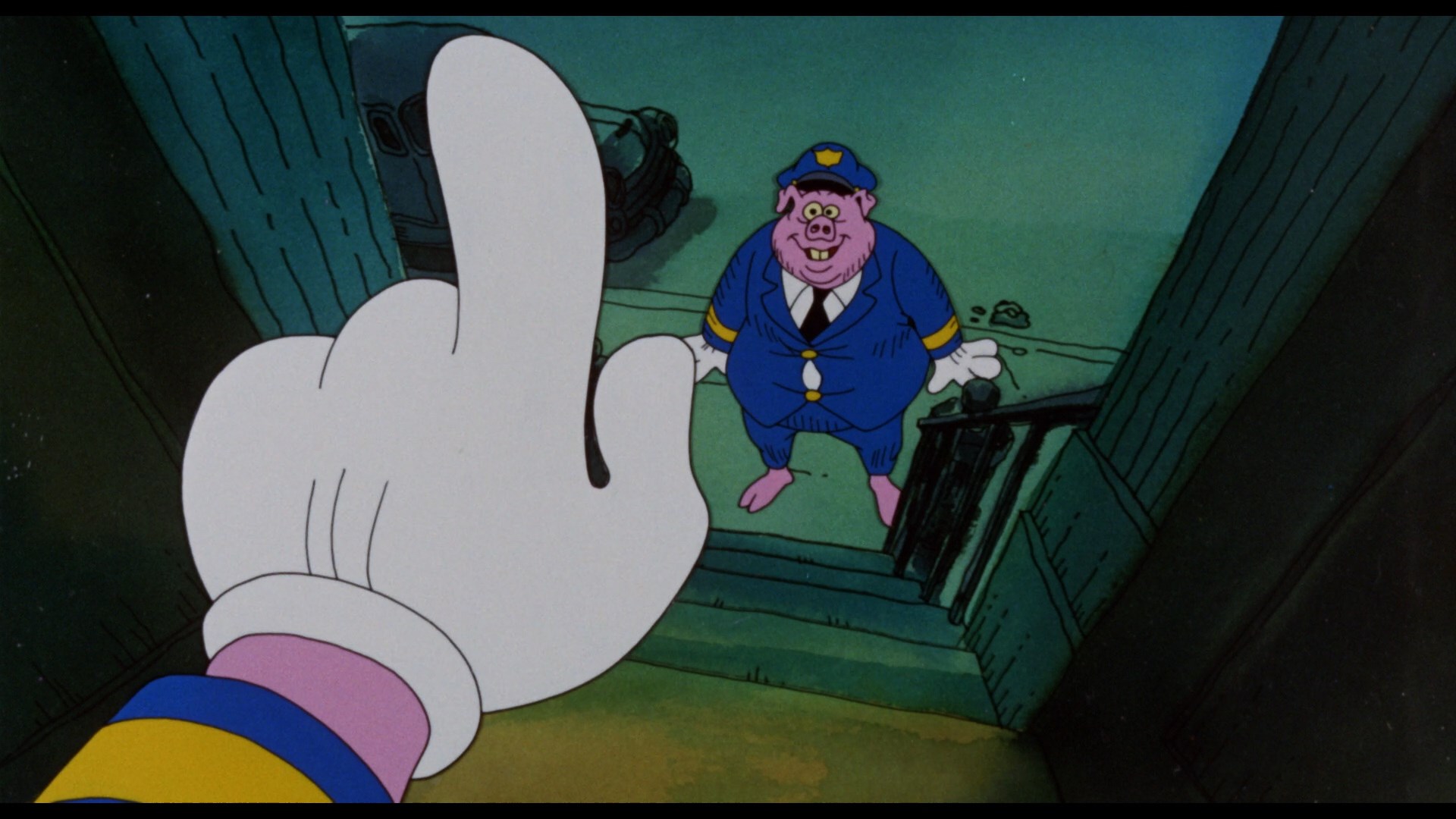 something very different by the following decade.
 by
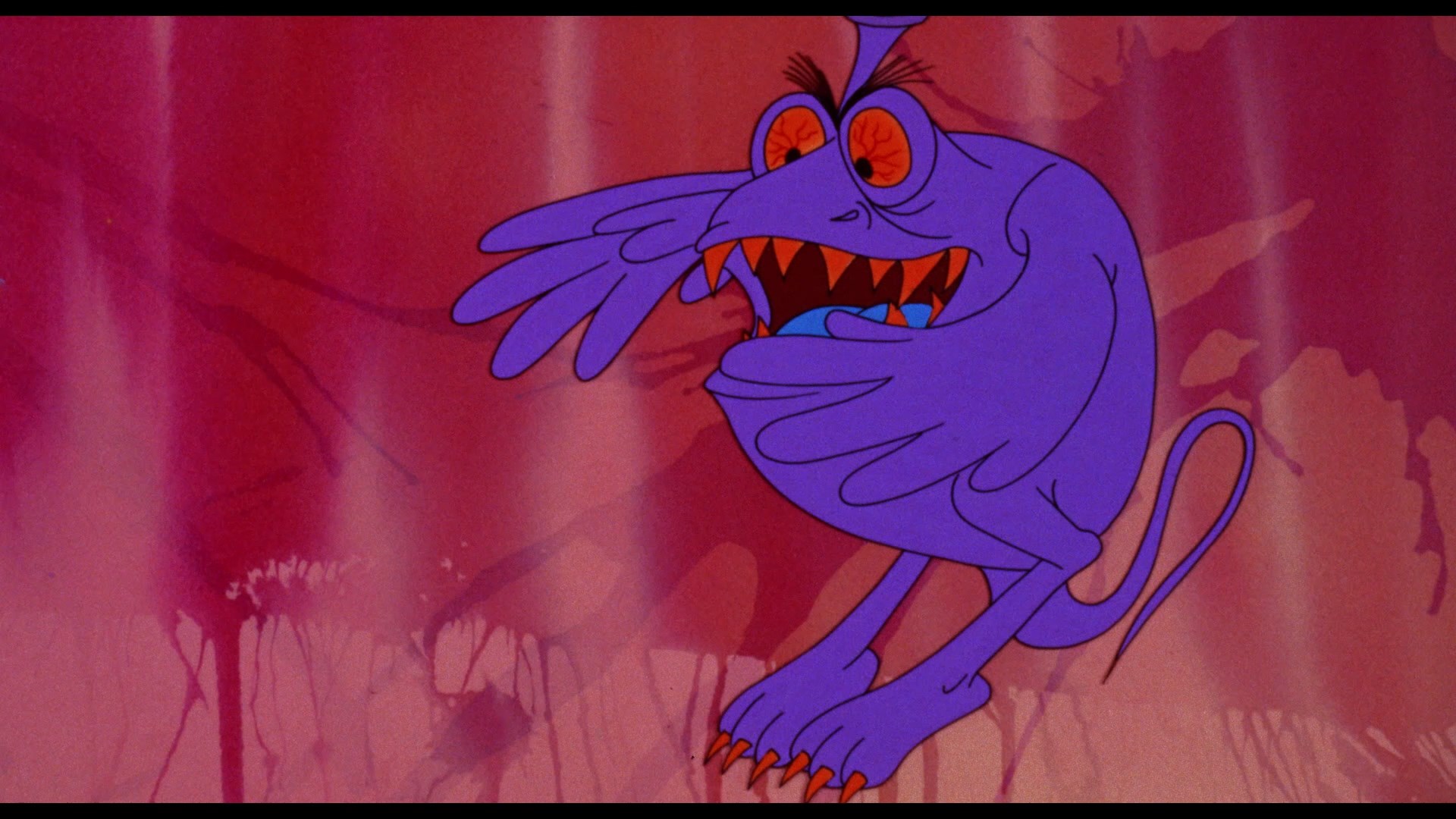
by 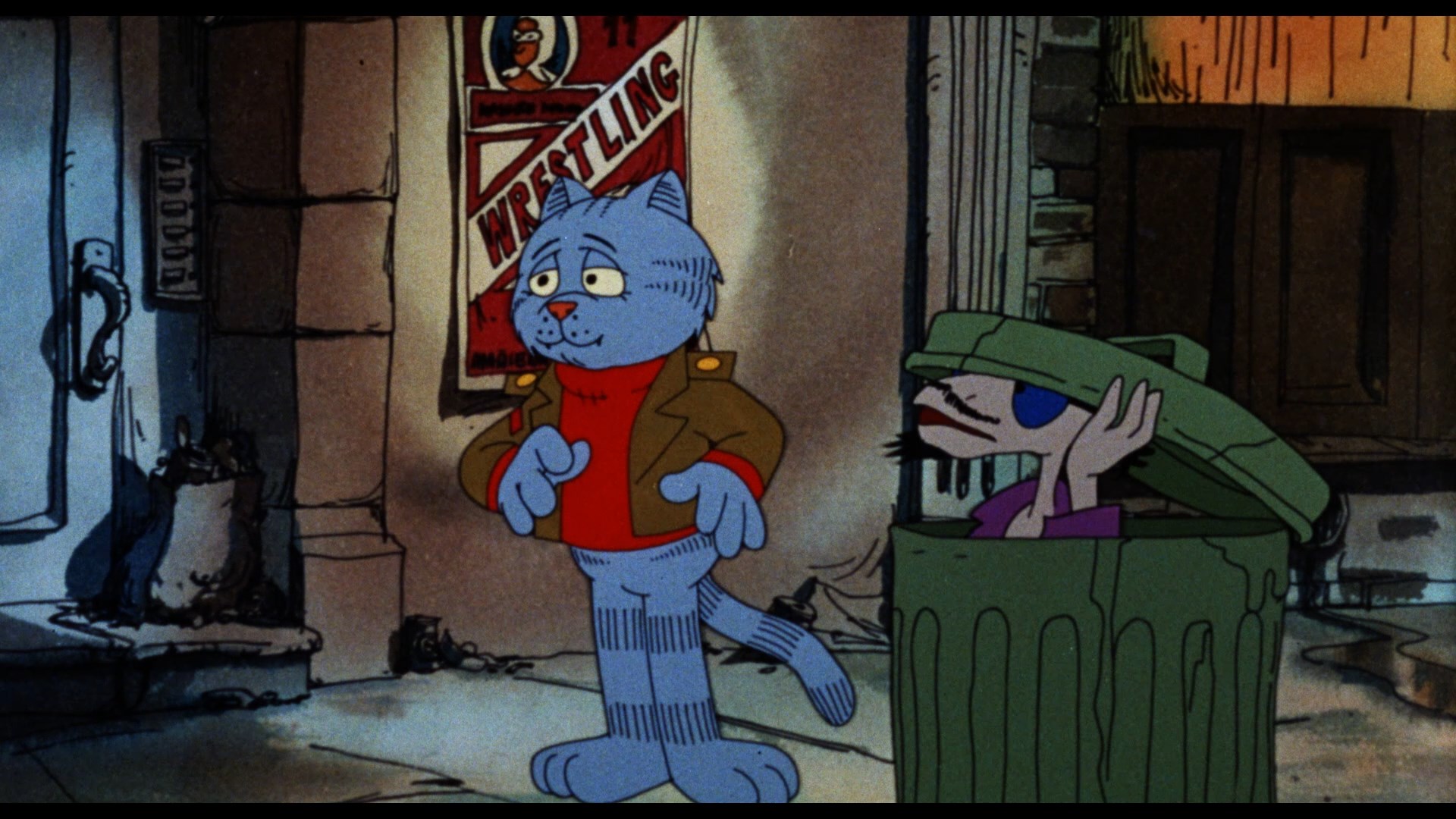 his wife and mostly ignoring his newborn child. In a doobie-soaked haze, he zones out to experience nine other alternate lives including a bizarre encounter with Hitler in Nazi Germany, a violent attempted seduction in a Puerto Rican neighborhood, a dicey trip as an astronaut to Mars, an alternate universe in a segregated and seceded version of New Jersey, and even brushes with God and Satan. More of an anthology film than a straight narrative, this one brings back Hinnant as Fritz and mostly tries to mimic Bakshi's style. However, the absence of the prior film's guiding hand is keenly felt with the constant provocations landing flatter here by comparison (and the style sometimes looks more like DePatie-Freleng). It does have its virtues though including some fun visual flourishes and a really infectious soundtrack by Tom Scott & The L.A. Express that should've gotten an LP release at the time.
  get downgraded to an R now without any issues (especially with later animated films like Sausage Party in the
 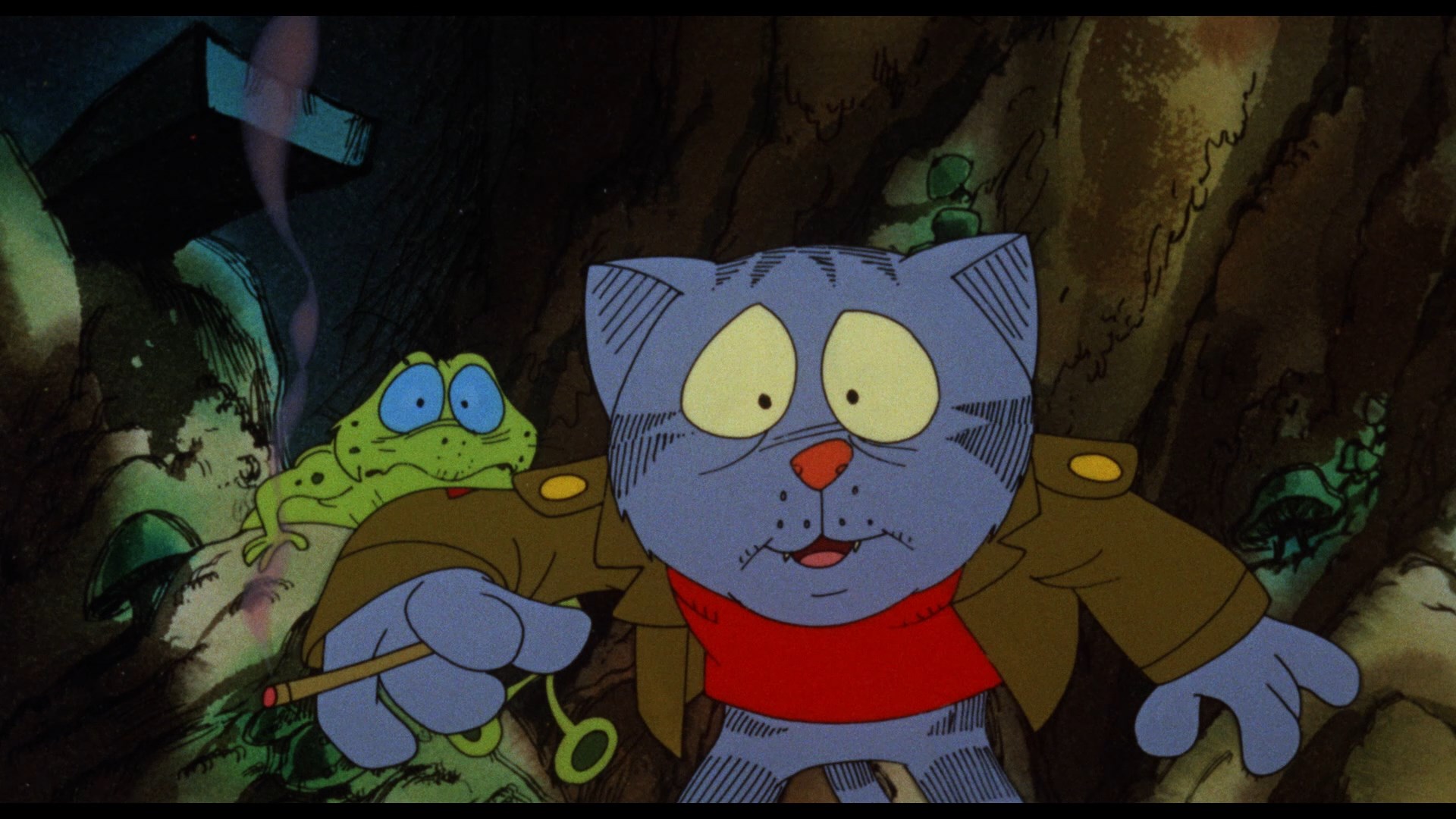 mix). Scorpion Releasing followed suit in 2021 by releasing the films as separate Blu-rays distributed via Kino Lorber, both featuring colorful and very satisfying HD scans that keep the original blazing color schemes intact. The original handmade quirks of the animation have been left alone here (including visible dust and fluctuating hairs in the first film), keeping the organic look we've known over the years. The DTS-HD MA English 2.0 mono tracks for both sound fine with no issues, and optional English SDH subtitles are provided. Fritz the Cat also comes with a thorough and informative audio commentary by comics legend Stephen R. Bissette and Mike Dobbs who cover the history of the X rating, the backgrounds of Crumb, Bakshi, and Krantz, the state of theatrical cartoons at the time, the touchy portrayals of race and gender here that are even more incendiary today, the Fritz character as "the ultimate white middle-class poser," and the nuts and bolts of the animation process itself. Also included on that disc are a radio spot, trailers for both Fritz films, and bonus ones for Aloha, Bobby and Rose, Trackdown, Who'll Stop the Rain, September 30, 1955, and King of the Mountain. The Blu-ray for Nine Lives also has trailers for both Fritz films along with ones for Blazing Magnum, A Small Town in Texas, and The Little Girl Who Lives Down the Lane.