Color, 2016, 94 mins. 10 secs.
Directed by Ruggero Deodato
Starring Rebecca Di Maio, Roger Garth, Ernesto Mahieux, Carlotta Morelli, Gabriele Rossi, Noemi Smorra, Edward Williams
Severin Films (Blu-ray) (US R0 HD), Wicked Vision, Donau Film (Blu-ray & DVD) (Germany RB/R2 HD/PAL) / WS (1.78:1) (16:9)
As of now, the tiny cinematic subgenre of 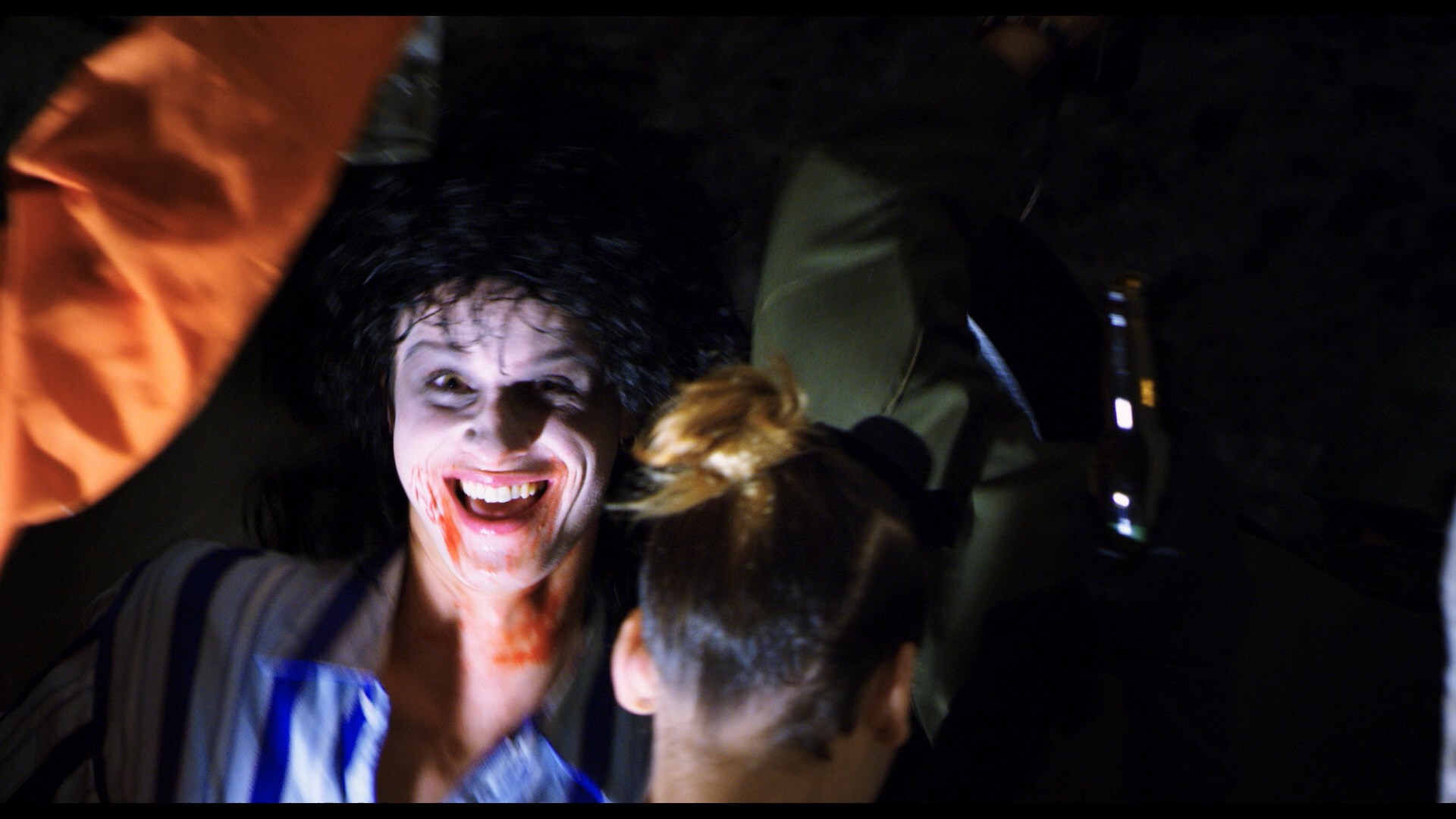 Amanda Knoxploitation consists of very few films; most recently,
  we had the controversial 2021 Matt Damon vehicle Stillwater, which was famously badmouthed by the barely fictionalized Knox herself on many occasions. Before that came Cannibal Holocaust director Ruggero Deodato's first film after a two-decades-plus hiatus, Ballad in Blood, about which Knox apparently had no comment. Jam packed with nudity, sleaze, and violence, it's a nasty little chamber piece (mostly revolving around four characters, making it a sibling of sorts to Deodato's House on the Edge of the Park complete with a nice little musical tip of the hat) that certainly fits its creator's worldview even if the harsh digital look is very different from his other work.
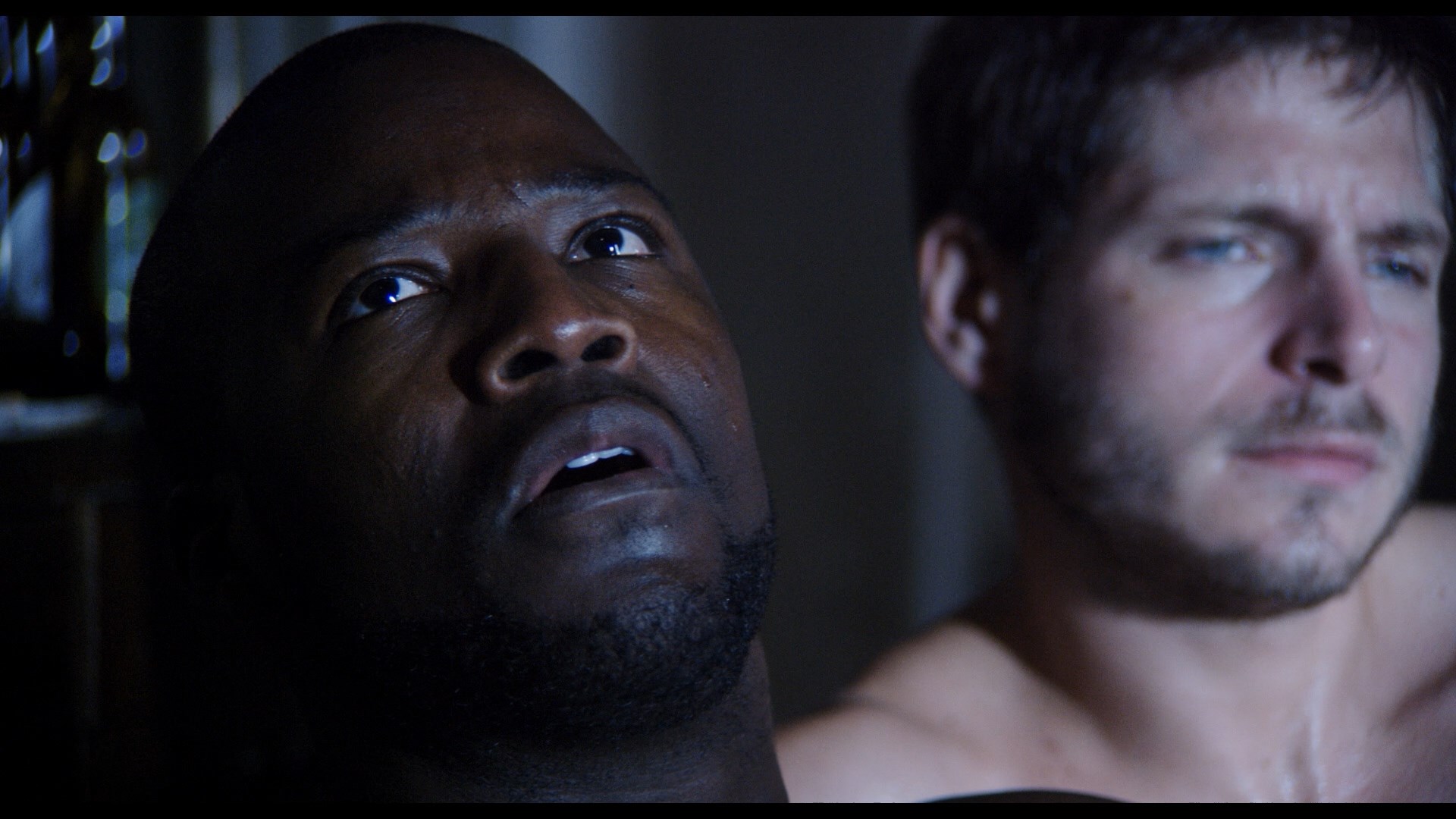
After a sex and substance-fueled night of underground partying on Halloween, the cold light of morning proves to be unusually brutal when foul-tempered Duke (Williams) impales his foot on a broken beer bottle while taking a leak, and Jacopo (Rossi) pukes all over Czech student Lenka (Morelli) while they're having sex. However, that's nothing compared to what happens after they realize that their fourth party attendee, 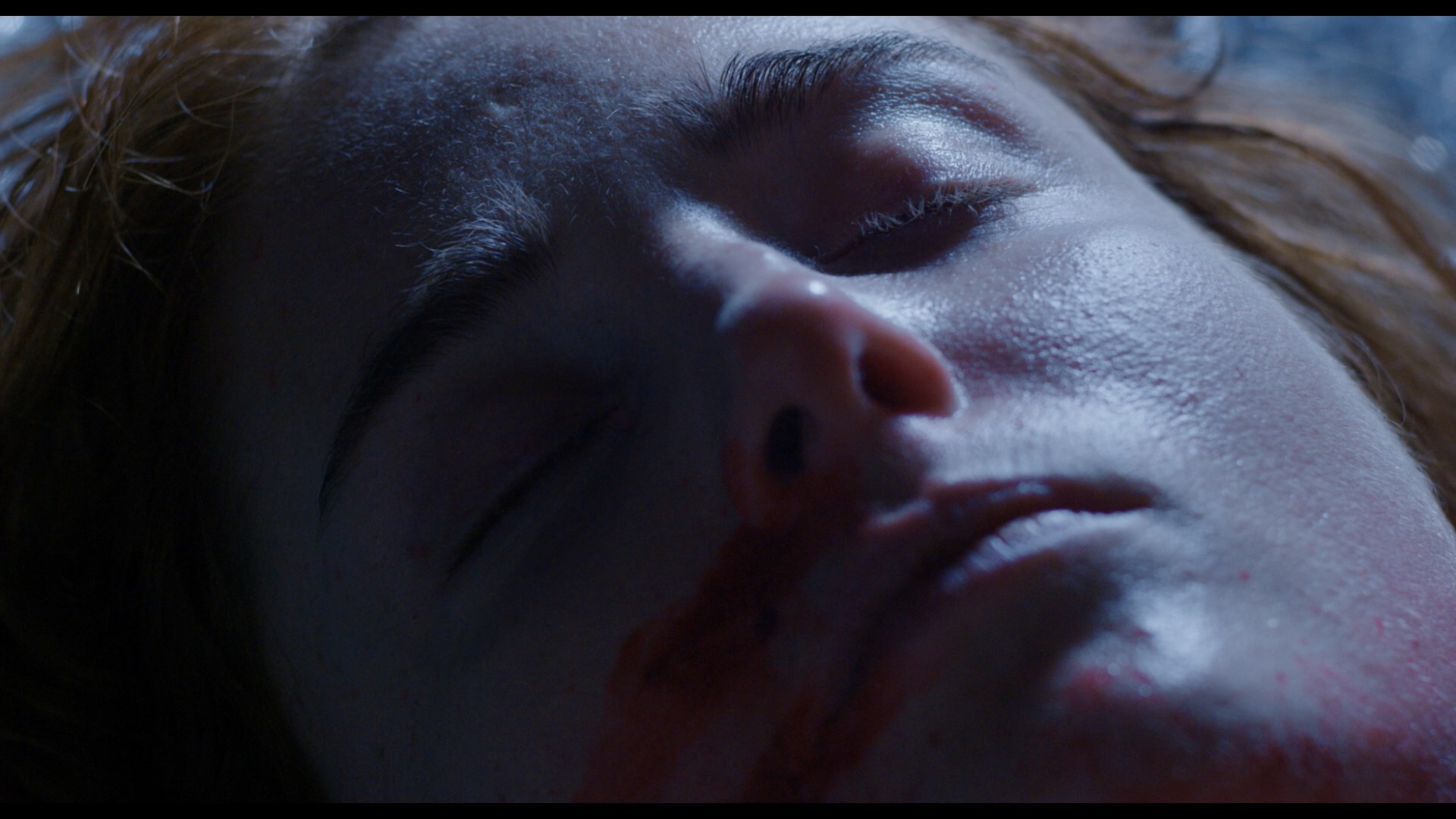 Elizabeth (Smorra), is sprawled out dead, naked, and bloody on the apartment skylight. After getting her body down with considerable difficulty, they realize nobody can seem
 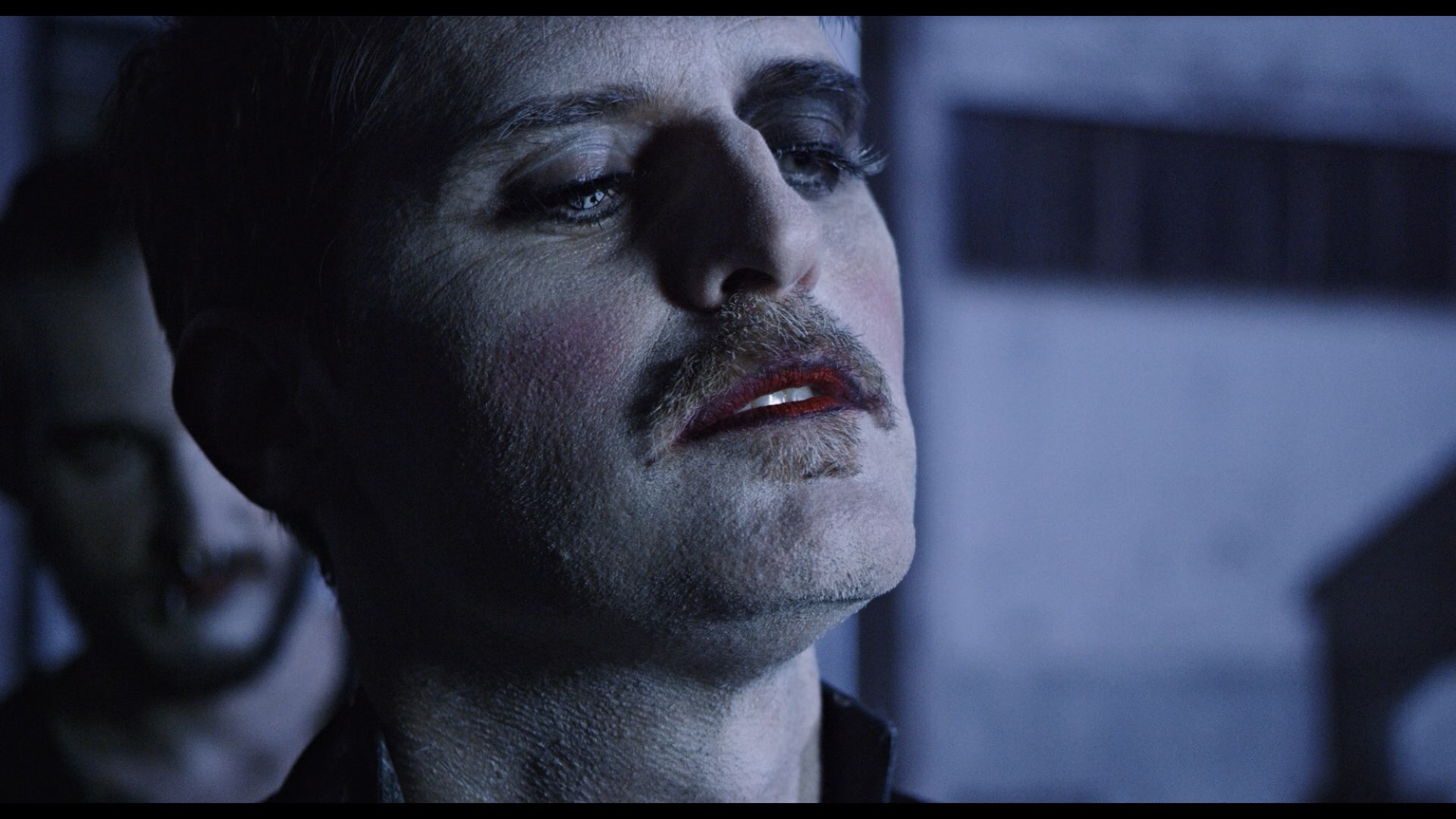 to remember what happened the night before -- and one of them logically has to be the killer. As it turns out, the prim and proper Elizabeth recorded everything with her selfie stick, and in flashbacks we gradually see how the whole sordid affair came about... and nobody's quite sure what to do about the corpse.
Despite its status as Deodato's big comeback film, the one was completely ignored in Italy upon its completion and only got decent distribution initially in Germany and Japan. The absence of any sympathetic characters is a big stumbling block for many viewers (it's basically a cross between Shallow Grave and Donkey Punch), as is the highly... um, erratic acting on display, with Williams in particular apparently directed to yell his lines as loudly as possible. On the other hand, it's certainly trashy with lots of sex, drugs, and splashy gore effects; thankfully Deodato resisted the urge to slather this one in tons of CGI, so it still has that practical edge to it. As mentioned above, the very artificial, digital look of the film is a trait shared by a lot of Italian productions these days; how much you're willing to let that slide will go a long way to dictating your overall response to the film. That said, the aesthetic does work like a charm during the fantastic opening sequence, a startling concoction that sets an awfully high bar for the rest of the film to clear. One of the best aspects here is the techno-flavored score 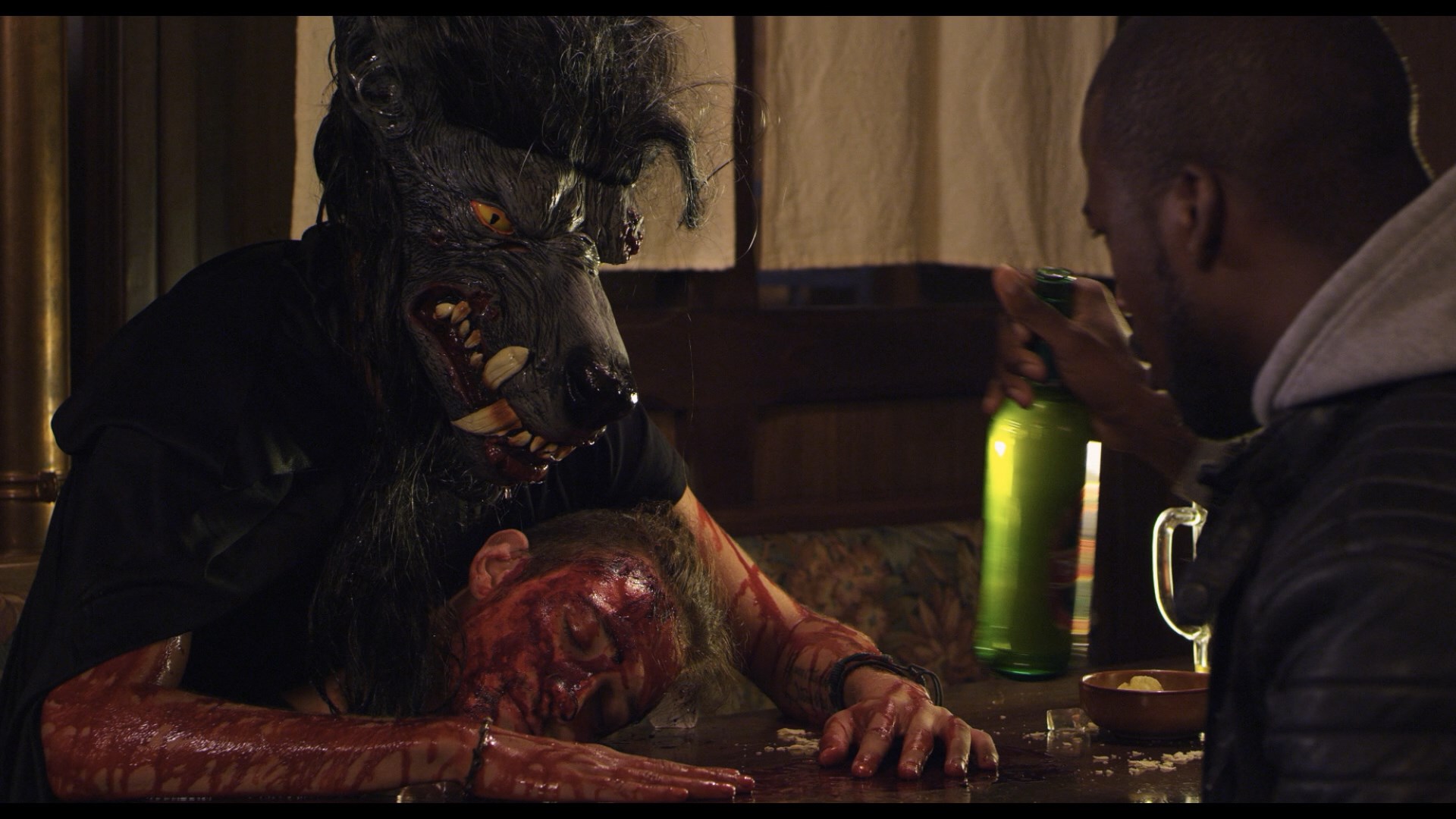 by Claudio Simonetti,
 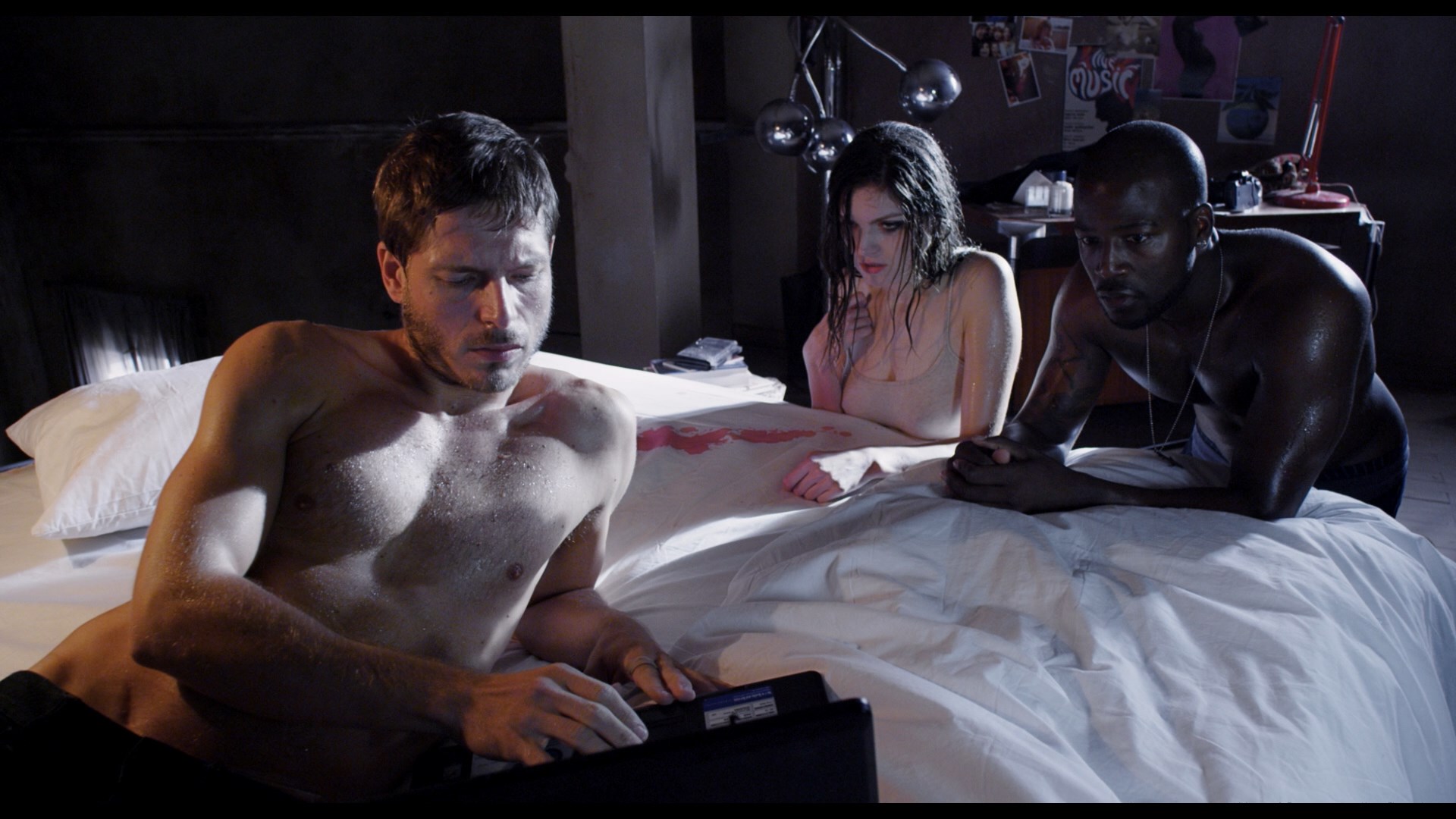 his fifth collaboration with Deodato following films like Body Count, Cut and Run, and The Washing Machine. Unfortunately, it seems to be just as jinxed as those without a soundtrack release of any kind in sight, despite an end credits note to the contrary; as of now, the only collaboration of theirs to make it out of the gate is Dial: Help, believe it or not.
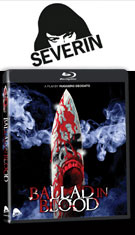
Anyone who wanted to see this film in the wake of its release had to jump through a few hoops to find it, either through less than legal means or eventually tracking down one of the multiple German releases (first through three limited mediabook Blu-ray and DVDs from Wicked Vision, then a budget general release separately in both formats from Donau Film). At least the film was shot with live English dialogue (for better or worse), so that's never been an issue for English-speaking viewers. In 2021, Severin Films gave the film its North American debut in any format with a special edition Blu-ray that looks as pristine as you'd expect given the film's vintage. The DTS-HD MA English 2.0 stereo track is also faultless in terms of presentation with some nice surround activity, and it comes with optional English SDH subtitles. The extras kick off with "The Day After" (29m22s) with Deodato conversing about his true crime influences, the neorealist influence of 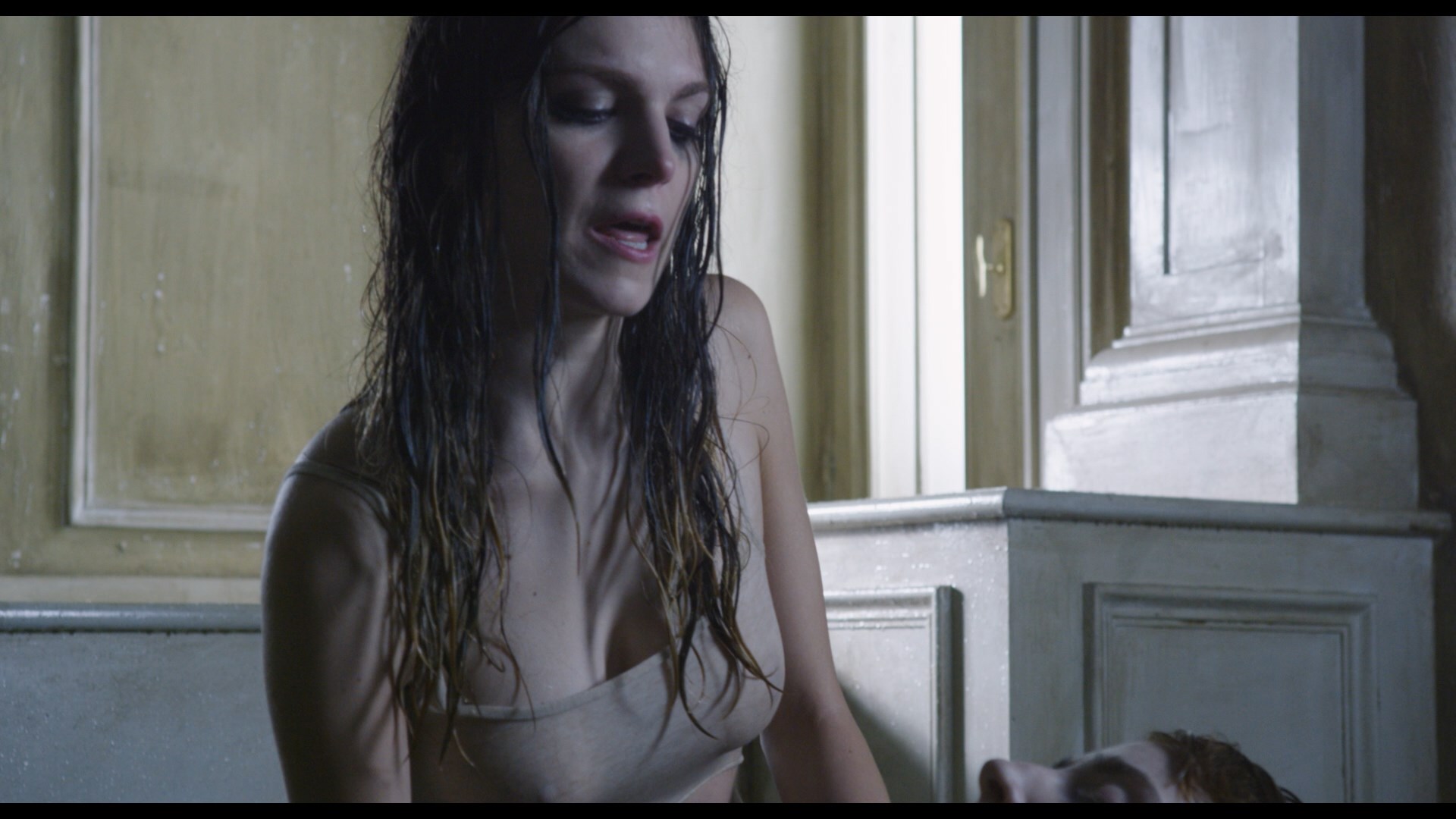 Roberto Rossellini, his decision to approach the
 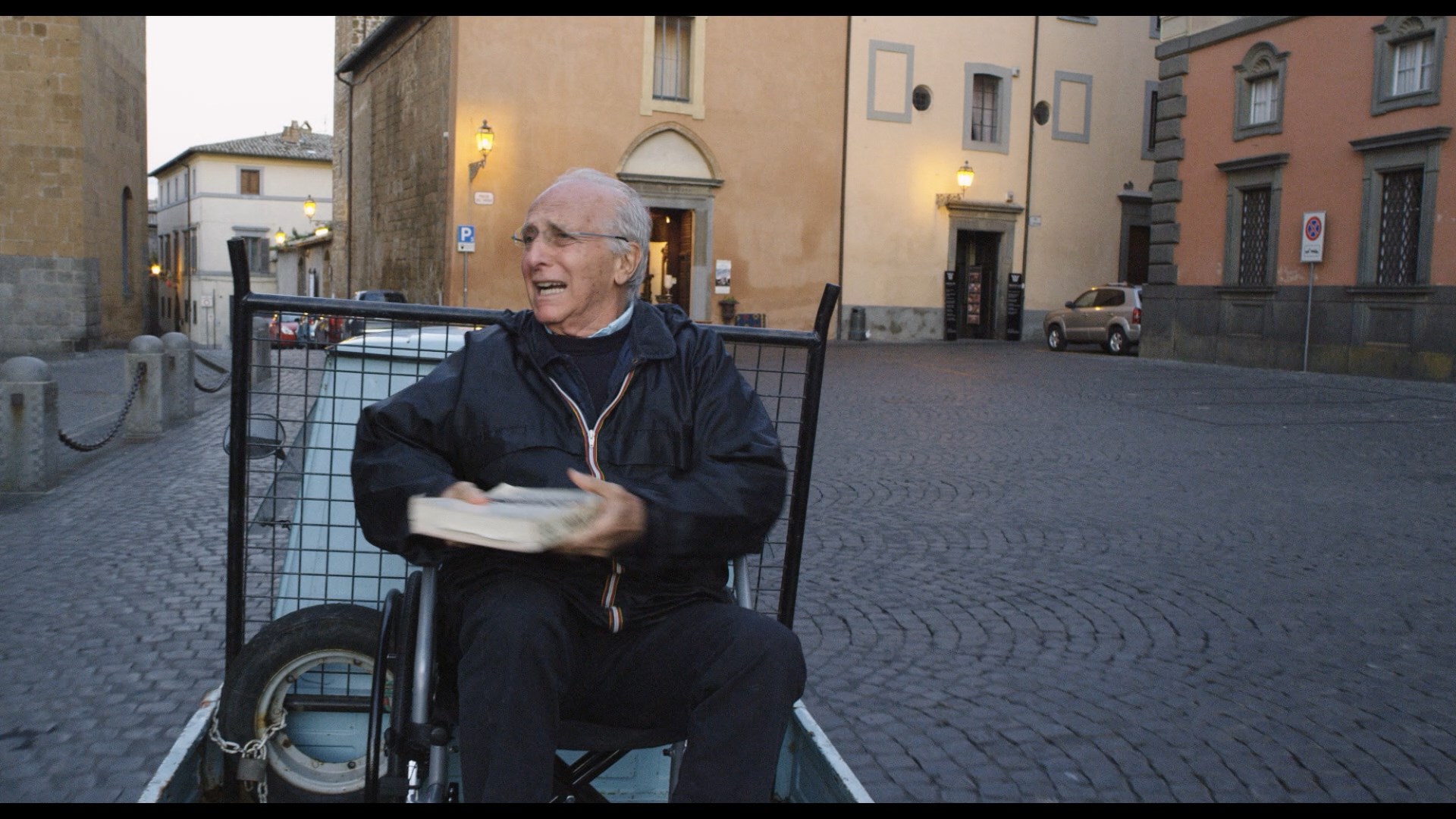 real murder case in Perugia like Rashomon, the alarming behavior of students he researched for the project, the limits his actors placed during the production, and of course, the story behind his own "wacky" cameo in the film. Then in "Midnight Mass Hysteria" (25m28s), Nina Burleigh (author of The Fatal Gift of Beauty: The Trials of Amanda Knox) offers a fascinating account of the real crime in all its bizarre details, from the post-Halloween murder of Meredith Kercher through the conflicting alibis and the world-famous complications of justice and nightmarish tabloid frenzy that ensued. That topic carries over in "It Happened in Perugia" (20m55s) with film historian Fabio Melelli, a professor at the university attended by Kercher, giving his own account of being on the scene during the scandalous events and chatting about the whole evidence collecting and conviction process. Then in "Things To Do in Perugia When You're Dead" (20m18s), Smorra recalls working on the film during a tight professional period in her career, her respect for Deodato, the similarities and substantial differences from the murder case, her take on the nudity requirements for the role, and her satisfaction with the final result. Finally in "A Maestro at Work" (9m53s), executive producer Raffaele Mertes (Trauma) goes into his introduction to the film early on and his immediate affinity for Deodato, the shift from his previous duties as a cinematographer, the rapid four-week production process, and the tactics used with some of the largely unexperienced actors. Also included are the original behind the scenes featurette (18m38s) seen on the German release, filled with copious raw production footage, and two trailers.
Reviewed on November 25, 2021.
