B&W, 1953, 111m.
Directed by Michelangelo Antonioni
Starring Franco Interlenghi, Patrick Barr, Anna-Maria Ferrero, Eduardo Ciannelli, Evi Maltagliati, Alain Guyader, Fay Compton
Raro (DVD) (US R0 NTSC), Minerva (Italy R0 PAL)
B&W, 1953, 111m.
Directed by Michelangelo Antonioni
Starring Franco Interlenghi, Patrick Barr, Anna-Maria Ferrero, Eduardo Ciannelli, Evi Maltagliati, Alain Guyader, Fay Compton
Raro (DVD) (US R0 NTSC), Minerva (Italy R0 PAL)
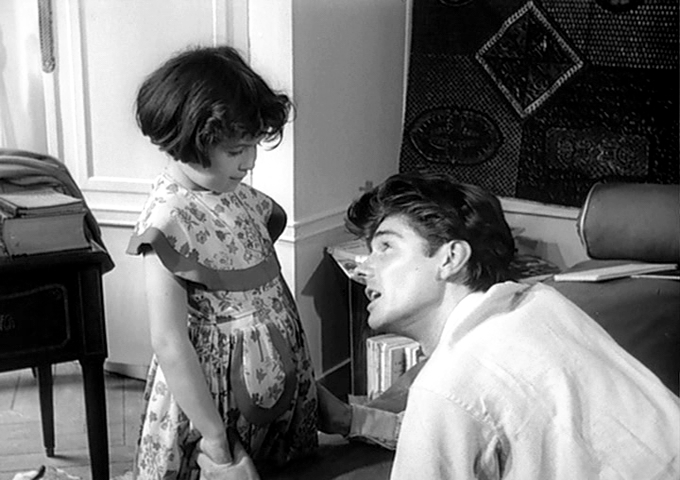 Before he made an international splash with L'avventura and captured the esscence of '60s art house chic in Blow-Up, director Michelangelo Antonioni made several gritty, black and white Italian films that found an audience only years after their release in their native country. One of the oddest of these is I vinti ("The Vanquished"), also released as Young and Perverse, a trio of multilingual stories examining crime among the young postwar set. Sort of a mixture of neorealism and the American juvenile delinquent genre, the film includes a murder of some kind in each tale but avoids any direct sensationalism; today's it's mostly fascinating for the little touches of what would become full-blown ideas in his later films, and fans should find plenty to sift through here.
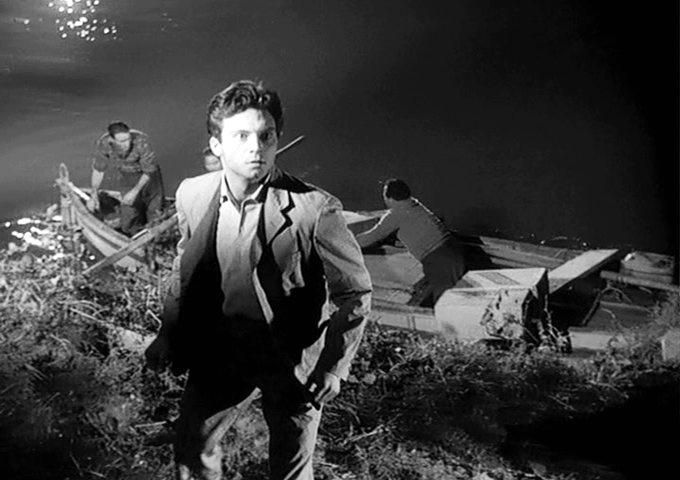 Promotion for the film emphasized its use of true events as the basis for each crime, but at the start, the film essentially shrugs this off by saying that since each one is being interpreted in front of a camera, there's no point arguing about how much of it is genuine. The French-language first story concerns a day in which several youths with romantic complications decide to go out for a picnic, with one of their group (Guyader) singled out for a nasty fate. The fact that this was based on a notorious French scandal put the film in hot water right away, while the fascist subject matter of the Italian second segment added more fuel for the fire. The compromises involved (which forced a wholesale restructuring and redubbing of the Italian segment, though both versions are included on the DVD) definitely keeps this one from masterpiece status, but it's a fascinating chapter in both the filmmaker's output and Italy's political stance at the time. Oddly, the third story -- about a young man who kills a frumpy aging prostitute (The Haunting's Compton) in London -- would seem the most likely target for censorship today, but that's how things go. This segment has also drawn the most attention (what little the film's had) for its little visual touches that would inform Blow-Up, such as the body in the park and the closing tennis game; on the other hand, the spare but magnetic use of human forms against landscapes that characterizes his best work in only visible here in tiny fits and starts, mainly in the French sequence.
 Minerva first released a restored version of this film on DVD in Italy several years ago with optional English subtitles, but an official video release in America remained out of reach until Raro's edition. The transfers of the two appear to be from the same film element, though with the U.S. Raro disc there's no PAL speedup. Quality looks fine overall; this isn't a sparkling presentation a la Criterion, but for a neglected, scruffy-looking early '50s Italian film, it's quite satisfying. The original three language options are present which shift from one story to the next, with optional English subtitles for the French and Italian tales; much dialogue had to be relooped after the first cut was shown, so often the dialogue has nothing to do with the characters' lip movements. The big extra here is the nearly half-hour uncut version of the Italian sequence with the original full storyline; quality bounces all over the place here given the film's history, but it's a great curio. You also get a video interview with writer Turi Vasile (15 mins.), a shorter chat with actor Interlenghi (10 mins.) who carries the second story, a director bio and filmography, and a 32-page liner notes booklet. However, the really big upgrade argument for the American disc is the exclusive inclusion of a rare 23-minute Antonioni short from the same year, "Tenato Suicidio," which shares some thematic similarities to the main feature and is going to be a real godsend for Italian art house buffs. Definitely recommended if you can't get enough golden age European cinema.
