*
Color, 1976, 125m.
Directed by Roman Polanski
Starring Roman Polanski, Isabelle Adjani, Melvyn Douglas, Shelley Winters
Vinegar Syndrome (UHD & Blu-ray) (US R0/RA 4K/HD), Paramount (US R1 NTSC) / WS (1.85:1) (16:9)
Color, 1976, 125m.
Directed by Roman Polanski
Starring Roman Polanski, Isabelle Adjani, Melvyn Douglas, Shelley Winters
Vinegar Syndrome (UHD & Blu-ray) (US R0/RA 4K/HD), Paramount (US R1 NTSC) / WS (1.85:1) (16:9)
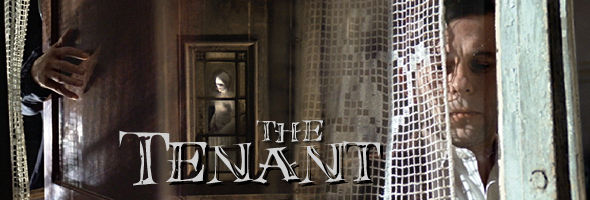
The first of Roman Polanski's evocative Parisian thrillers, The Tenant was widely reviled upon its initial release for what many perceived as a far too drastic change of pace from the celebrated Chinatown. Of course, anyone who could connect the dots further back could see its progression from the similar "apartment living is hell" studies, Rosemary's Baby and Repulsion; furthermore, the film looks forward in striking ways all the way up to The Pianist, which virtually reprises this film in a more compact form during its middle act.
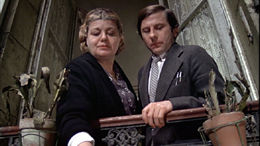 Polanski assumes the lead role of perpetually nervous Trelkovsky, a French citizen originally from Poland who rents a room in a gothic apartment building populated by a testy concierge (Shelly Winters), cantankerous landlord Monsiuer Zy (Melvyn Douglas), and a variety of other eccentrics. The previous tenant, Simone Choule, committed suicide by leaping from the balcony and suffering for days in the hospital, where Trelkovsky meets Simone's friend, Stella (Adjani), with whom he shares a drink and a memorable afternoon at the movies. As the neighbors become increasingly hostile to Trelkovsky by complaining about noise and bullying him for not signing a petition, the man's grip on reality begins to slip. Even worse, these bizarre neighbors (who often spend hours at night standing motionless in the communal toilet) may be conspiring to drive Trelkovsky to follow in Simone's doomed footsteps.
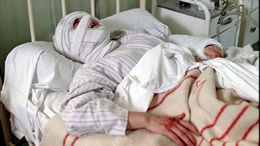
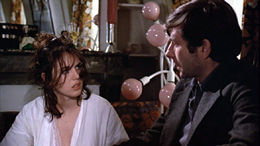 A rich and multi-layered film, The Tenant is as pure a distillation of Polanski's technique as one could hope for. The repetition of themes and images can cause chills after countless viewings, though often the shudders overlap with skillfully handled black comedy. (Often it's difficult to tell the difference between the two.) The film remains even more relevant now in its study of urbanized human beings as commodities unable to relate to each other on any meaningful level; Trelkovsky and Stella's nervous dates include a few furtive gropes but end with cold farewells or both parties in a drunken stupor. In this world, everyone is identified solely by their outward appearances and how well they conform to expectations; you are the coffee you drink, you are the cigarettes you smoke. The enigmatic Simone Choule is identified as a writer on Egyptology, and indeed her apartment for Trelkovsky becomes a smothering tomb filled with remnants of the dead: make-up, a sole black dress, with the bathroom across the way adorned with heiroglyphics. Choule herself in the hospital is only seen mummified in tight bandages, inarticulate and screaming in horror. This utter disconnect is reinforced by her grieving friend, Georges (Jeunut and Caro regular Rufus), whose raw declaration of love on a postcard of King Tut turns out to be something else entirely. In a world like this it's small wonder an outsider would be driven mad, and even a pure soul like Stella winds up wounded in this storm of insanity.
 As eerie and thematically bewitching as The Tenant is, the film is boosted further by highly inventive casting. Adjani is wonderful as always, while Americans Winters, Douglas, and a chilling Jo Van Fleet (as the nasty Madame Dioz) all perform their supporting parts with expert aplomb. Opening with a startling Louma crane credits shot that probably influenced Dario Argento's Tenebrae, cinematographer Sven Nykvist (best known for his work on Ingmar Bergman films) performs some of his finest work; there's never a wasted bit of screen space for the entire running time. The film also marked the first of three collaborations between Polanski and composer Philippe Sarde (Tess, Pirates), a fruitful union destined to end badly. Be warned, the eerie glass harmonica main theme will stick in your mind long afterward.
Paramount's highly satisfying DVD offers a sterling visual presentation with robust colors and exceptional black levels, essential to appreciating the disturbing final third of the film. Previous transfers were often washed out, but this disc corrects those years of video abuse. Compared to past editions, the DVD adds some information to the sides of the image while losing a bit of extraneous headroom from the top; compositions look accurate throughout. The audio has always sounded rather muffled, which unfortunately is the case here as well; prepare to turn up the volume far more than normal. In the English language version, only Polanski, Winters, Douglas and Van Fleet spoke their own performances; everyone else was dubbed afterwards and can be seen speaking a mixture of English and French. The alternate French audio on the disc (which can be viewed with optional English subtitles) is in many ways a more effective and satisfying presentation, as supporting characters which were brash and sloppily dubbed in English come off as far more naturalistic in French. The French track offers the only opportunity to hear Adjani's real voice, while Polanski did dubbing duties for himself as well. Newcomers may want to stick with the English version first, but the alternate audio makes for a rewarding experience as well. And yes, that troublesome Enter the Dragon clip with Bruce Lee, which caused more than a few legal headaches and even had to be trimmed out of some UK versions, is here in all its glory. The sole extra is the creepy US trailer, which utilizes original footage of Polanski standing in a doorway.
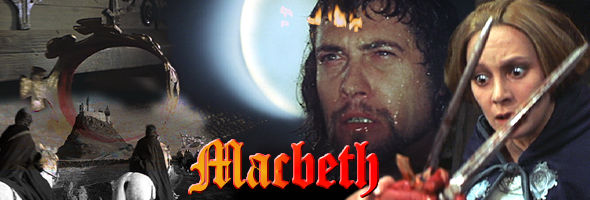
Color, 1971, 140 mins.
Directed by Roman Polanski / Starring Jon Finch, Francesca Annis, Martin Shaw, Nicholas Selby
Criterion (Blu-ray) (US RA HD), Sony (US R1 NTSC) / WS (2.35:1) (16:9)
Color, 1971, 140 mins.
Directed by Roman Polanski / Starring Jon Finch, Francesca Annis, Martin Shaw, Nicholas Selby
Criterion (Blu-ray) (US RA HD), Sony (US R1 NTSC) / WS (2.35:1) (16:9)
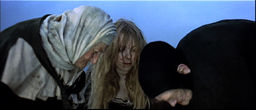 hands of the Manson family. Not surprisingly, an already grim and disturbing play was turned into a hellish nightmare on film, reeking of corruption, greed, and needless bloodshed. Fortunately it's also one of the director's most brilliant films. Experimenting with scope photography for only the second time, he paints an unforgettable portrait of medieval Scotland as a damp, brooding place in which man's nobler instincts are invariably forced to confront a recurring cycle of evil brought on by politics and financial gain. Even the Christian institution of marriage is portrayed as a breeding ground for insanity and death, as ambitious battle hero Macbeth (Jon Finch) and his wife (Francesca Annis) arrange the gruesome assassination of King Duncan (Nicholas Selby) to speed the young lord's ascent to the throne. Of course, one murder quickly leads to another as Macbeth's reign of terror drags him into paranoia and madness. Spurred on by the prophecy of three witches who foretell his rising power and ultimate downfall, Macbeth struggles to maintain his lofty position while those around him plot a violent revolt.
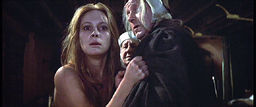 who perfectly fit the period setting. The financing by Hugh Hefner's Playboy company dictated the injection of nudity and bloody violence, but Polanski turned the financier's expectations around by presenting human flesh as a matter of fact, non-exploitative sight, whether it's the undraped and unappealing coven of witches or Lady Macbeth's legendary nude sleepwalking scene. The level of violence was also astounding for the time and remains quite strong, particularly Duncan's murder and the stunning final death scene (which will remain vague here for the uninitiated). Several other British-based films from '71 also pushed the boundaries of sex and violence (most notably Straw Dogs, The Devils, and A Clockwork Orange), making for one of the more unusual years of big studio entertainment, but Macbeth was also remarkably visionary for its time. Watergate broke the following year, making Polanski's depicition of politics as a seemingly endless chain of cover ups and backstabbing more relevant than ever. Of course, its continued application to the political world today hardly requires any explanation at all.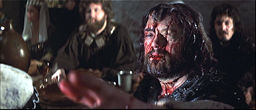
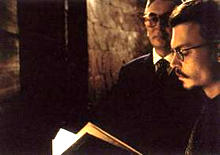 especially disheartening considering the indifferent shrugs which greeted the wretched End of Days and Stigmata. Hopefully as time passes, expectations surrounding this film have changed somewhat and viewers can finally appreciate The Ninth Gate for what it actually is, an eccentric and intelligent black comedy laced with hearty gothic horror. Adapted from Arturo Perez-Reverte's El Club Dumas, the plot feels on the surface like a glossy literary twist on Alan Parker's Angel Heart. Likeable but unscrupulous "book detective" Dean Corso (Johnny Depp) is hired by the elegant, slimy Boris Balkan (Frank Langella) to track down two of the three existing copies of The Nine Gates of the Kingdom of the Shadows,
 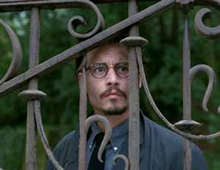 a text co-written by Lucifer himself in 1666. Balkan possesses the third copy and believes that only one of the three is genuine. Hopping from New York (or at least a CGI replica of it) to Portugal to Paris, Corso encounters a number of eccentric personalities including a wine-sipping book collector (warmly played by Jess Franco regular Jack Taylor!) and a beguiling, obviously supernatural nymphet (Polanski's wife, Emmanuelle Seigner), who's prone to popping up in odd places with some very funny reading material.
 of European horror in particular will have fun comparing this film to some of its similar cinematic predecessors. Dario Argento's Inferno, also concerned with unholy texts, houses of the damned, and creepy young girls popping up out of nowhere, makes for a good point of comparison, as does the Polish masterpiece The Saragossa Manuscript. The latter film revolves around a series of interlocking narratives sprung from a demonic manuscript, and Polanski amusingly quotes directly from it during the effective, beautiful, and thankfully ambiguous final scene. Oddly enough, all three films are based on literary sources, some more loosely than others...
