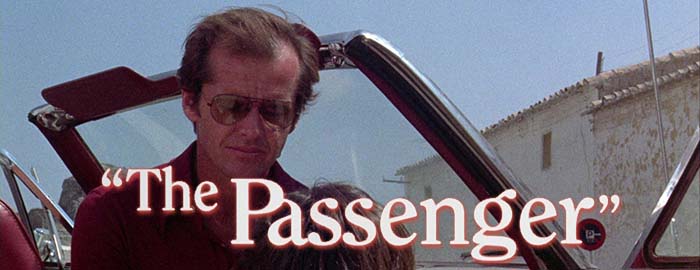
Color, 1975, 125 mins. 56 secs.
Directed by Michelangelo Antonioni
Starring Jack Nicholson, Maria Schneider, Jenny Runacre, Ian Hendry, Steven Berkoff, Ambroise Bia
Indicator (Blu-ray) (UK R0 HD), Sony (US R1 NTSC) / WS (1.85:1) (16:9), Imagica (Japan R2 NTSC) / WS (1.85:1)
Despite  losing a staggering amount of
 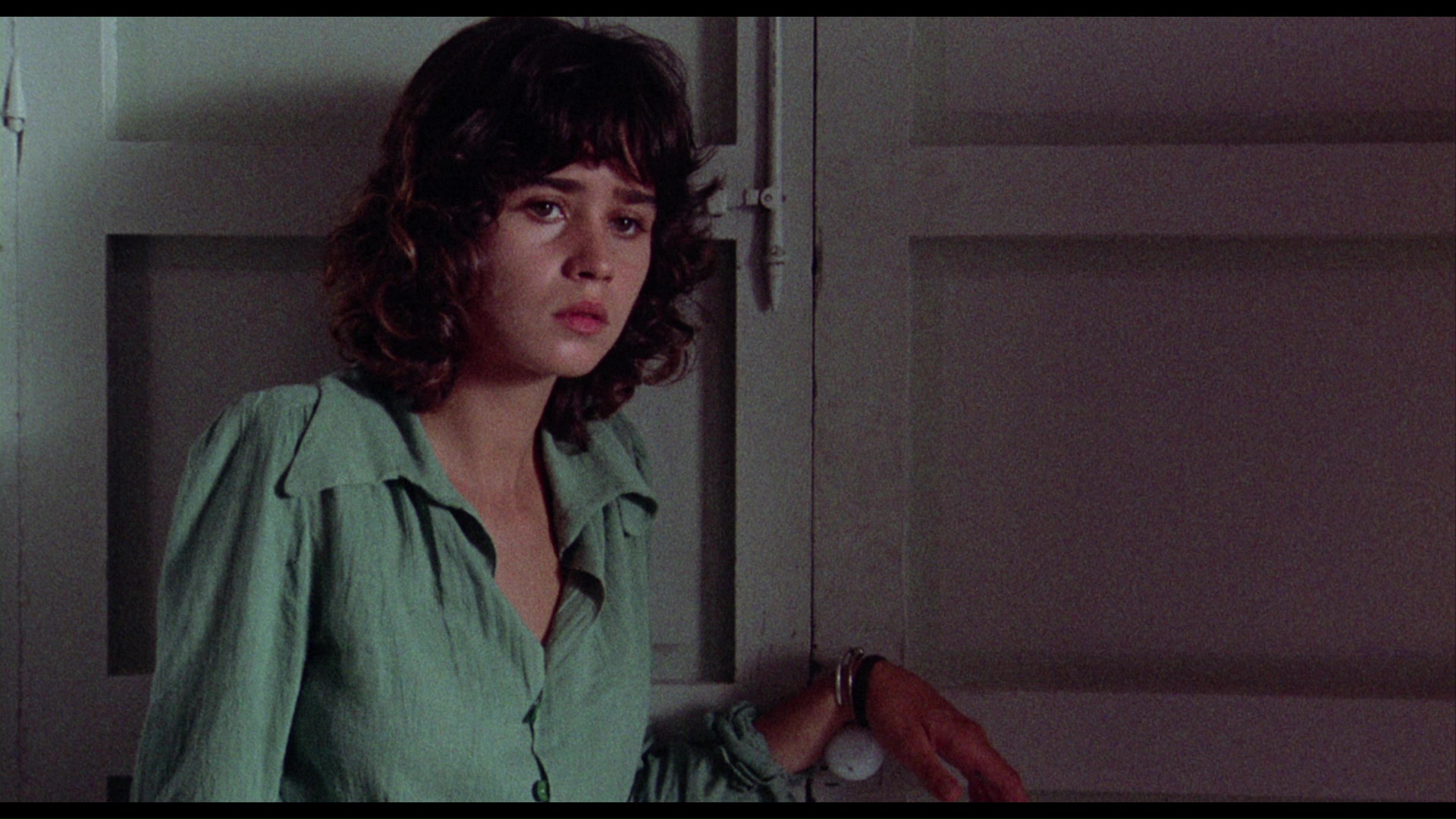 money on Michelangelo Antonioni's Zabriskie Point in 1970, MGM decided to take a gamble on the admired Italian director again when he managed to secure Jack Nicholson for a long delayed follow up film, Professione: Reporter, or The Passenger as it became more widely known in the U.S. and a few other territories. Devoid of the kinky mind games of Blow-up or Chinatown, the film was not a financial hit and was written off at the time as a noble but minor work. However, patient admirers of European cinema and Nicholson fans who want to see him in an atypical subdued role will be more willing to go along for this deliberately paced, beautiful ride that seems to get better every year.
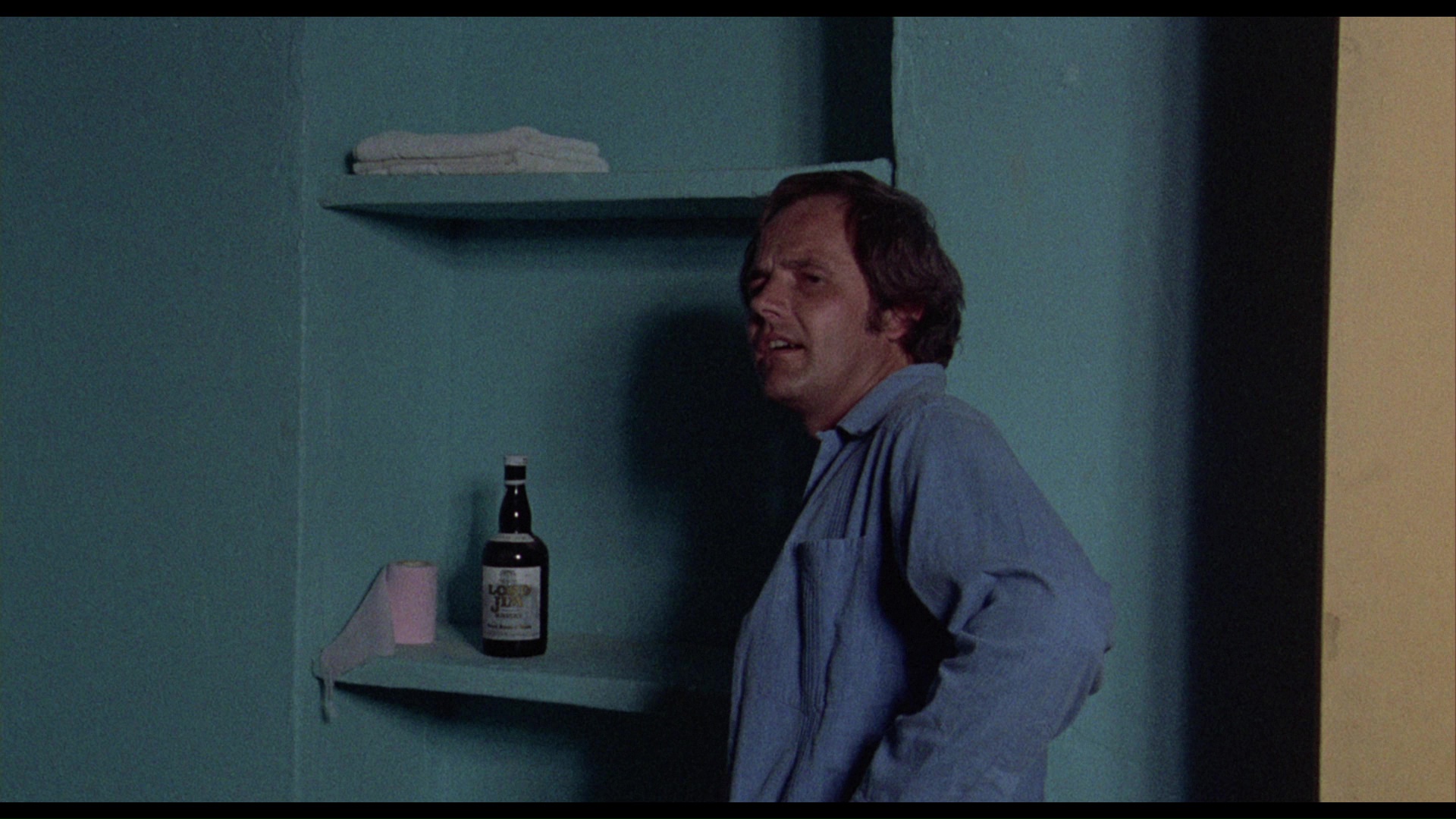
Reporter and documentarian David Locke (Nicholson) has wandered into a remote area of Africa hoping to interview political extremists about whom he knows little and cares even less. Another man staying at his hotel, the mysterious Mr. Robertson, has no ties to any friends or family, only a book of appointments which he must keep. Locke discovers Robertson dead from a heart attack in his hotel room and, in a fit of midlife crisis soul searching, decides to swap their identities, including a passport photo switch. Locke then embarks on a journey from Africa to Europe, focusing only on keeping the dead man's appointments. Along the way he discovers the true nature of his alternate identity and becomes entangled with a beautiful girl (Schneider) who encourages him on his mission. Meanwhile Locke's estranged wife (Runacre) and the police attempt to track him down before a band of counter-revolutionaries puts a fatal end to his quest for identity.
 An
An 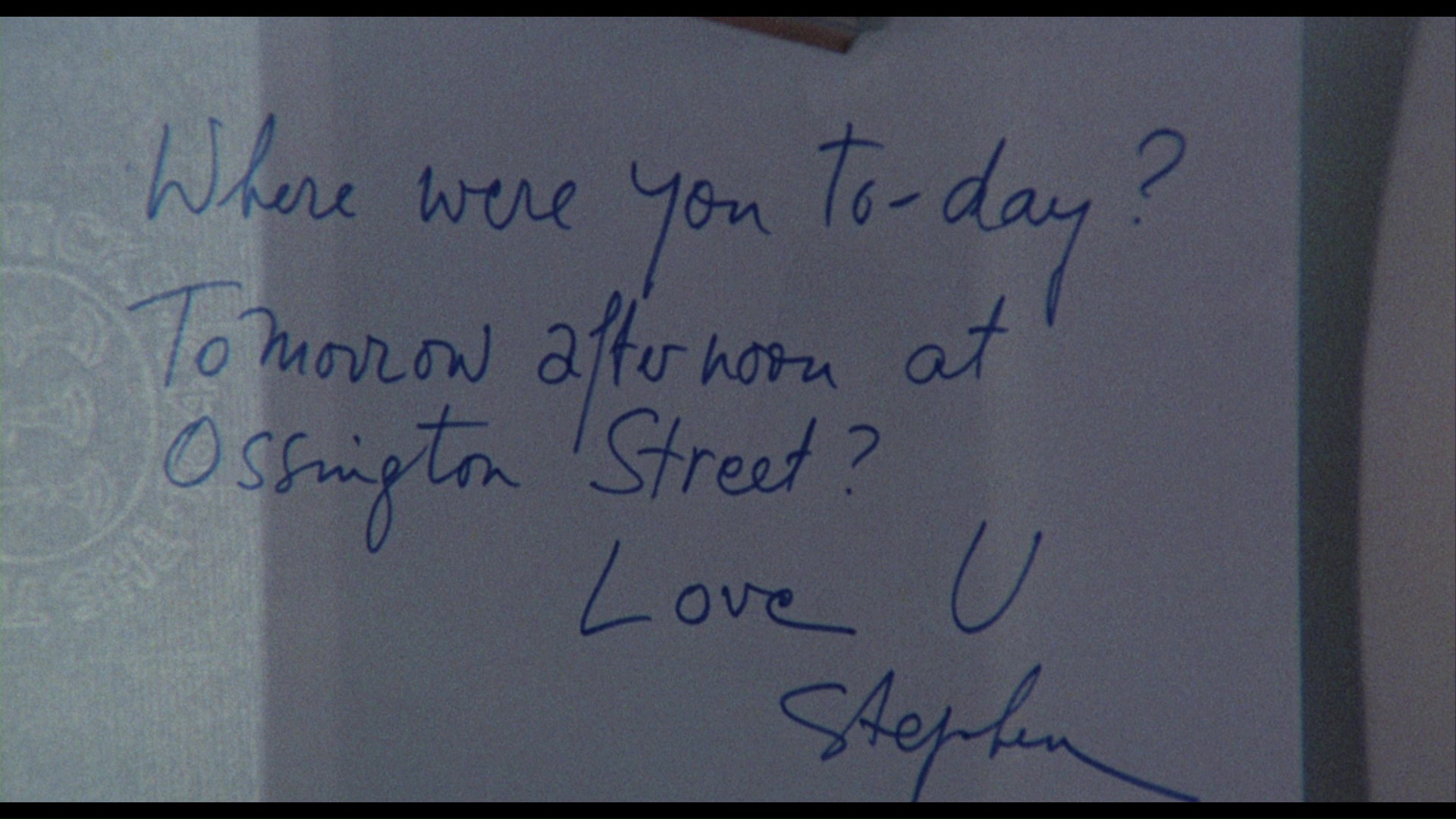 eloquent summation of the themes throughout Antonioni's films to date, The Passenger is equal parts character study, thriller, and travelogue. The methodical pace is difficult to accept at first, but once Antonioni begins to weave his spell, the film pays off with a series of beautiful, unforgettable images, such as Schneider standing up in a convertible while riding through lanes of trees or the stunning uninterrupted six minute shot which forms the climax of the film. Cinematographer Luciano Tovoli (Tenebree) deserves a huge amount of the credit here; his gift for conjuring up visual magic from the barest elements reaches its peak here. In her first international role since Last Tango in Paris, Schneider has good screen presence but, to the consternation of many viewers at the time, remains mostly clothed. Nicholson is excellent as always, acting more with his facial expressions than dialogue this time around. In fact, maybe twenty words are spoken during the entire first half hour of the film, with most of the story forcing viewers to pay attention and put together the various details they have witnessed.
Though released in the early days of home video by Warner (remember those big clamshell boxes?), The Passenger was maddeningly neglected for years thanks to dull, grainy, and brutally cropped transfers that sapped away much of its magic. (Nicholson himself got the rights from MGM soon after its release and held it back in most countries until 2003.) The Japanese DVD release in 2000 was a 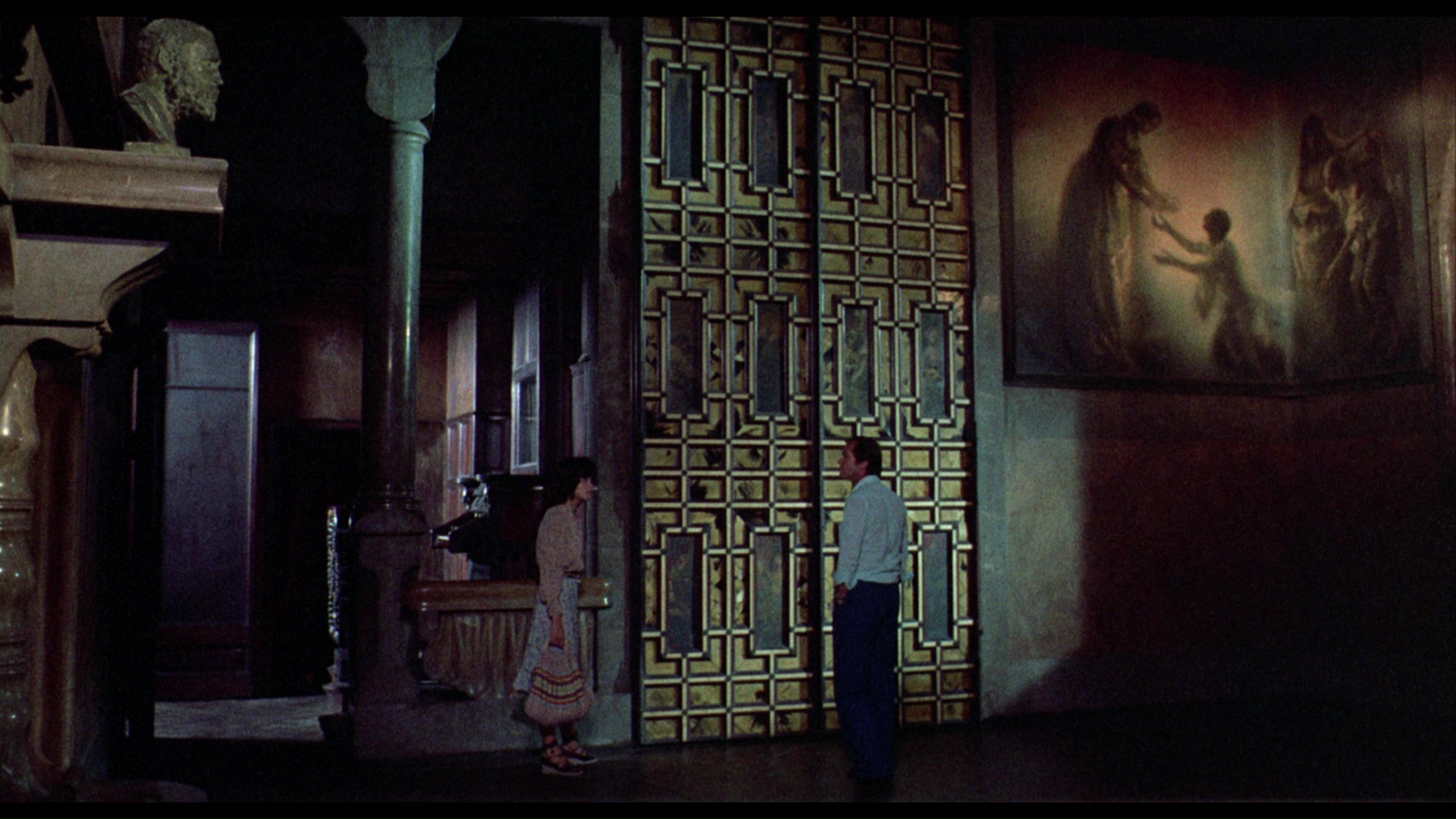 welcome and highly overdue antidote, bearing the title of Profession: Reporter and restoring much of its original luster. Some of the reel changes are a little ragged, but this only
 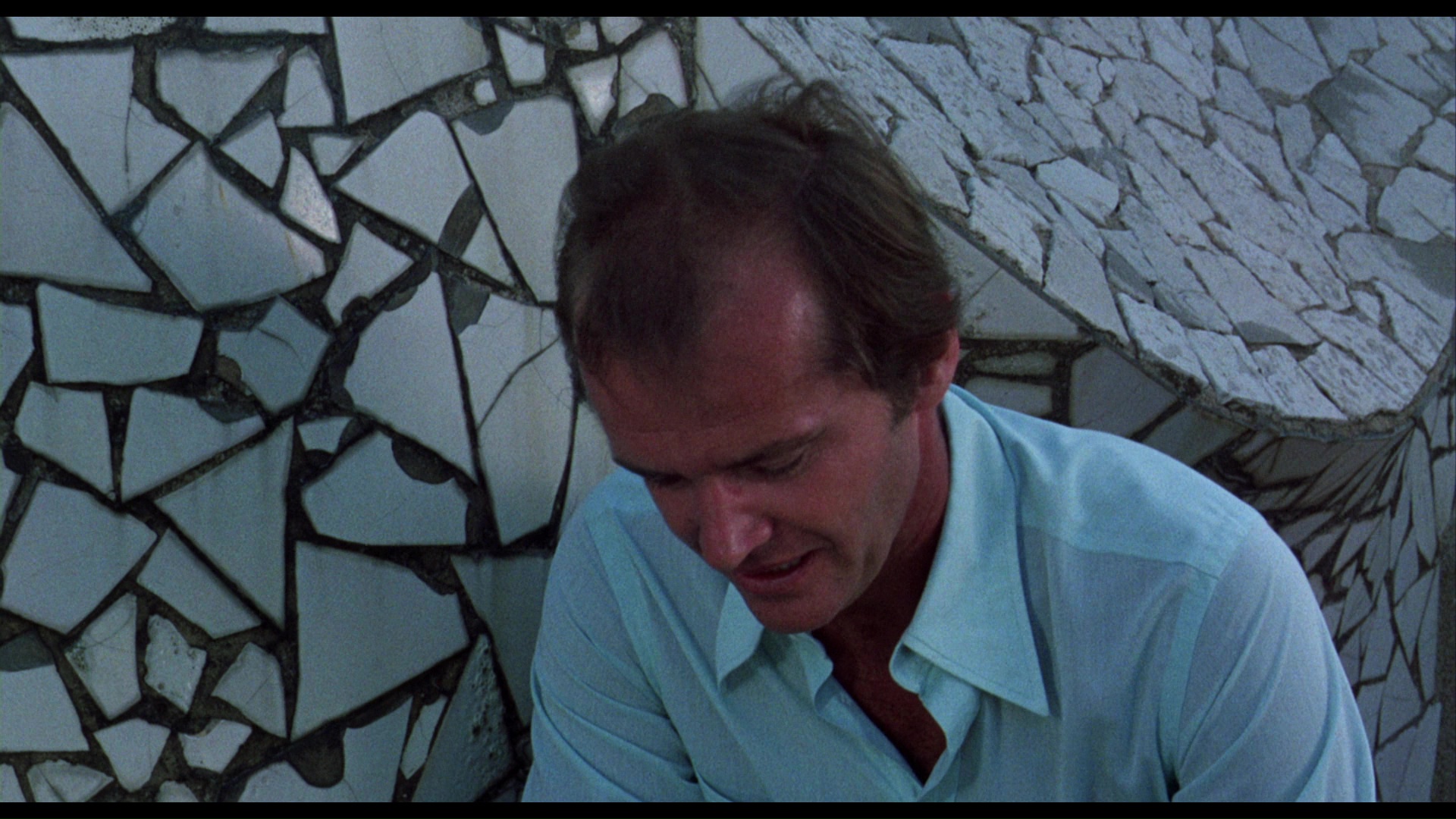 lasts for a few seconds. The film is in English (mono) with removable Japanese subtitles, and most notably, this is the complete European print, with seven extra minutes deleted from the U.S. edition. The disc also includes the U.S. theatrical trailer, which focuses on the film's few moments of action and probably led to some very unsatisfied audiences. Nicholson later negotiated with Sony to bring the film back to the public, which resulted in a theatrical reissue and a 2006 DVD release that improved things with a fresh scan from the negative. Extras include a reissue trailer and two audio commentaries with Nicholson (whose passion for the film remains as strong as ever) and screenwriter Mark Peploe (moderated by Aurora Irvine).
The 2018 U.K. Blu-ray from Indicator expands on that past edition considerably, all centered around a nicely detailed HD presentation of the feature itself that does the best job to date of conveying Antonioni's usual color symbolism represented here with vivid bursts of red and green. (Be warned that a terrible Spanish Blu-ray is out there featuring a sloppy upconversion of the older SD master.) The film can be played with main title options as either The Passenger or Professione: Reporter, with identical running times, and the LPCM English mono audio (with optional English SDH subtitles) is also in great condition. The prior Nicholson and Peploe commentaries are carried over here, while a new one is added with film writer Adrian Martin who offers a completely scholarly take on the film with a focus on its placement in Antonioni's filmography and  thoughts on the director's tendencies to favor atmospheric details and allegory over traditional storytelling. "Profession Reporter" (4m54s) features Antonioni chatting with a reporter (in French with English subtitles) about
 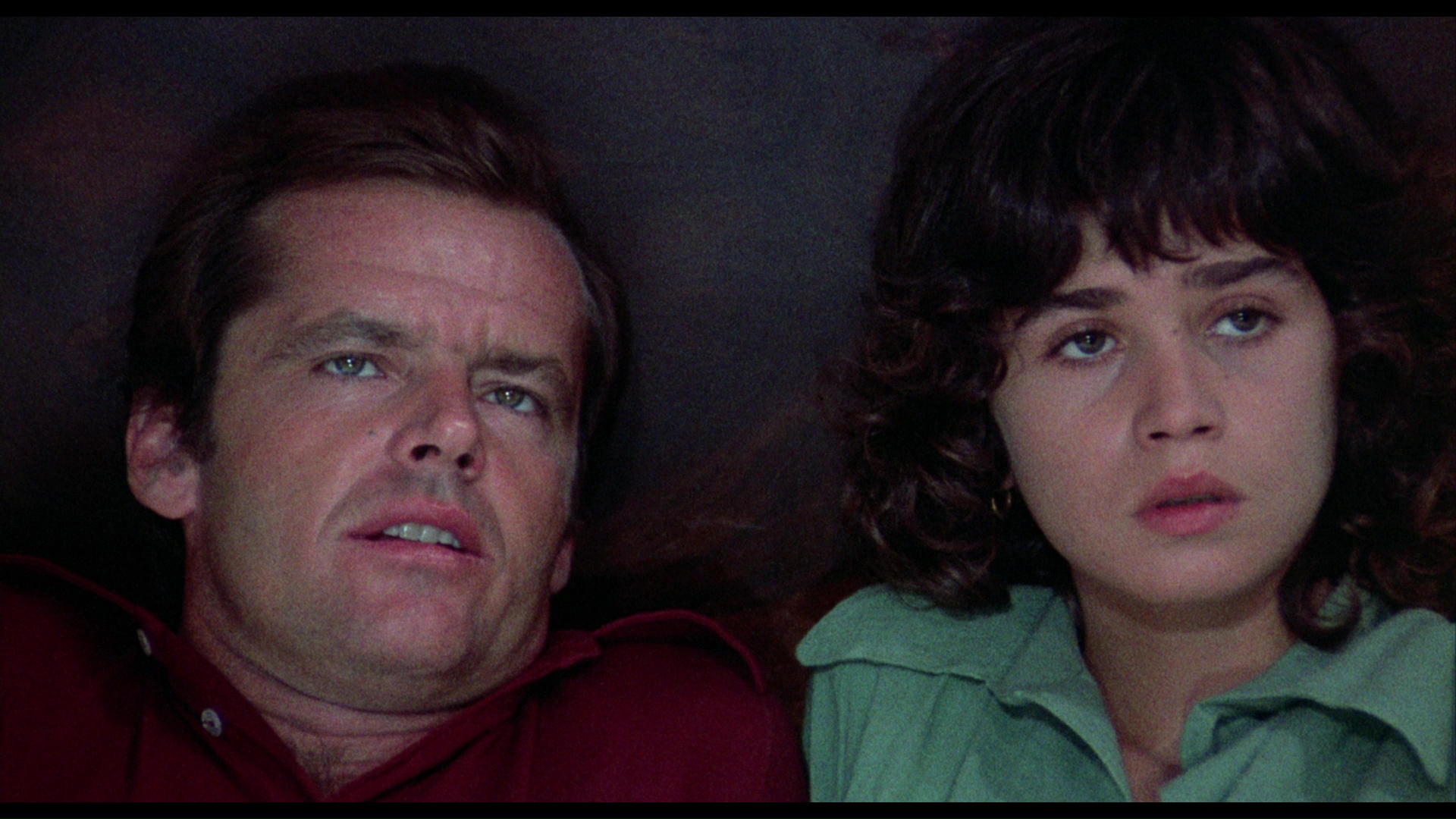 his use of color in the film while debuting it at the 1975 Cannes Film Festival, while "Antonioni on Cinema" (4m40s) features him again in '75 conversing in French (presumably still at Cannes) about his thoughts concerning acting and the purpose of making films. "The Final Sequence" (12m38s) is an archival featurette evidently made for French promotion with Antonioni interviewed at the editing bay about how and why he executed the film's daring, much-discussed, and quite remarkable final six-minute shot. A new interview with Runacre (14m22s) features recollections about how she was first approached by the director for the film and adapting to his unusual technique that involved very few close-ups and lines of dialogue. A more colorful chat with actor Steven Berkoff (10m13s) features more Antonioni memories including an anecdote about his one-eared cat, an account of his unusual first scene with Runacre, and the way he could always spot a master filmmaker. The reissue trailer is included, plus a gallery of 52 images including production photos, stills, and promotional material. An insert booklet features a new essay by Amy Simmons (who offers a lengthy, blow-by-blow description of the film's events), Antonioni's production notes about how he grew closer to the material in the script once he started shooting the film, selections from a pair of 1975 interviews, and Nicholson's notes from 1974 about his working process with the director.
Updated review on April 8, 2018.
