Color, 1971, 107m.
Directed by Pier Paolo Pasolini
Starring Franco Citti, Ninetto Davoli, Jovan Jovanovic, Vincenzo Amato, Angela Luce
BFI (Blu-Ray) (UK RB HD), MGM (US R1 NTSC) / WS (1.85:1) (16:9), Image (US R1 NTSC) / WS (1.85:1)

The first film by revolutionary Italian director Pier Paolo Pasolini film to originally hit the DVD market, The Decameron, is a bawdy adaptation of Boccaccio's famous moral tales and forms the beginning of his lauded "Trilogy of Life," a trio of films adapted from famous literary anthologies with an emphasis on humor, sexuality, religion, and sometimes pure fantasy. The films encountered numerous censorhip difficulties upon their release in the early '70s, getting slapped with deserved X ratings in the US and losing footage in some editions in the UK. The films were also presented in a bewildering variety of language variants which makes their ideal viewing conditions difficult to assess, but more on that in a bit. The films also consist of many unknown and usually undraped actors, with only a few familiar faces (like Pasolini regular Ninetto Diavoli, who appears in all three) taking on some of the larger roles.

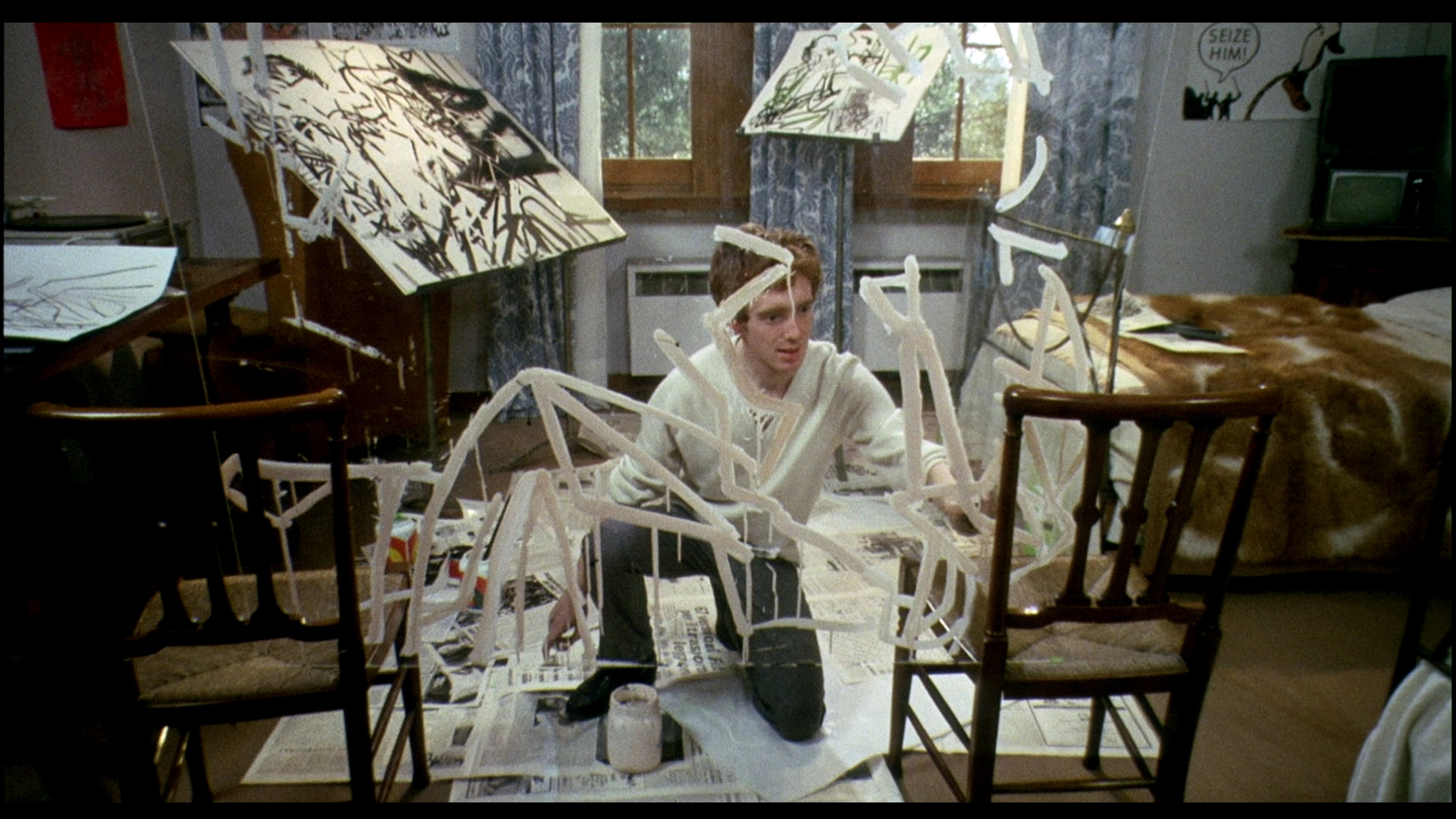
The film features nine complete stories (and fragments of others) cherry-picked from the original collection (which contained 100 tales), with Pasolini himself appearing occasionally as the painter Allievo Giotto as a loose sort of framing device. A young man (Davoli) falls in with a strange family and some graverobbers; a studly groundsman poses as a deaf mute and is forced to satisfy a convent of lusty nuns; three brothers lure their sister's boyfriend to his death with unpredictable consequences; two young lovers steal away for a rooptop rendezvous only to be observed by the girl's wily parents; a man returns from the grave to give his friend some unexpected advice; a priest receives a surprising deathbed confession which leads to miraculous results; and much, much more. The rich tapestry of characters and images doesn't strive for a higher meaning per se and in fact comes off the closest Pasolini ever came to a Bunuel film, packing in lots of good-natured pokes at the church and startling audiences with frank sexuality which comes off here as guilt-free and one of life's greatest joys. There's no predictable divine force controlling anything, as people both good and bad are left to fates whose only consistency is irony. From a less artistic standpoint, it's also worth noting that this film was surprisingly popular around the world and inspired a slew of imitations, mostly medieval sexy stories which carried over its carnal frankness but only a small fraction of its wit or joie de vivre. Titles like The Black Decameron and Ubalda, All Naked and Warm certainly have their scuzzy charms, but Pasolini's film remains far above in a class of its own.

All three films in this series suffered terribly in the early days of home video (and godawful repertory screenings), with the murky, dark, color-faded transfers prepared by Water Bearer assaulting viewers throughout the VHS and laserdisc eras as well as the early days of DVD. The original UK DVD from the British Film Institute back in '02 only bettered that one thanks to offering optional instead of burned-in subtitles, while salvation eventually arrived with a US reissue from MGM which finally featured a watchable version with decent detail and solid (if overpumped) colors. (This disc quickly went out of print, and apart from a fleeting Brazilian MGM set release, they abandoned any plans to issue the other two films.)

In any case, you can set all of those compromised versions aside thanks to the BFI's miraculous Blu-Ray edition, a stunningly beautiful presentation from the original negative that bests any theatrical experience. The colors are now exactly where they should be (especially the greens, which glowed a bit on the MGM disc), and the razor-sharp picture detail reveals layers and layers of information invisible even on the MGM disc. (And yes, it's uncut complete with one very startling shot that makes its eventual downgrading to an R rating in America very unusual indeed.) The Blu-Ray also contains the option to watch the film in either its Italian or English language version, with seamless brancing allowing it to open and close with either sets of credits; the scratchier English opening with the original United Artists logo is a very nice touch. In this case the film was definitely shot all the way through in Italian, so unless you're really nostalgic for the early '70s dubbed experience (which is actually far better than usual), stick with the original one. The uncompressed mono audio sounds terrific, with the looped dialogue coming through perfectly. (There isn't much in the way of music, so that's not a factor.) The original Italian trailer is included (you can find the American one on the MGM disc) along with Pasolini's rare B&W 1970 documentary, "Appunti per un'Orestiade africana," which surveys African culture in a manner distinctly different from the more familiar Italian mondo approach. You also get a hefty booklet containing liner notes by Roger Clarke, Sam Rohdie, Nigel Andrews, and Geoffrey Nowell-Smith, essentially a mix of bio information, archival reviews, and new comments about the trilogy, which looks fresher now than ever. Note that while BFI's releases are usually region free, their Blu-rays licensed through MGM are Region B. If you live in America, these magnificent releases (which put everyone besides Criterion to shame) are reason enough to upgrade to an all-region player. Top marks all around.

(Note: thanks to the BDA, frame grabs from these titles could not be taken; images seen for all three BFI discs are for illustrative purposes only and do not come close to reflecting the excellent transfer quality.)


Color, 1972, 112m.
Directed by Pier Paolo Pasolini
Starring Hugh Griffith, Laura Betti, Ninetto Davoli, Franco Citti, Josephine Chaplin, Tom Baker, Jenny Runacre, Robin Askwith
BFI (Blu-Ray) (UK RB HD) / WS (1.85:1) (16:9), Image (US R1 NTSC) / WS (1.85:1)

English teachers around the world threw up their hands in disguest with the release of The Canterbury Tales, which finds Pasolini taking the lead of his previous film by selecting eight of the most cinematic tales from Geoffrey Chaucer's familiar tome about pilgrims on the way to Canterbury Cathedral amusing themselves with ribald tales of lust, murder, and comedy. The fact that Pasolini chose to emphasize the earthy, outrageous aspects of these tales (particular "The Miller's Tale," which usually sends young students into a state of shock) made it highly inappropriate as a teaching tool, but the end result is so extreme and deliciously unflinching that one can't help but admire the director's fearlessness.

Virtually chucking out the pilgrimage aspect apart from a quick nod at the beginning and end, the film instead features Pasolini as Chaucer amusing himself by writing the stories as told by a colorful cast of characters. A nobleman (Griffith) is struck blind after taking on a much younger wife (Chaplin) in "The Merchant's Tale;" the devil (Citti) reveals himself to a debt collector in "The Friar's Tale;" a genial medieval Charlie Chaplin precursor (Davoli) winds up in serious hot water in "The Cook's Tale;" a student (Dan Brown) decides to bed a pretty married woman (Runacre) while tricking her husband a flood is coming, but their crude post-coital antics complicate matters in "The Miller's Tale;" the crimson-clad Wife of Bath (Betti) sets her sights on a startled parson (Doctor Who's Tom Baker, doing a nude scene no sane person ever asked for) in hopes he won't die like the rest of her husbands; two students get back at a landowner who tries to rip them off in "The Reeve's Tale;" three rowdy friends find a treasure after carousing at a whorehouse but learn the hard way that greed is the root of all evil in "The Pardoner's Tale;" and the scatalogical "The Summoner's Tale" finds a dying man playing a prank on a friar, leading straight into the now-legendary final minutes in Hell, one fo the most unforgettable, jaw-dropping scenes ever committed to film.

Critically derided as the weakest entry in the series, The Canterbury Tales suffered most from being seen in agonizingly terrible home video editions and really bottom-drawer prints, with even the Museum of Modern Art's archival edition looking dull, dreary and colorless. The same goes for early home video editions, from the grimy Water Bear transfer in America to the equally worthless versions issued around the world. As such, BFI's Blu-Ray will be the biggest shocker for anyone familiar with the film; to call it an utter revelation is an understatement. The cinematography by Tonino Delli Colli (who also did The Decameron but sat out the third film) is remarkably beautiful, with fantastic landscape photography worthy of classic paintings. The vivid colors also bring out the vibrance and imaginative touches in Danilo Donati's costumes and Dante Ferreti's sets, which were impossible to appreciate before. And of course, the finale is even more over the top thanks to the clarity of high definition. No matter what one thinks of this film, their opinion is bound to improve after seeing such a radical improvement across the board. This disc also addresses the major sticking issue for many viewers, the language track. Many of the primary players are familiar faces from British film and TV, with the hammy Griffith, delicate Chaplin, and cult favorite Runacre (The Creeping Flesh) faring best. All of the British actors performed their lines in English and used their own voices for the dub (including a small role for Robin Askwith in his exploitation prime before his Confessions series of sex comedies, here performing perhaps the longest on-camera bladder relief ever captured on film), so for some this is the most legitimate version; however, the stilted delivery of Chaucer's lines from nearly everyone else sounds canned and awkward, robbing the film of much of its spontaneity and warmth. The Italian track has never been released in America and is rarely encountered elsewhere, so its inclusion here is a fascinating option and in many respects makes for a more enjoyable, smooth viewing experience. The Italian voice performances sound more energetic and natural, while the option to read the lines actually helps some of the jokes play better. Also, since in the final tally the two best performances also comes from Italians (Betti and Cinci), their own Italian vocal tracks can't help to boost the proceedings. Ultimately viewers should sample both options to see which one they prefer, but at least now it's easy to compare in one simple package. Once again the option to play the English version kicks off with the original UA credits and, in a nice touch, alternates to the English-language inserts when Chaucer is seen writing his stories.

The biggest extra here is "Pasolini and the Italian Genre Film," a new featurette by David Gregory and Alberto Farina examining the director's influence on horror, sexploitation and comedy films. This would have probably made more since on the Decameron disc given that film's more prevalent influence, but either way it's nice to have thanks to interviews with writers and producers who worked with Pasolini (and sometimes imitated him) including Gabriele Crisanti, Paolo Bianchini and Alfredo Bini. You also get a very saucy theatrical trailer and a bookelt containing liners by the same participants from the prior disc, here making a case for its wholly unique take on English views of sex and the church. Given that this film added a non-Chaucer scene of a gay man unable to buy his way out of condemnation being roasted alive in an outdoor contraption surrounded by leering buffoons, it's safe to say Pasolini was serious in his jabs against organized religion.


Color, 1974, 131m.
Directed by Pier Paolo Pasolini
Starring Franco Merli, Franco Citti, Ninetto Davoli, Tessa Bouché, Ines Pellegrini, Margareth Clémenti, Luigina Rocchi, Salvatore Sapienza
BFI (Blu-Ray) (UK RB HD) / WS (1.85:1) (16:9), Image (US R1 NTSC) / WS (1.85:1)

Regarded as the high point of the trilogy by a wide margin, The Arabian Nights is certainly the most ambitious and visually impressive. Most of the same crew remained as Pasolini trotted his camera to Africa, Iran, India, and Nepal for a phantasmagorical journey through one of the most famous story collections of all time, and everyone outdoes themselves with a visual feast that ranks as the director's most optimistic achievement. Though much of the trademark eroticism and offbeat comedy remains here, the film is so much more than that and also features a strong linking narrative to pull it all together.

While being sold at a slave market, the fiesty Zumurrud (Eyeball's Pellegrini) opts to become the property of a young, financially-lacking prince, Nur Ed Din (Merli, the future poster boy of Salo). The two immediately form a youthful bond, but she's abducted by one of her jilted would-be buyers, with her new master in pursuit. During their journey, Zumurrud must escape disguised as a man and is declared a king in another region, while her suitor becomes the love toy of three beautiful women where the main storytelling aspect comes into play (there's no Shahrazad in sight here, folks). The first major tale follows Aziz (Davoli), who rejects his fiancee when he falls in love with another woman but finds the heart's demands more treacherous than he imagined; a prince follows some criminals into an underground lair where he finds a beautiful girl at the nocturnal mercy of a red-haired demon (Citti) who makes some highly unusual demands; and naked royal Yunan (Sapienza) abandons ship and washes up on an island where a young boy lives in fear of being murdered. Other characters and fragments interact with the main story, which also involves a fantastical encounter with a lion and more than a few stunning vistas on display.

The occasional special effects (including a brief flying scene with the demon) are hardly the focus here, as the natural locations and amateur actors give an entirely different take on this well-worm material which already inspired countless Sinbad and Aladdin movies. This is far removed from such family fare, restoring the original adult tone and sense of peril for what amounts to a celebration of the basics of humanity. While a handful of jolting moments of brutality (a dismemberment, a stabbing and an brief but heartstopping castration) foreshadow the terminal anguish of Salo, the tone here is dreamlike and affectionate, while the virtual abandonment of familiar actors results in an undeniable freshness and vitality. Also of note is the beautiful, diverse score by Ennio Morricone, who worked on the previous two films mainly adapting traditioanl music but gets to really shine here with a full score loaded with exotic, fascinating instrumentation.

Just as plagued by shoddy transfers through much of the video era, The Arabian Nights finally soars in the BFI Blu-Ray edition which looks light years better. Gone are the ugly brown and orange color schemes which made all the actors appear to be covered in dirt; the film now looks fresh, colorful and vivid, and the detail culled from the transfer from the original negative results in countless new details in every shot invisible even in theatrical screenings. Some noise reduction was apparently applied to overcome some damage to the element, but there's enough natural film grain here to still give the impression of watching a top-drawer theatrical screening. If you've ever tried to suffer through any of the DVD editions of this film, the Blu-Ray will feel like a breath of fresh air from the first shot.

This version also addresses an issue which has plagued the film since its release: the running time. A screening of Pasolini's first cut at Cannes was 155 minutes, but producer Alberto Grimaldi persuaded him to trim it down by 25 minutes. A reel of deleted footage clocking in at 21 minutes was subsequently issued on a French DVD, but it's presented here in HD as well with Morricone's score filling in for the lost audio. The film's overlapping structure (which led to frequent comparisons to The Saragossa Manuscript) dictated that a story couldn't be simply chopped out; instead, the majority of the cut footage is parallel action during the Princess Dunya segment (the penultimate story) which then continues with an imprisoned Prince Tagi escaping into a small but interesting battle scene in the mountains and encountering his beloved again in drag. It's obvious why this was cut as it could be seen as redundant in the scheme of the entire film (we've already spent plenty of time with the whole king-in-disguise story thread), but at least some of the scenes should have been left to close out the Dunya story more smoothly than its abrupt finish in the final cut. In any case, it's great to finally have this footage back in any form; the remaining time discrepancy may also be due to the original intermission (which came right after the aforementioned castration scene, ensuring some more sensitive viewers may have opted to not return for the rest of the film); the break is missing here but can be seen on the old Water Bearer transfer if you're curious.

As for the language aspect, the Italian track has been the most widely-seen for years and is usually regarded as the most legitimate one, even if only a handful of the performers were actually speaking it. Everyone else is speaking English or something else entirely with post-production looping creating the entire soundtrack no matter how you watch it. The alternate English version here synchs up about as often as the Italian one, but the subtitled version feels more poetic and organic to the film as a whole. Completists may want to check out both, but newcomers should definitely experience it in Italian first. Given the length of the film and high bitrate it occupies on the disc, the only extra here besides the deleted scenes (admittedly one heck of a deal sweetener) is the original theatrical trailer, which again pushes the salacious sequences ahead of the artistic ones.


Color, 1968, 105m. / Directed by Pier Paolo Pasolini / Starring Terence Stamp, Silvana Mangano / Un Mondo di Cinema (Italy R2 PAL), Films Sans Frontieres (France R2 PAL) / WS (1.85:1)


Since the early days of film, the mysterious outsider infiltrating a bourgeois family has been a reliable source for drama and/or amusement, ranging from the French classic Boudou Saved from Drowning to countless screwball comedies. Leave it to Pier Paolo Pasolini to put a sexual and religious spin on the idea with Teorema (which translates as "Theorem"), one of the archetypal '60s art films. Like vspace="8">such fellow headscratchers as Blow-Up and Last Year at Marienbad, the film is primarily an allegory filled with symbols intended to resonate differently with each viewer, spiced up with enough controversial content to pull in the masses at the box office as well. A pivotal turning point in the director's career between his gritty early classics and his outrageous later work, Teorema is well worth viewing for anyone who doesn't mind filling in more than a few blanks at the end.
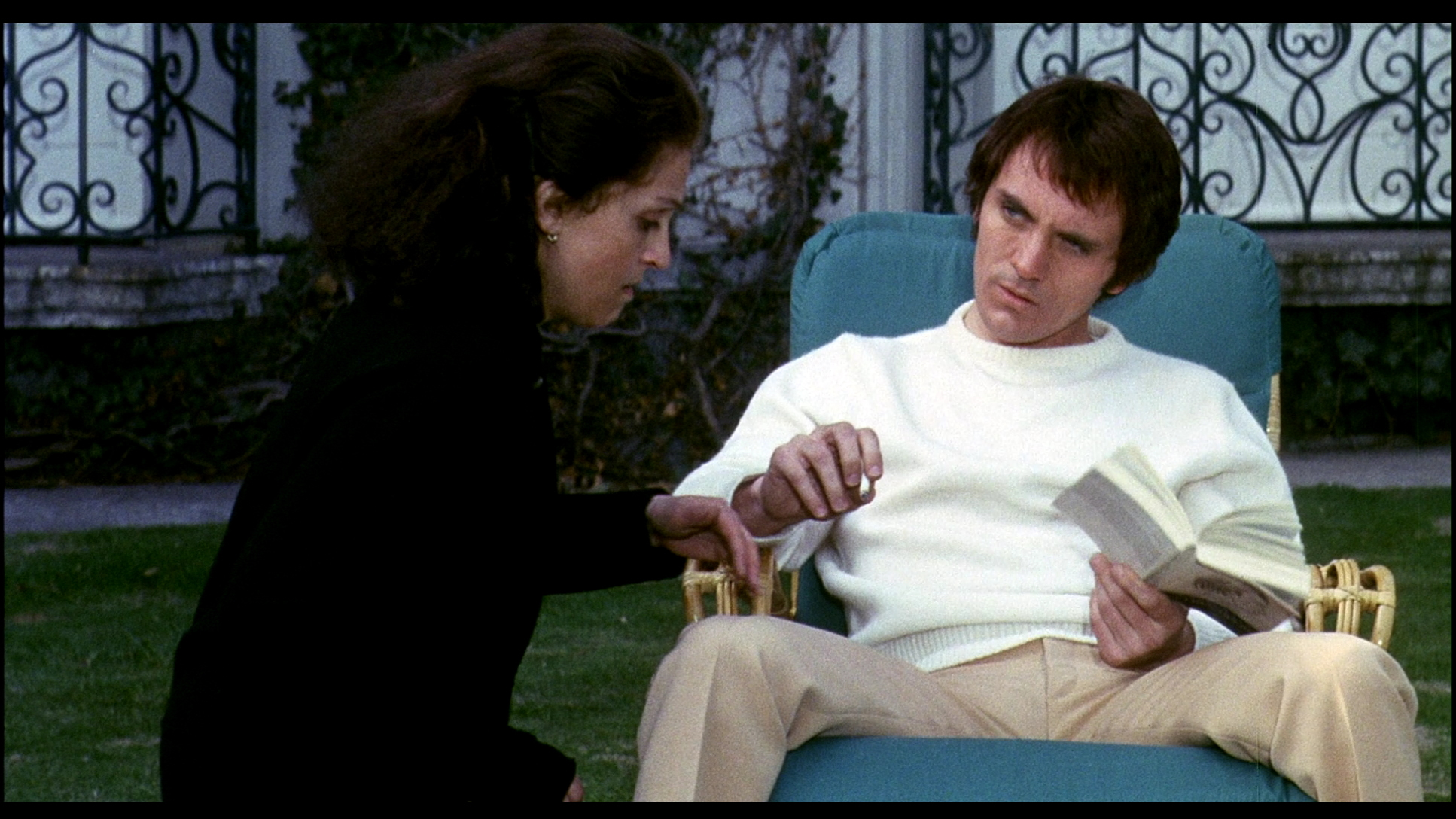
A magnetic stranger (Stamp) arrives during a party at a typical house populated by a factory manager father (Massimo Girotti), an elegant and aloof mother (Death in Venice's Silvana Mangano), a daughter (Anne Wiazemsky), a son (Andrés José Cruz Soublette), and a homely maid (Twitch of the Death Nerve's Laura Betti). The stranger and the son share a room, but one by one the newcomer finds a way to psychologically and physically seduce everyone around him. Igniting spiritual needs as well as sexual ones, he abruptly disappears and leaves his conquests to deal with the aftermath in their own fashion. Needless to say, some of them adapt far better than others as divine influence and madness come into view.

vspace="8"> Slow, formally composed, and absolutely a product of its time, Teorema concerns itself with transformative power, be it through God, sex, or the act of watching cinema itself. Pasolini constrasts sepia-toned and color footage, windswept wilderness with the developing city, low class peasants with empty middle-to-upper class members; the camera lingers on the actors' bodies in a detached but strangely erotic fashion, though Mangano's sexual awakening turns ugly in the final act. Groundbreaking at the time for its politics, expressionistic acting, and surprising full frontal nudity, Teorema became an international favorite of the critical and coffee house set, becoming one of Pasolini's most widely discussed titles (often among those who couldn't sit through the entire film).
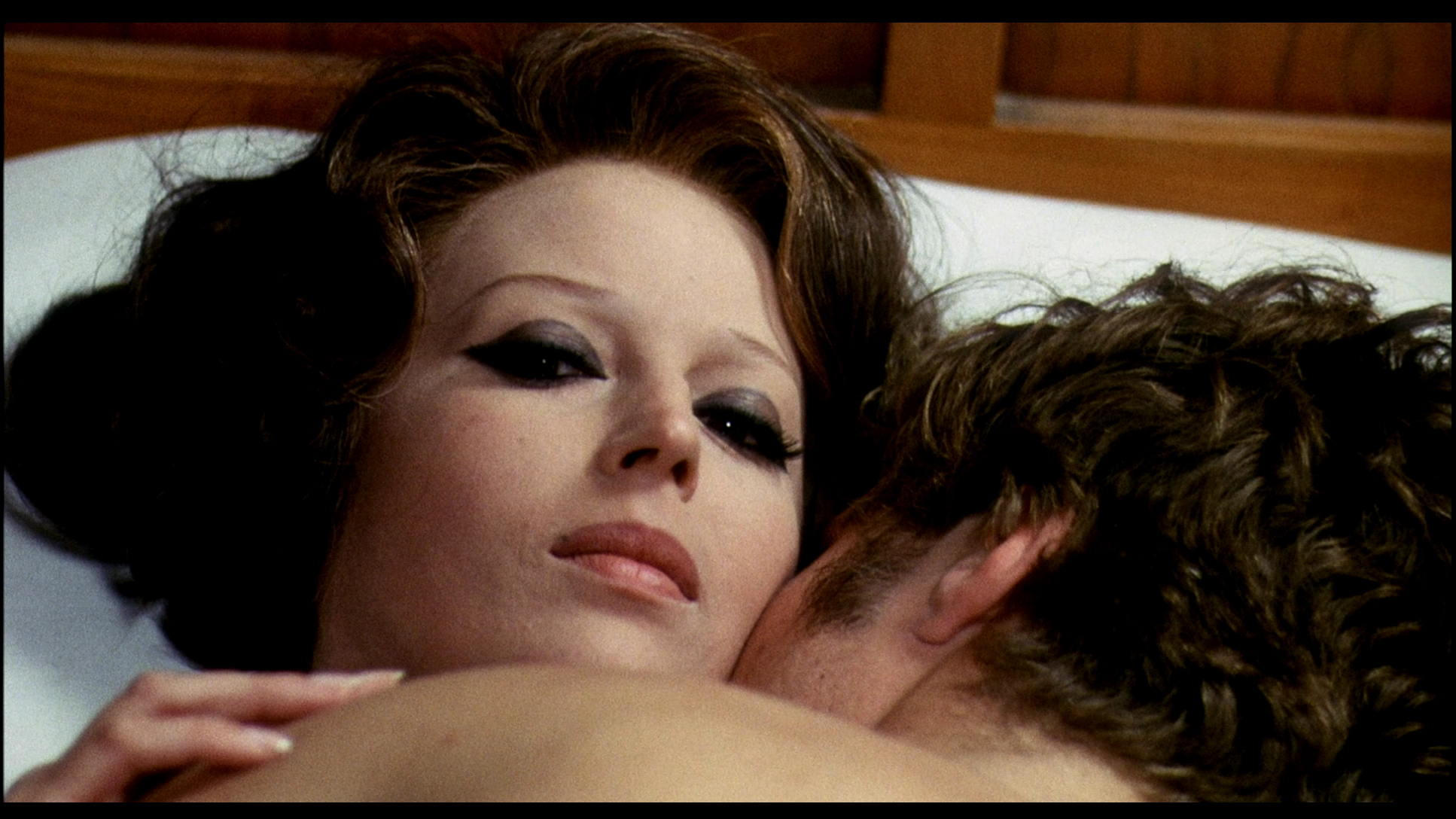
Like many Italian films of its era and onward, Teorema was shot with an international cast and dubbed in every territory in which it was released. Most viewers got an Italian language version with subtitles in their own native language, but the DVD release from Italy contains both the Italian audio (no English subtitle options) as well as the far more obscure English dubbed track. vspace="8">Surprisingly, the latter is by far the more satisfying of the two; the dialogue is recorded and mixed more naturally, and the English track features a much more prominent and engaging use of the wild Ennio Morricone score including some catchy pop music and peculiar atmospheric compositions. Though the film only contains a few minutes of dialogue during its running time, the presence of Stamp's real voice on the English version is quite welcome and makes this, along with a few other rare exceptions like Fellini Satyricon and Fitzcarraldo, that rare "foreign language" film whose English track provides a solid argument against the "native language with subtitles" argument. Though not anamorphically enhanced, the widescreen Italian DVD looks beautiful and easily surpasses the grungy, battered transfers which blighted the home video market for years. A widescreen French DVD is also available, in a far less colorful and satisfying transfer in Italian with French subtitles. Extras on both are mainly text-based, though the Italian disc does contain newly created trailers for a handful of the company's other arthouse favorites such as Belle de Jour and Throne of Blood.


Mondo Digital ReviewsMondo Digital LinksFrequently Asked Questions