B&W, 1965, 104m.
Directed by Mario Caiano
Starring Barbara Steele, Paul Muller, Helga Liné, Lawrence Clift, Rik Battaglia
Severin Films (Blu-ray & DVD) (US R0 HD/NTSC) / WS (1.66:1) (16:9)
B&W, 1965, 104m.
Directed by Mario Caiano
Starring Barbara Steele, Paul Muller, Helga Liné, Lawrence Clift, Rik Battaglia
Severin Films (Blu-ray & DVD) (US R0 HD/NTSC) / WS (1.66:1) (16:9)
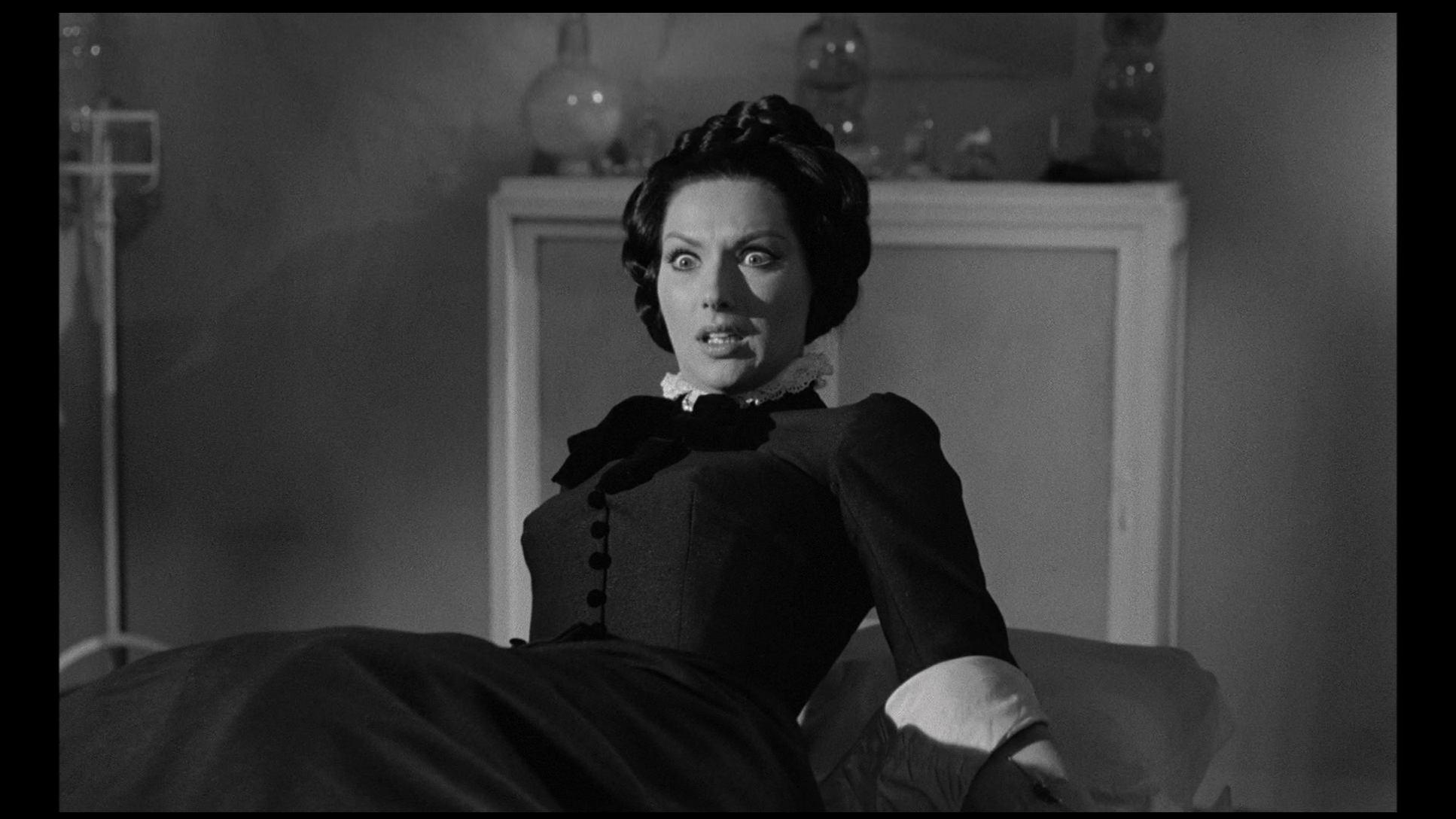
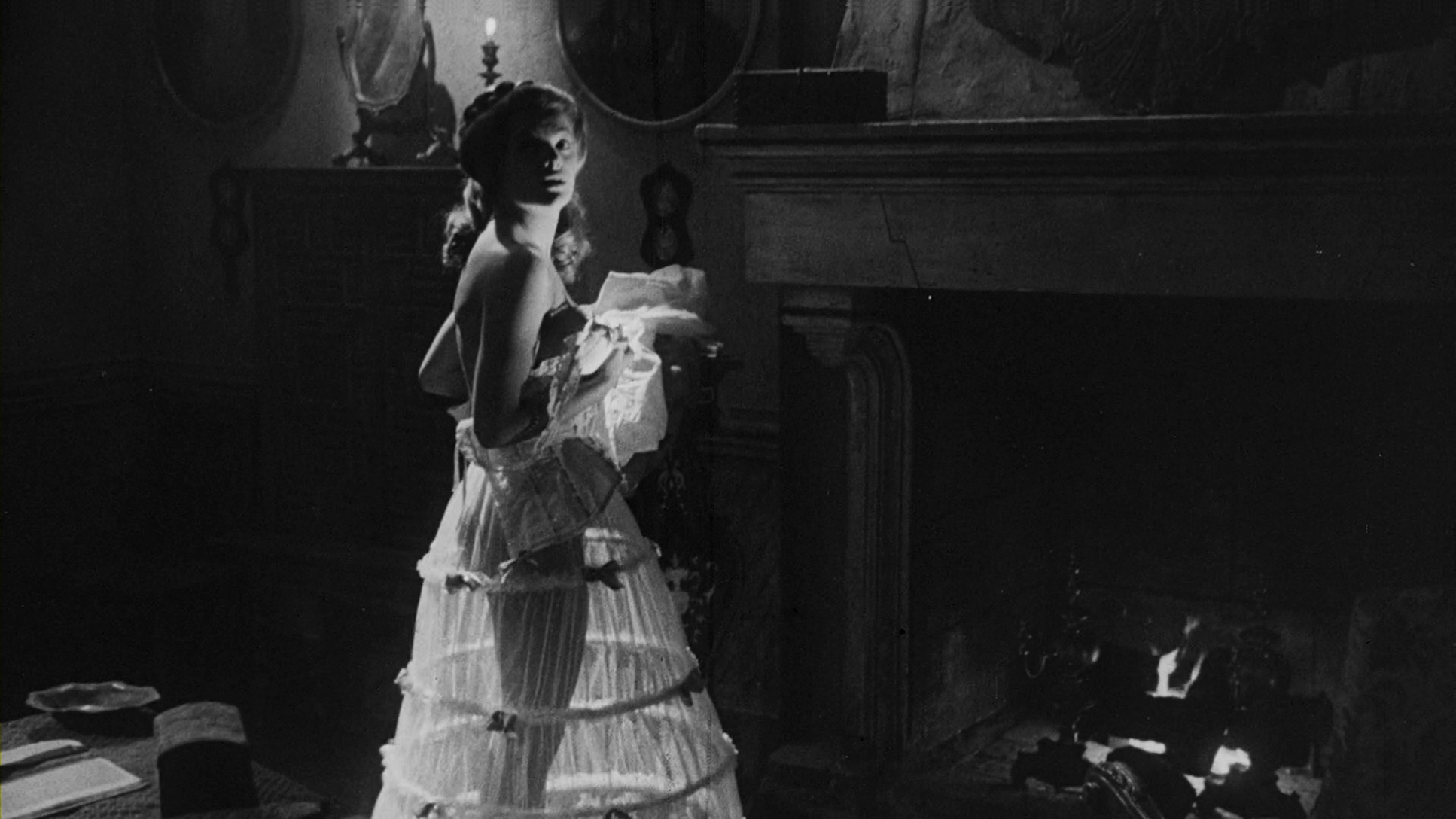
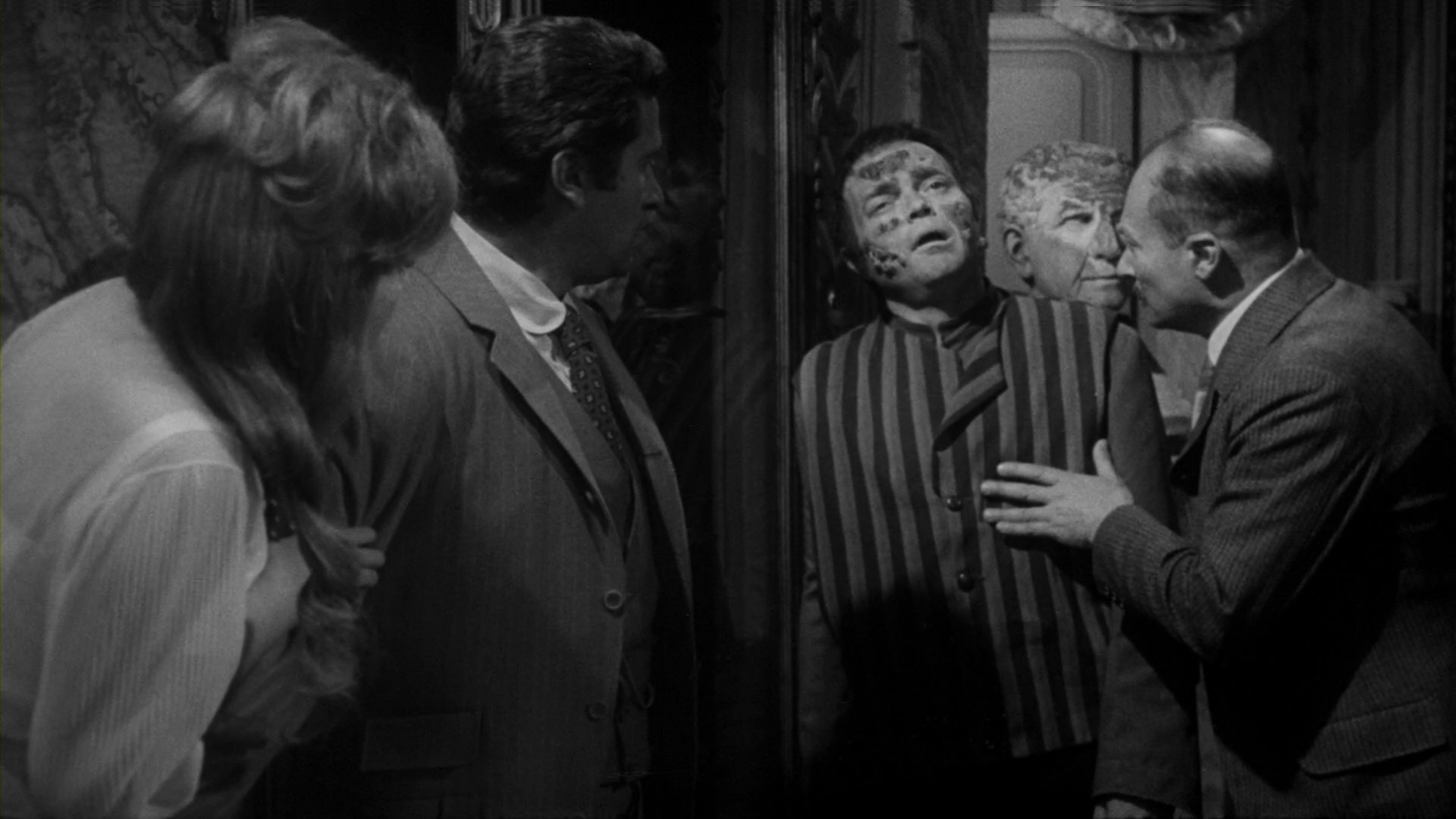
 Made at the height of Italy's golden age of gothic horror, Nightmare Castle has been one of the most widely available titles on home video since the days of VHS, largely thanks to the public domain status of its much-abbreviated American version. Horror fans have long cherished it as perhaps the ultimate visual tribute to its leading lady and Italy's first real scream queen, Barbara Steele, who had already captivated viewers with her sinister, uncanny beauty in films like Black Sunday and The Horrible Dr. Hichcock. Add to that some heaping dollops of sadism and you've got an instant drive-in classic which has nevertheless fared very poorly through much of its home video history, at least until the late DVD era.
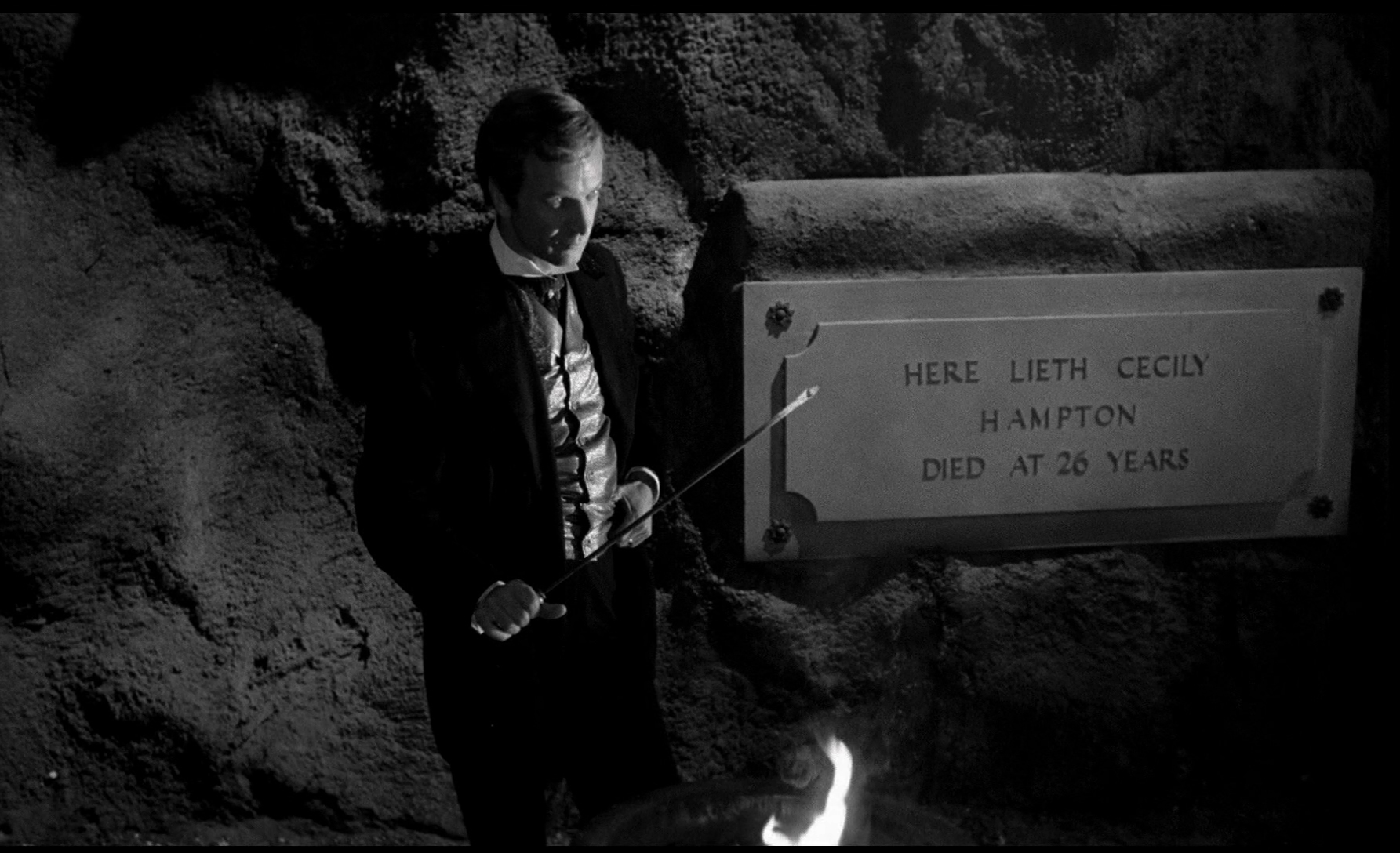
 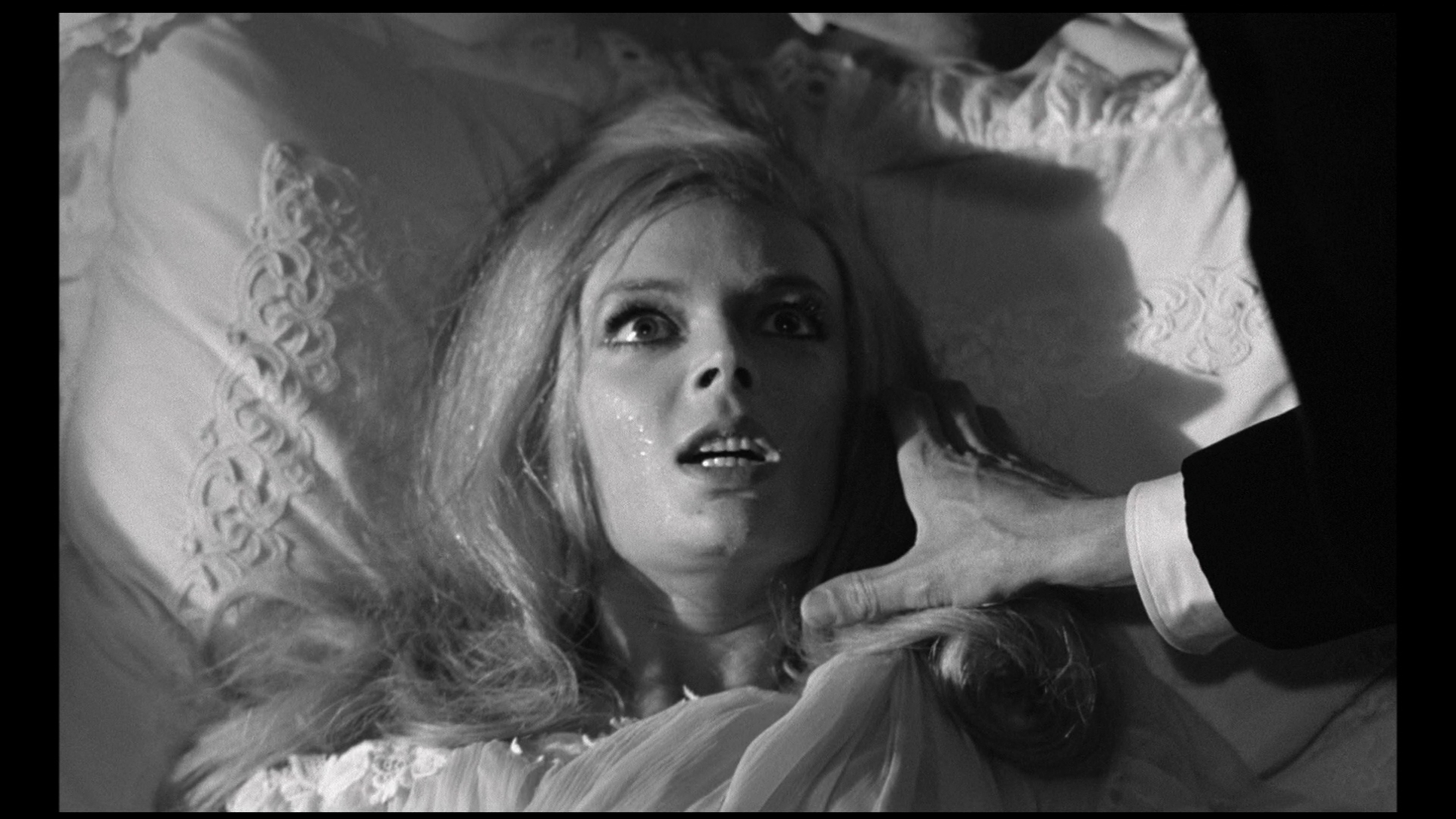 drops of acid, ties Muriel to a bed, electrocutes them both in mid-embrace, and slices out their hearts while charring the remains into potted plant ashes. Unfortunately Muriel tells him just before dying that she secretly changed her will and left all of her fortune to her "idiot" stepsister, Jenny. Undeterred, he ignores the attentions of his elderly, evil housekeeper, Solange (Eurosleaze favorite Helga Liné), whom he rejuvenates with some kind of blood experiments, and swiftly marries the nervous,
  blonde-haired Jenny (also Steele), whom he brings home in lieu of a honeymoon. (The fact that these "stepsisters" look exactly the same is never really addressed by the script, by the way.) Soon Jenny's having bizarre nightmares and wandering around the castle a lot, while the mad scientist's plot to drive her insane is complicated by what might be the ghosts of his recently dispatched victims.
  sinister work all around (at least after the latter ditches her embarrassing "old age" make-up from the first couple of scenes), and the claustrophobic nature of the film (not to mention its incredibly small cast) does set it apart somewhat from its more flamboyant peers. Oddly, this proved to be Steele's last major Italian vehicle to get wide distribution (not counting the weird hybrid The She-Beast or the barely-seen An Angel for Satan), though at least in this case she gets to finally provide her own voice for
 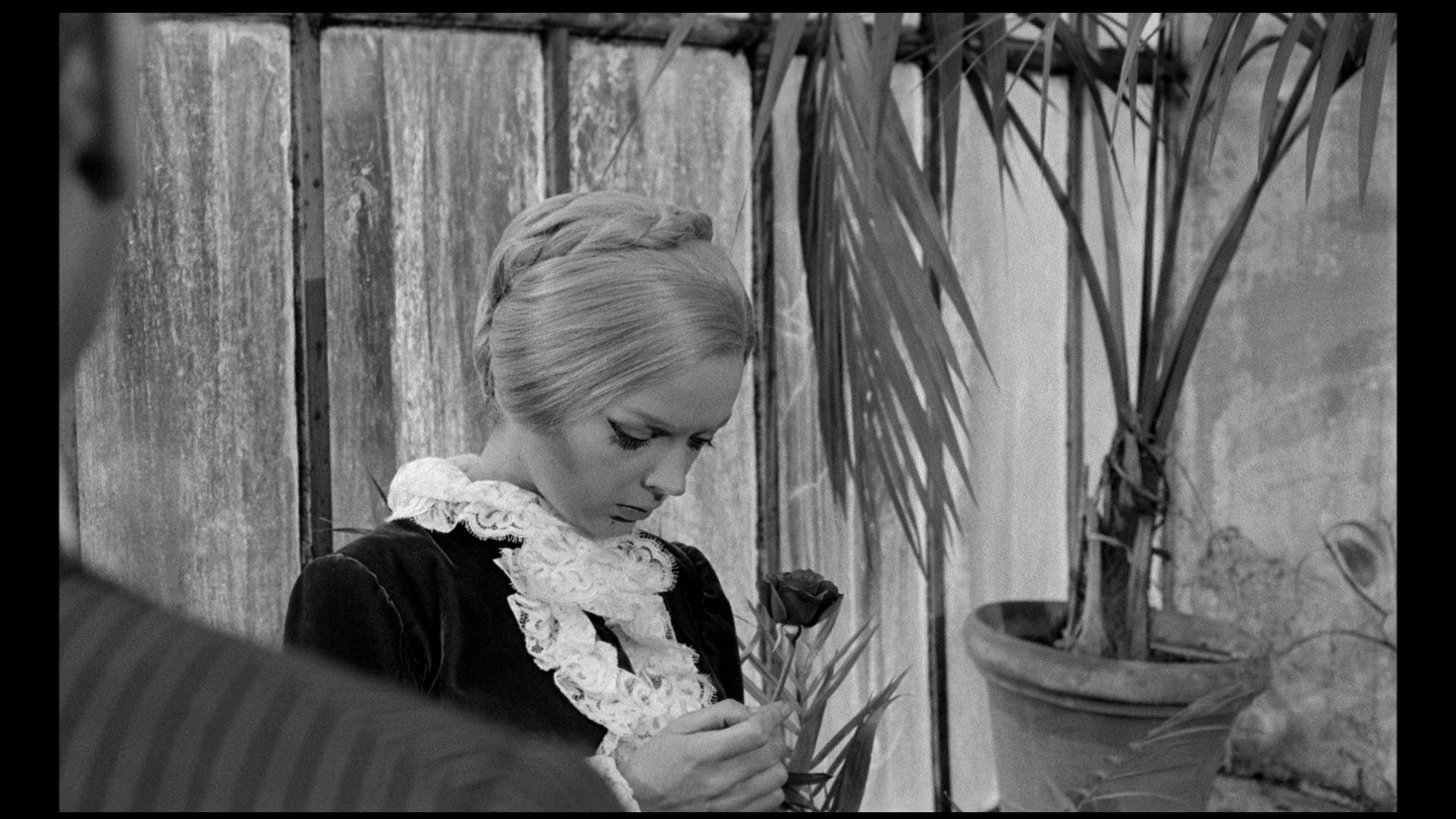 Jenny's character.
 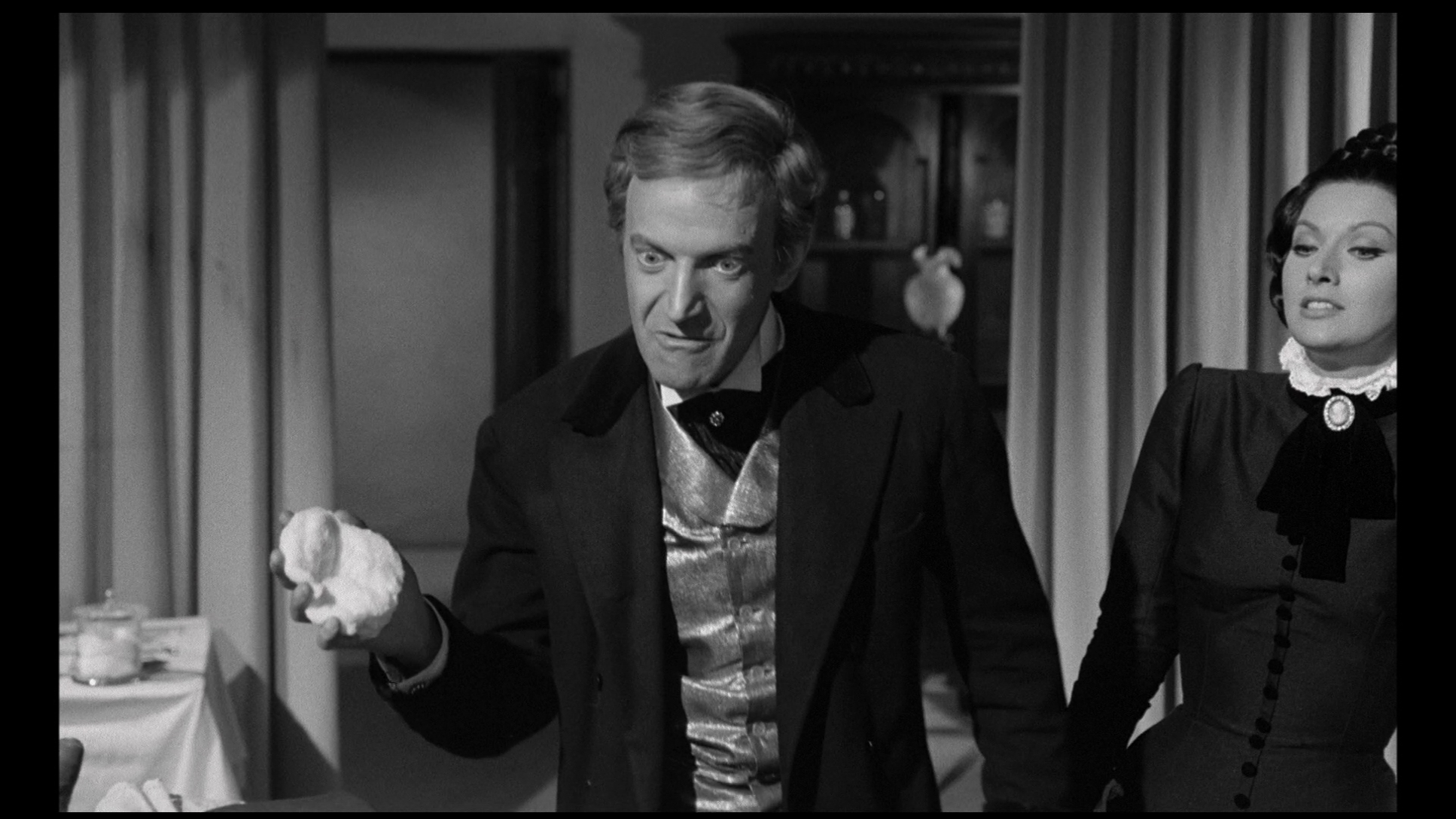 domestic release of the European version under the perplexing title of The Faceless Monster, a flat letterboxed version that would have been great if it weren't for some very distracting compression problems, a distorted running time due to dodgy PAL conversion, a soft and damaged transfer, loads of video crosstalk through the entire picture, and, to copyright it as a "special edition," layers of newly-added sound effects (crickets, wind, howling dogs, etc.) plastered through several scenes.
 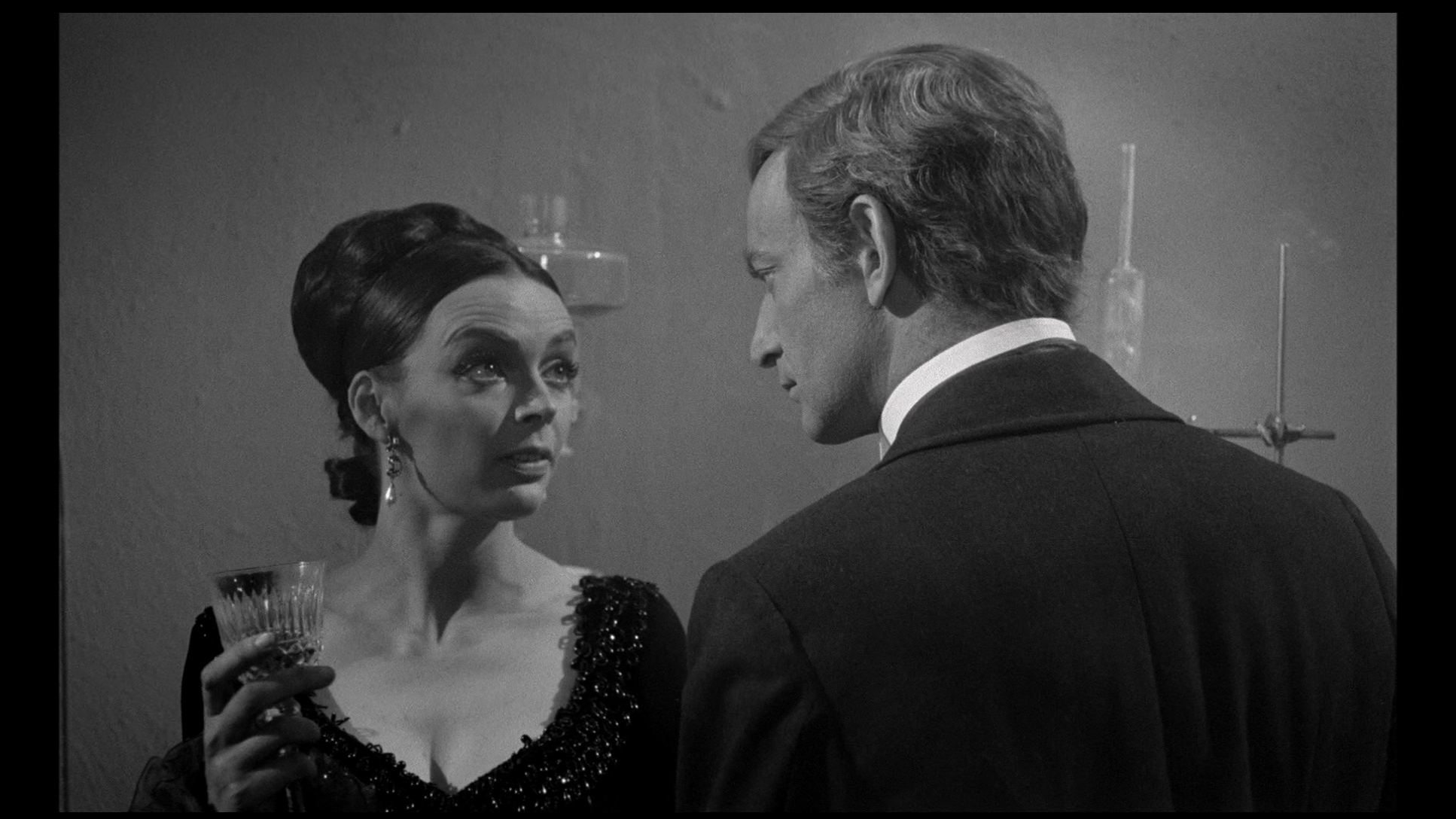 Severin managed to surprise everyone with their 2009 DVD release, taken straight from the original Italian negative and looking light years better than it ever had before. The blacks are rich and deep, facial details are pin-sharp, and the landscaping around the castle is now clear and free of jitter and distortion. Some fleeting damaged splices appear at a couple of scene transitions (and one negative tear at the 58 minute mark), but that's extreme nitpicking in what is otherwise a superlative presentation. The audio also runs at the correct speed and sounds clearer than before, though frankly the dub track is still pretty lousy even if the actors were obviously speaking English on the set. That aural disconnect has often been cited by fans as part of its charm, however, so perhaps that's just as well. The original Italian credits are also preserved with the title cards over a macabre piece of artwork. The disc also packs in some excellent bonus features as the formerly supplement-shy Steele finally started appearing on some of her releases (including the aforementioned The She-Beast for an amusing commentary track), and here she
  devotes an entire featurette, "Barbara Steele in Conversation," to an encapsulation of her career from start to finish. It's a dream come true for Steele fans as she discusses her early modeling days, her libertine experiences in boarding school, her miserable experience working for 20th Century-Fox on the Elvis vehicle Flaming Star, her big break in Italian films (not just the horror ones), her memories of working with Fellini on 8 1/2 (including a hilarious anecdote about an Antonioni gag left on the cutting room floor), her segue into '70s exploitation immortality working on the first films of Jonathan Demme and David Cronenberg, and finally her unlikely ventures into producing with Dan Curtis and her frustrating recurring roles on the revamp of Dark Shadows. Perhaps most valuable of her is her account of shooting scenes as a sexual alchemist for Fellini's Casanova, only to have the original footage stolen and the film started over from scratch. The avalanche of rare, priceless Steele images is just icing on the cake, too. Next up is "Black, White and Red," with Caiano appearing in a newly-shot interview along with his very aggressive orange cat for a discussion mostly centered around Nightmare Castle, including the explanation behind his perplexing screen credit, his affinity for Poe which exploded throughout the script of this film, and his limited recollections of Steele. Never one of Italy's more distinguished directors, Caiano nevertheless remained busy working on everything from sword and sandal quickies to spaghetti westerns to oddities like Nazi Love Camp 27, The Fighting Fists of Shanghai Joe and Nosferatu in Venice, so it's nice to finally get the story behind the career of someone who seems like a good-natured craftsman. Finally you get a pristine UK trailer (under the Night of the Doomed) title and a much fuzzier US trailer (as Nightmare Castle) which is essentially
  just a chopped-down version of the first one. In short, it's an obvious must for Euro horror fans and especially important for restoring one of the last mistreated titles in the Steele canon.
  moderated by David Del Valle. The atmosphere is very similar to the one they conducted for The Crimson Cult, with much discussion of her career in Italy at the time, her fondness for playing predators rather than victims, the opulence of European cinema at the time, her hopping back and forth to England, and a few anecdotes specific to this film including her memories of Battaglia. There's a fair amount of empty space at times so you may want to keep your fast forward button handy. If that weren't enough Steele for you, the disc also contains fresh HD transfers of 35mm prints of two more of her Italian horror classics, presented as is with celluloid-related imperfections intact (and no chapter stops). As far as bonuses go these are pretty incredible, however, and definitely preferable to the very soft, ragged
  16mm prints you usually see popping up. First up is Castle of Blood, the Antonio Margheriti gothic gem fraudulently presented as an Edgar Allan Poe adaptation in America. The Synapse DVD of the alternate European cut (with a brief bit of topless nudity and some stronger lesbian content) is readily available, but this is by far the best presentation of the American version despite the scuffs and scratches and somewhat flat gray scale. Surprisingly robust is the third feature on the disc, the American cut of Terror-Creatures from the Grave, a public domain mainstay by Massimo Pupillo with Steele as a widow involved in a spooky tale involving the resurrection of plague victims and a string of murders revolving around a gloomy castle. The transfer looks shockingly good, all things considered, with the most detail and deepest blacks of any transfer out there to date. As an added bonus, the alternate and additional scenes in the European cut are included here as a separate 14-minute reel in French with English subtitles (presumably sourced from the French DVD). The American trailers for both bonus features are included as well along with "Vengeance from Beyond" (26 mins.) and "A Dance of Ghosts" (16 mins.), a pair of featurettes about the the two bonus Steele films with participants including critic Fabio Melelli, actor Riccardo Garrone, and archival audio interviews with Pupillo and Margheriti covering everything from their colorful Anglicized pseudonyms to the breakneck production schedules and stylish improvisations common to Italian productions of the period. Loaded to the gills, the entire disc turns out to be quite a treat for Italian horror fans and especially those smitten by the ageless, hypnotic presence of the great Barbara Steele.