Color, 1975, 94 mins. / Directed by Radley Metzger / Starring Mary Mendum, Carl Parker, Marilyn Roberts / Synapse (US R0 NTSC) (MSRP $24.98) / WS (1.78:1) (16:9)


After directing Score, which incorporated elements of non-simulated sex and bisexuality into his successful template of intelligent, upscale erotica, director Radley Metzger pushed the genre even further with the next in his line of literary adaptations, The Image. Faithfully translating the novel L'Image by Jean de Berg (actually Catherine Robbe-Grillet, with a bit of assistance and a prologue from her famous husband, Alain), this film expands on the bondage flourishes of Camille 2000 and, along with Just Jaeckin's Story of O, remains the best filmic treatment of S&M to date.

Against the posh backdrop of Paris, well-dressed lothario Jean (Carl Parker, a.k.a. Mike the coffee-scalded handyman in Score) becomes entangled with two women at a party: young and beautiful submissive Anne (Mary Mendum) and her austere, sadistic mistress, Claire (Marilyn Roberts). An afternoon trip to the rose-filled Bagatelle Gardens results in some petty enforced larceny, perverse water sports, and punishment by thorns, much to Jean's delight. After more flirtation, they finally become a threesome engaging in debauched sexual behavior around the city: in restaurants, in retail dressing rooms, in bathtubs, and so on. Claire's increasingly sadistic treatment continues to escalate, hiding a far more complex reservoir of emotions than Jean realized, and the level of Anne's willingness to go along with the brutal treatment becomes too blurry for comfort.

The last film to bear Metzger's real name before he embarked on his five Henry Paris hardcore classics, The Image is as visually luscious as its predecessors. Apart from the peculiar post-synch dubbing for the American actors, the aesthetic value of the film is impeccable and gives it a polish that makes the subject matter even more jarring. A far cry from the rough and gritty nature of the Olga films, for example, this is a class act even when it treads into hardcore imagery (manual and oral only). The last act of the film may be too much for many viewers, as it brutally bangs the viewer's head against preconceived notions of pleasure and pain on film. Even the most jaded exploitation vets should prepare to be shaken up; The Image is simply unlike any other film ever made. The actors are amazingly brave and convincing under the circumstances; all of them had done some commercial work beforehand and put themselves on the line with this unusual gambit. In the '70s this was extremely strong stuff, but now The Image is perhaps even more shocking as its sensibilites are so far removed from anything seen on movie screens in the U.S.

Various video editions have circulated under the original title, as well as the more infamous reissue name (The Punishment of Anne) and a briefly available edited cut as The Mistress and the Slave. None of them hold a candle, or even a moldy chunk of wax, compared to the Synapse DVD. Taken from the original negative, this is by far the most impressive presentation of a Metzger title on any home video format to date. Compared to even recent blockbuster titles, this transfer is astonishing; the colors are beautifully rich and film-like, while detail is sharp and realistic enough to clearly expose the actors' dental fillings when they're screaming or, in Parker's case, laughing diabolically. Audio comes in either the original mono mix, a tastefully remixed stereo track with some nice ambient music separation, and an isolated mono music track highlighting the catchy, funky score (uncredited, alas, and perhaps a skillful library compilation like the Henry Paris titles). Artist and writer Stephen R. Bissette, a familiar name to many a horror fan, contributes some nicely appreciative liner notes, while the disc (featuring some wonderfully atmospheric menus) also houses a Metzger filmography complete with trailers for many of his earlier soft titles. Considering this film has one of the widest fan bases outside of Metzger's usual appreciative audience (which thankfully seems to be growing by the day), this title has been a long time coming to home video and easily exceeds one's wildest - and kinkiest - expectations.


Color, 1969, 117 mins. / Directed by Radley Metzger / Starring Daniele Gaubert, Nino Castelnuovo, Eleanora Rossi-Drago, Silvana Venturelli / Music by Piero Piccioni / Cinematography by Ennio Guarnieri / Image (US R0 NTSC) (MSRP $24.95) / WS (2.35:1)


This delicious cocktail of a movie marked a new era for erotic films in general and, most importantly, for Metzger; while he had played around with adapting classic stories into a modern context before (Carmen, Baby), here he transformed a classic Alexandre Dumas Fils romance best known as a Greta Garbo tearjerker vehicle into a sumptuous, jet-setting tragedy filled with beautiful, self-centered people whose nobler virutes are invariably destined to clash with their stations in life.

Apparently, life in the near future will cause cities (Rome, in this case) to be filled only with the rich and decadent. Into this kinky universe stumbles the romantic Armand (Nino Castelnuovo, best known as Pierre in Umbrellas of Cherbourg and the giallo favorite Strip Nude for Your Killer), whose father provides him with a lavish lifestyle in exchange for control over his life. Armand is offered his pick of the ladies for a companion, and against his friends' advice, he sets his sights on Marguerite (the lovely Danielle Gaubert, who tragically died shortly after this was released). A true party girl, Marguerite flits from one lover to another amidst wild parties and bouts of intravenous drugs. Obviously aware that her days are numbered, she resists Armand's desire to form a true relationship, but eventually their passion consumes them. Unfortunately, fate has a few surprises in store for them.

While Camille 2000 is packed with memorable images and haunting scenes (love those mirrors!), the highlight is undoubtedly a ten minute party sequence in which the voluptuos Olympe (Silvana Venturelli) vies for Armand's affections at a lavish underground party decked out with a gold prison motif; arguably the greatest setpiece in the Metzger canon, the inevitable sex scene is powerful and erotic, tragic and exciting at the same time, with much of its power owed to the fantastic score by Pierro Piccioni (buy the CD!), one of the finest ever composed for an Italian film. The astonishing locations and production design constantly delight the eye while perfectly evoking the film's period and skewed outlook; likewise, Metzger's keen editing sense is in fine form, particularly in the startling moment when he cuts from a syringe plunging into skin to a close up of drums being played in a music combo. Also, here Metzger begins to explore the playful cinematic self-awareness (the film begins with a clapboard for Camille 2000 appearing over the opening shot) which eventually exploded the next year in The Lickerish Quartet. Of course, even the most consummate visual style needs something to hang onto, and Castelnuovo and Gaubert, a great screen couple, provide the necessary emotional depth to make the narrative a poignant, even wrenching experience.

The First Run transfer presents the film's Panavision framing perfectly and looks better than ever on the Image DVD. The same transfer was previously available from Audubon Video, which opened the matte up at the top to expose distratcing splices and dirt. Metzger's last scope film until The Cat and the Canary ten years later, Camille 2000 desperately requires all of the image to really work with an audience, and this is simply the only way to see it. Some print damage is still evident, particularly in the opening two minutes and during reel changes, but it's a miracle this still looks so good (though the original three-strip Technicolor photography has obviously aged a little). This version also runs much longer than the horrendous VHS release from Magnum Video, which excised the end credits and, strangely, one minute from a very darkly lit, mild love scene in the middle of the film. More oddly, the Magnum and First Run prints conclude with Armand rushing down the steps with Marguerite's friends in a drunken stupor, echoing the film's opening, while the Audubon Video edition contains the same scene earlier (directly after the casino sequence) and simply ends on a simpler, more romantic note at the hospital. Obviously, this difference significantly changes the tone of the film; by placing Armand drunk at the end, the resulting impression is that he has become completely despairing and borderline insane after Marguerite's death. It works either way, but both versions are worth checking out. Like the other First Run titles, the DVD also includes the European release trailer, in this case a collection of stills that play like a splashy version of La Jetee accompanied by Piccioni's score.


Color, 1970, 87 mins. / Directed by Radley Metzger / Starring Silvana Venturelli, Frank Wolff, Erika Remberg, Paolo Turco / Image (US R0 NTSC) / WS (1.85:1)


Put simply, Metzger would be a crucial director even if he had only made The Lickerish Quartet and nothing else. On its own terms as cinema and outside the boundaries of European erotica, this remarkable film operates on levels of narrative gamesmanship, visual architecture, and technical virtuosity that put most modern films to shame. Many illusion versus reality films tend to fall flat on their own pretension, but this, along with 8 1/2, The Stunt Man, and Last Year atMarienbad, is one of the few exceptions. Unfortunately, the film's sorry presentation on video for the past twenty years has done nothing to enhance its reputation; while virtually all prints have remained uncut, the majority of video transfers (often from public domain companies and sporting title changes like Erotic Illusion) have been washed out and poorly cropped. Metzger's short-lived Aububon Video label briefly issued a striking new transfer of the film a few years ago; this presentation mixed amostly letterboxed presentation with full frame during the stag filmfootage and the motorcycle daredevil sequence. First Run's edition, also supervised by Metzger, performs some additional color correction and looks even better, with the entire film uniformly matted at 1.85:1 to prevent those jarring shifts in aspect ratio (a la most Stanley Kubrick titles).

Frank Wolff (a late Eurosleaze veteran of such titles as Cold Eyes of Fear) and the austere Erika Remberg (the bitchy big top diva from Circus of Horrors) are an unhappily married couple spending their time in a vast, deserted castle with Remberg's petulant son, Paolo Turco. One evening the three sit around watching a scratchy B&W porno reel on Wolf's 16mm projector and are taken with a blonde beauty (Silvana Venturelli, coming off her memorable cuffs and cages stint in Camille2000) in the film. Afterwards they embark to a carnival where a young woman performs a gravity-defying motorcyle stunt. When she removes her helmet, she looks just like the woman in the film... but with brown hair.Wolff conspires to lure the woman back to the castle and surprise her with the film, but upon doing so, they find that the film has inexplicably changed so that the actress' face is no longer visible. Venturelli stays the night, and the following day, she takes turns seducing the family members one by one and freeing them from their sexual shackles.

While The Lickerish Quartet contains a great deal of sex, the love scenes are ingeniously presented as moody vignettes which reflect the nature and transformation of the characters. The film's celebrated highlight, in which Venturelli and Wolff ferociously roll around in a library whose floor is decorated with blow ups of dictionary definitions of sexual terms, is only one of the many pleasures to be found in savoring and gradually taking apart this elaborate puzzle. All of the actors are well up to the task here, and the twangy, vibrant score by Stelvio Cipriani (or Stephen Cipriani, as the film credits him) adds to the twisted, playfulambience. Beautifully shot and enhanced with razor sharp editing (including many disorienting cross cuts between time and space), The LickerishQuartet is that rare film that not only benefits from repeated viewings but actually requires them.


Color, 1973, 90 mins.

Directed by Radley Metzger

Starring Christiane Kruger, Mark Damon, Elga Sorbas, Anton Diffring / Image (US R0 NTSC) / WS (1.85:1)


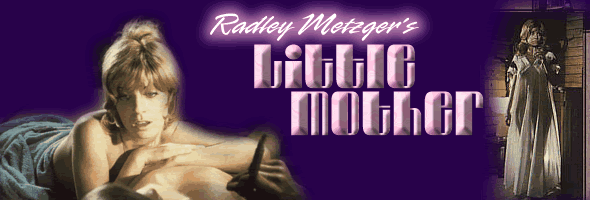
A far cry from Andrew Lloyd Weber's musical Evita, Metzger's political saga adapts the famous real life rise to power of Eva Peron (here called Marina Pinares) as a sexy, violent narrative filled with backstabbing and power plays. Though the film does feature two memorable sex scenes, one involving a shower door and the other an orgy that pushes the R rating about as far as it will go, most of the running time focuses on Marina's vicious rise to power and the parallel story of Annette (Elga Sorbas), whose revolutionary romance directly leads to the assassination finale. While the story more or less follows the familiar Evita framework (Pinares has learned of her terminal cancer at the beginning of the film and engages in Machiavellian tangos with the Cardinal, aptly played by Anton Diffring), the gritty tone and strange, ultra-European ambiance yield completely different results. Christiane Kruger easily owns the film, murdering and seducing her way into viewers' hearts; the bizarre clash of accents and intricate story require more attention than usual from viewers, but Metzger fans should find it worth the effort.
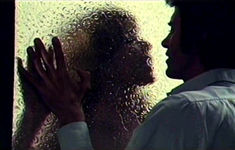
The DVD from Image and First Run is derived from the same source used for the film's video release in Holland as Blood Queen. Inappropriate moniker aside (the original Little Mother title refers to the people's nickname for Marina), the print is good if not quite pristine. The image is free of any noticeable damage, while the color looks about as good as one could expect from a '70s European film. Not a demo piece, but at least the sound has been cleaned up dramatically from the warbly, distorted PAL version. A true anomaly in Metzger's career, Little Mother will surprise fans but provides some juicy food for thought and a few good cheap thrills along the way for good measure.


Color, 1973, 83 mins.

Directed by Radley Metzger

Starring Clare Wilbur, Lynn Lowry, Gerald Grant, Calvin Culver, Carl Parker / Image (US R0 NTSC) / WS (1.85:1)


Of all of Metzger's films, Score has had the strangest historyon both the big screen and on home video. Conceived as an adaptation of a sexy off-Broadway play about bisexual couple-swapping, Metzger's film transplants the action to a fictitious European riverside town (actually inLuxembourg, though it looks for all the world like the Riviera) whereeveryone has a cushy, fulfilling job and submits to any sexual whim that strikes their fancy. While the play was fairly coy about the actual sexualinteraction between the characters, Metzger's film holds back nothing and treads into waters which have never really been explored since.

Elvira (Clare Wilbur, a veteran of the play) and Jack (Gerald Grant, who later appeared in Metzger's Naked Came the Stranger and the Italian gore favorite Eaten Alive), a happily married swinging couple, play a game with each other in which they earn points by seducing unwitting members of the same sex. In the midst of exchanging savvy film history bonmots, they agree that they have become bored with the lack of challenge in picking up folks from magazine ads and set their sights on a young new couple: Betsy (Lynn Lowry, a great B-movie actress in the similarly themed Shivers as well as Sugar Cookies, I Drink Your Blood, and Cat People) and Eddie (Calvin Culver, a.ka. gay porn actor Casey Donovan, who gained notoriety for dating late novelist/actor Tom Tryon and going straight, sort of, in Metzger's The Opening of Misty Beethoven). Elvira's plan entails her inviting Betsy over while Jack's away. In front of Betsy, Elvira seduces the studly phone repairman (Carl Parker, also in Metzger's remarkable The Punishment of Anne), a part originally played onstage by Sylvester Stallone(!), by dumping scalding coffee on his lap (there's a new one). Betsy and Eddie return for a little dinner and costume party in which they don outfits as reflections of their personalities, allowing the experienced couple to close in and make their movie.

While Score could easily have become yet another stagnant play on film, the good performances, sharp and very funny writing, eye-catching locations, and inventive camerawork manage to keep things moving at a rapid clip. Once again, Metzger's sense of rhythm during both the dialogue and seduction sequences is impeccable, with the film's centerpiece (crosscutting between Elvira/Betsy and Jack/Eddie) churning up tremendous momentum thanksto the delirious quasi-Morricone score and inventive lighting and camera movements.

Most obviously, the DVD is by far the best this film has ever looked,even more richly colorful and sharp than the First Run VHS release. The Magnum video edition from the late '80s looks extremely sick in comparison as it brutally chops the careful compositions into mincemeat, and for some reason, the Magnum print was also cut to remove virtually every trace of frontal nudity from the film (and that's quite a bit). Metzger's Audubon Films video label very briefly allowed a complete print of Score onto the market; this print, seen only in a few theaters originally, contains about two minutes' worth of mild hardcore male footage and some steamy lesbian groping. Not surprisingly, the hardcore material is missingfrom the First Run print, reportedly Metzger's preference, but it's strange that alternate takes weren't done to cover what surely would have been responded to with outrage by most audiences. While the frontal nudity is intact through most of the film, the big finale has been very heavily trimmed (at least over 20 brief cuts by a simple side-by-side comparison); the loss of the footage itself isn't that painful (in many ways, the filmbenefits overall from it), but the haphazard dicing destroys the flow of editing for what remains; the music consistently jumps with each cut, causing a nasty case of aural whiplash. This problem aside, the DVD is overall the best way to see Score and definitely looks better thanthe earlier uncut but fuzzy-looking, fullscreen Audubon release. Unprepared audiences may greet it with disgust or extreme discomfort, but foropenminded viewers, this is a fun, lighthearted, and almost sinfullyentertaining treat, not to mention a nostalgic (and for many, fantastic andalien) depiction of a time when sex could be enjoyed without guilt or fear.


Color, 1978, 98 mins. / Directed by Radley Metzger / Starring Carol Lynley, Honor Blackman, Olivia Hussey, Daniel Massey, Peter McEnery, Michael Callan, Edward Fox, Wendy Hiller, Wilfrid Hyde-White / Image (US R0 NTSC) / WS (1.66:1)


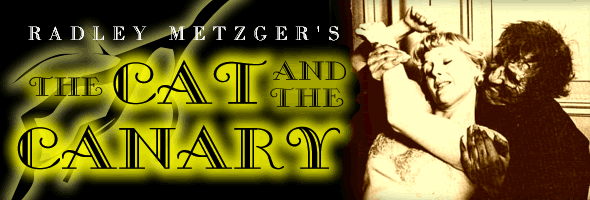
Something spooky is going on at the Glencliff Manor. In 1933, twenty years after the death of rich old Cyrus West, his relatives have gathered on a dark and stormy night for the reading of his will. With the aid of reliable Mrs. Crosby (Wendy Hiller), Cyrus himself (Wilfrid Hyde-White) appears to his heirs via celluloid and at long last reveals the distribution of his wealth. Some, namely the sweet and innocent Annabelle West (Carol Lynley), are overjoyed by the news, while others, like the bitchy Susan Sillsby (Honor Blackman), are less than enthusiastic. Trapped in the house overnight by the storm, the guests are informed by a mysterious visitor that a madman has recently escaped from a nearby asylum. Nicknamed "The Cat," this lunatic uses claw-like appendages to attack his victims... and he may very well be hiding in the house.
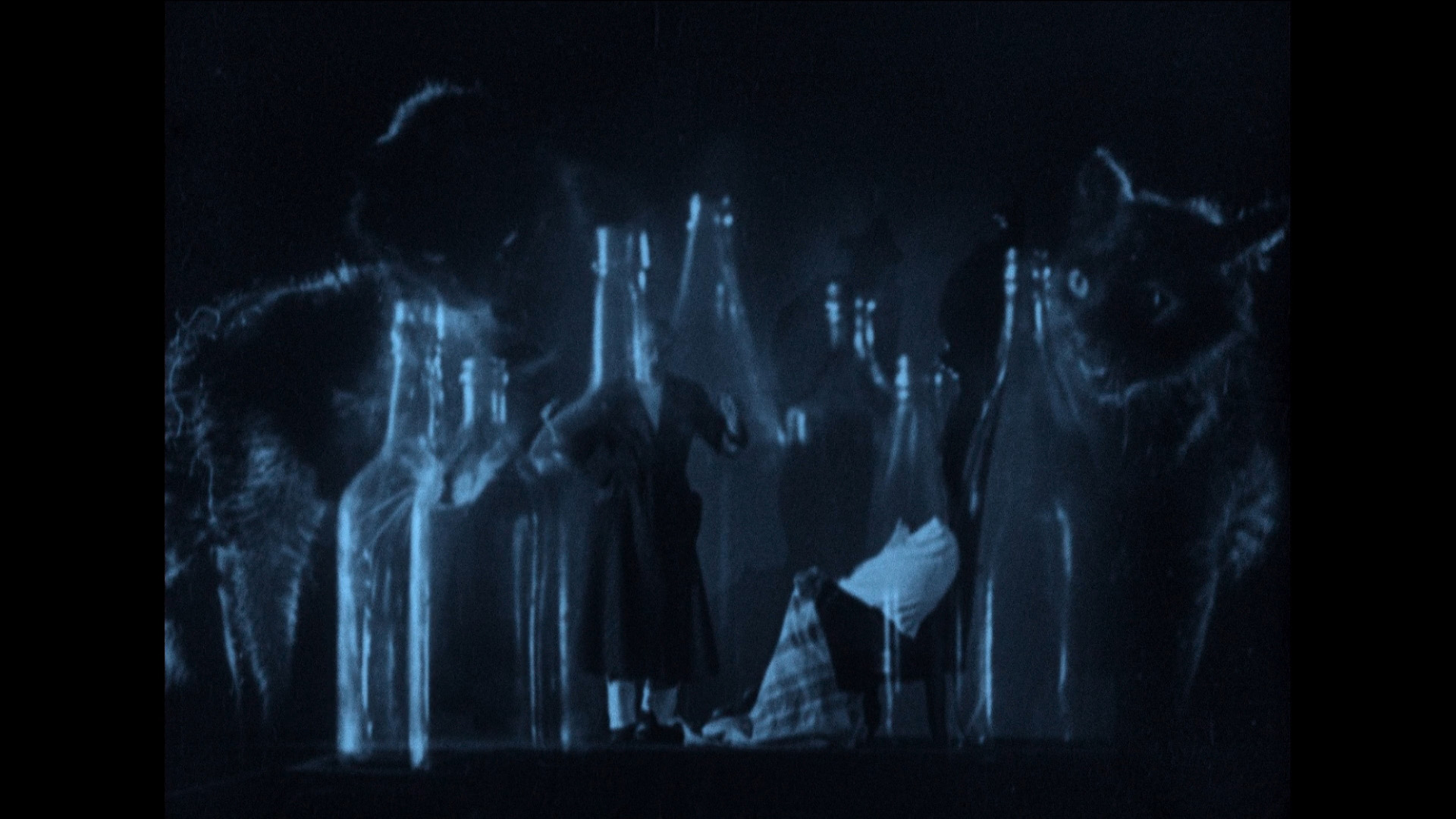
A virtuoso adaptation of the classic 1922 play (most famous as a silent adaptation to film by Paul Leni in 1927), this underrated horror film, Metzger's only outing in the genre, would have a much better reputation had not been associated with all of the remakes and sequels prevalent in the late '70s. The Agatha Christie movie trick of using lots of notable British stars works extremely well here, with Blackman (Pussy Galore herself) taking top acting honors. Olivia Hussey looks nice but generally has little do as Blackman's presumably lesbian lover, and Lynley does fine as the naïve innocent heir (though both she and good guy Michael Callan seem a few years too old for their roles). The real stars of the film, though, are Metzger and the house; he obviously has great fun deploying every old dark house trick in the book and frequently plays with the conventions of cinema (particularly the will reading sequence and the delightful end credits). Beautifully shot and edited, the film soaks in spooky atmosphere, perfect for viewing on a dark, rainy evening, and good luck guessing the murderer's identity. A real pleasure from start to finish. Like most of the Metzger titles, this one shows some signs of wear, including more than a few speckles, but looks far superior to the awful, long unavailable VHS edition from RCA Columbia back at the dawn of home video. Letterboxed at slightly more than 1.66:1, the image quality looks fine but appears to be missing mild slivers on the left and right edges of the screen. In any case, it's great to finally have this back on video, and even viewers unfamiliar with Metzger's other films should find plenty of entertainment here.


Color, 1983, 90 mins. / Directed by Radley Metzger / Starring Carol Levy, Victor Bevine, Shannah Hall, Chris Beach / Image (MSRP $24.95) / WS (1.66:1)


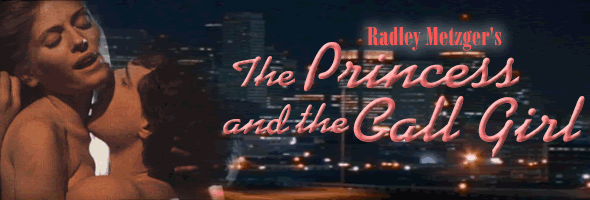
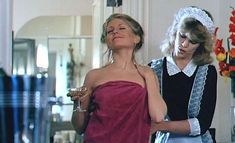
Radley Metzger's last film to date, The Princess and the Call Girl originally debuted in the U.S. on The Playboy Channel but, as demonstrated by this release, was clearly designed to be shown in a theater. Like most of Metzger's films, the plot jumps off from a popular literary source (in this case, Mark Twain's The Prince and the Pauper, though credited to a French story entitled "Frontispiece"), using glamorous locales and sophisticated characters to give its eroticism that unique Metzger atmosphere.

The globehopping story concerns two identical former college friends (both played by Carol Levy) - one a naive rich girl engaged to a virginal preppy guy, the other a high priced prostitute skilled in the methods of manipulating the passions of a variety of men. The prostitute, Lucy Darling (!), accidentally overbooks herself and resorts to asking her friend to swap places for the weekend, a situation which rapidly spins out of control and leads to numerous comic consequences. Of course, the climactic engagement party finds various attendees, including the identical women, hopping bedrooms and guests in an attempt to sort out the confused identities.

Cheerfully fluffy and consistently erotic without pandering to its audience, Princess sports a likable performance from Levy, best known for the terrifying knife in the mattress sequence in Jack Sholder's Alone in the Dark. She handles both roles quite well, though her wry, doe-eyed mannerisms take some getting used to, and she fits perfectly in with the tradition of classy Metzger heroines who smolder even when fully dressed. The rest of the cast does well, too, delivering Metzger's wordplay-packed dialogue with plenty of zest and wit. In the most typical scene, Levy exchanges cinematic bon mots with a movie buff client and nearly brings him to climax by naming several classic movie stars in rapid succession. The incessant disco score gets a little tiresome after a while but definitely adds some nostalgia value to the proceedings, while Loubeau's skillful camerawork nicely contrasts the visual textures of Park Avenue and the Riviera.

The Image DVD presents the same transfer from First Run's VHS edition, albeit in a crisper and more colorful rendition. Prior VHS versions back in the '80s looked awful, and while this was intended primarily for cable exhibition, the 1.66:1 framing here looks far more satisfying and balanced, lending the film a visual glossiness lost of previous versions. The actual print is still in less than pristine condition, with the opening sequence displaying some negative dirt and a small but pesky recurring tear which appears for a few minutes. However, this is still by far the most pleasing edition of the film, a sweet little valentine that, outside of his Henry Paris titles, stands as Metzger's funniest achievement. In fact, Princess in many ways is a fitting epilogue for the age of sexual freedom; they may not make 'em like this anymore, but as long as these films continue to be appreciated, viewers can relive the experience and have quite a few good, hearty laughs along the way.


Mondo Digital ReviewsMondo Digital LinksFrequently Asked Questions