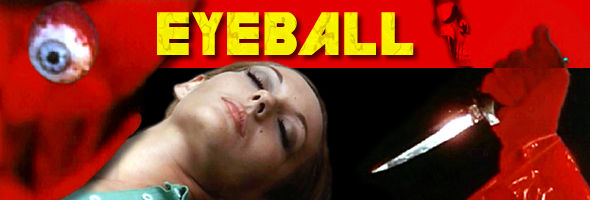
Color, 1974, 91m. / Directed by Umberto Lenzi / Starring John Richardson, Martine Brochard / Marketing-Film (Germany R0 PAL) / WS (2.35:1) (16:9)
Lenzi's final giallo is widely considered the weakest of his murder mystery output, primarily because most viewers have only seen the butchered U.S. version which circulated on countless double bills in the '70s. With its abundance of empty-headed suspects and victims, thumping Bruno Nicolai score, and trendy lesbianism, this would make an excellent double bill with its mid-'70s kin like Case of the Bloody Iris and, on its own trashy terms, makes for energetic and often amusing viewing.
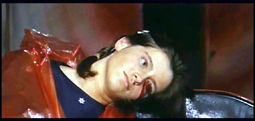
A busload of American tourists enjoying the sights of Spain finds trouble when two of their party (one of them riding through a spook house attraction) run afoul of a knife-wielding killer with a penchant for plucking out eyeballs. Our hero, Mark (John Richardson), deduces that his wife may be connected, since she was found months ago lying by a swimming pool with a bloody orb nearby. In classic fashion, each person who finds a vital clue winds up under the blade of the red-gloved maniac, but that doesn't stop the tour from pressing on.
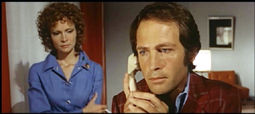
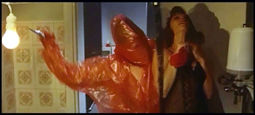 Originally known under the more poetic title of Gatti rossi in un labirinto di vetro (Red Cats in a Glass Labyrinth), this ludicrous, slash-happy outing was released in Europe as The Secret Killer and Wide-Eyed in the Dark before landing its most famous title courtesy of Joseph Brenner. Newcomers to the genre would be better off starting somewhere else, as Eyeball is padded out with an ungodly amount of filler, mainly travelog footage and conversations in which characters stand around speculating about the killer's motives. The cheeky Nicolai theme tends to blast forth whenever things get too slow (whether the film calls for music or not), and the always reliable Richardson (Torso) somehow keeps a straight face even during the OTT finale.
 Viewers tired of fuzzy bootlegs and those awful, bloodless Prism videotapes will be pleased by this German DVD, titled Labyrinth des Schreckens (that's Labyrinth of Fright to non-Teutonics). Featuring the full-length opening credits sequence (with the Secret Killer title) and every gory knife slash intact, this presentation is even more valuable because it finally preserves the original scope compositions with anamorphic enhancement to boot. Some compression problems pop up during darker scenes and the black levels look a bit pasty, but this is by far the best this film has looked on home video. The dubbed German track is presented in a gimmicky 5.1 mix (which at least utilizes Nicolai's stereo music tracks); it's distracting but fares better than Marketing-Film's earlier job on All the Colors of the Dark. A German mono track is also included, but most viewers will want to opt for the original English track, which is looped of course (this is an Italian horror film after all) and features the usual dubbing crew we've come to know and love. Extras include a newly constructed and fairly respectable trailer (though the catchy U.S. one is worth tracking down, too). The disc also contains a gallery and a batch of trailers for other titles in the series, most of them shot on video and, by all appearances, pretty dire.
