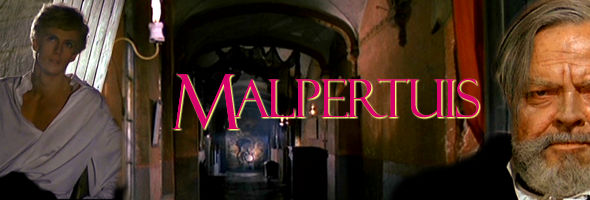
Color, 1972, 119m./100m.
Directed by Harry Kümel
Starring Orson Welles, Susan Hampshire, Mathieu Carrière, Michel Bouquet, Jean-Pierre Cassel, Daniel Pilon, Sylvie Vartan
Barrel (US R0 NTSC) / WS (1.85:1) (16:9)
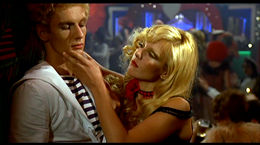 Harry Kümel was fresh off the international success of his dazzling Daughters of Darkness, and an eye-popping international cast headlined by Orson Welles promised plenty of marquee value. Unfortunately the finished product seemed even more cursed than the titular house, as the dream-like and often inscrutable film met with a baffled reaction at Cannes (in a cut the director disavowed) and quickly sank into oblivion. However, students of both horror and arthouse cinema continued mentioning the film over the next few decades, though few actually had the chance to see it; finally a restored director's cut was assembled through European funding in the early 2000s and, thanks to repertory screenings, finally restored the reputation of this long-lost Eurocult curio.
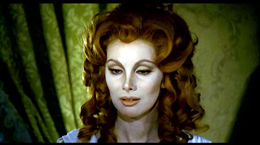 them, but Jan soon finds his own fate bound with everyone else in the house as the sinister old man's inheritance carries repercussions far more horrific and bizarre than anyone could imagine.
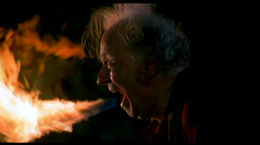 Jan's entrance is presented differently (without mystical overtones), the memorable tavern song by fetching French chanteuse Sylvie Vartan (aunt of Alias' Michael Vartan) is chopped up very differently, and Jan's fate when he looks Euryale in the eyes is conveyed only through sound rather than the literal imagery of the Cannes cut. Honestly, both versions are worth watching, and in the end it's hard to say which one is preferable, as both have their virtues and faults while offering quite a bit of alternate and exclusive footage; the director's cut is definitely slower and dreamier, while the Cannes version is a more traditional Euro-horror experience. Both versions aren't perfect, particularly since the film chooses to end with one "gotcha!" moment too many that throws many viewers for a loop; still, it's a magnificent achievement and certainly a film whose allure hasn't diminished one bit over the years. The director and subject matter have often landed this one strictly in the horror category, though it's more correctly described as a dark gothic fantasy along the same lines as Mario Bava's near-simultaneous Lisa and the Devil, with which is shares a similar air of enchanted decrepitude as well as a nearly identical narrative structure; just check out the opening and closing 15 minutes of each, and the parallels are unmistakable.
 transfer of the long cut, while taken from the same hi-def master, appears quite a bit sharper and more colorful. The mono soundtrack sounds fine, accompanied by optional English subtitles. The English Cannes cut on disc two looks quite a bit more worn, unfortunately, and some minor vertical croppigng on the credits indicates the image could be slightly zoomed in. In any case, the director's cut -- which most people will rush to first anyway -- is a fantastic presentation and more stunning than the theatrical prints currently in circulation. The Barrel disc also adds on additional material for its release, making this about as comprehensive a release as one could imagine. Kümel appears several times, first with a full audio commentary for the director's cut in which the discusses the source novel, the filming, the casting, the sad release history, and the intricate symbolism. It's a fascinating and fast-paced chat that barley misses a beat throughout the entire running time. Then he appears on-camera on disc two for "Reflections of Darkness," a lengthy 74-minute video chat with David Del Valle about his entire career of fantastic cinema (making this a fine companion for the special edition of Daughters of Darkness). He also appears in small snippets in two other featurettes, "Orson Welles Uncut" (a 25-minute look at his participation in the film including numerous photos and film outtakes) and "One Actress, Three Parts," a new featurette with Hampshire talking about her role in the film and her approach to the character(s). Other extras include a 7-minute short about the novel's author entitled "Jean Ray / John Flanders," a welcome intro to someone still virtually unknown outside Europe, as well as the original Engligh language theatrical trailer. The two-disc set comes packaged with a booklet containing liner notes by Del Valle and a lengthy history of the film by Ernest Mathijs.
