THE DEMON OF MOUNT OE
Color, 1960, 113 mins. 51 secs.
Directed by Tokuzō Tanaka
Starring
Kazuo Hasegawa, Raizô Ichikawa, Shintarô Katsu, Kôjirô Hongô, Fujiko Yamamoto, Tamao Nakamura
Radiance Films (Blu-ray) (US/UK RA/B HD), Kadokawa (DVD) (Japan R1 NTSC) / WS (2.35:1) (16:9)
THE HAUNTED CASTLE
Color, 1969, 82 mins. 31 secs.
Directed by Tokuzō Tanaka
Starring Kôjirô Hongô, Naomi Kobayashi, Rokkô Toura, Kôichi Uenoyama, Ikurko Mori, Mitsuyo Kamei, Yôko Atsuta, Akihisa Toda
Radiance Films (Blu-ray) (US/UK RA/B HD), Kadokawa (DVD) (Japan R1 NTSC) / WS (2.35:1) (16:9)
THE GHOST OF KASANE SWAMP
Color, 1970,
82 mins. 34 secs.
Directed by Kimiyoshi Yasuda
Starring Saburô Date, Kenjirô Ishiyama, Teruo Ishiyama, Mitsuko Tanaka, Reiko Kasahara, Ritsu Ishiyama
Radiance Films (Blu-ray) (US/UK RA/B HD), Kadokawa (DVD) (Japan R1 NTSC) / WS (2.35:1) (16:9)
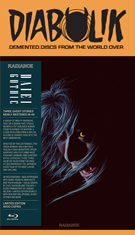
Hot on the heels of its supremely impressive 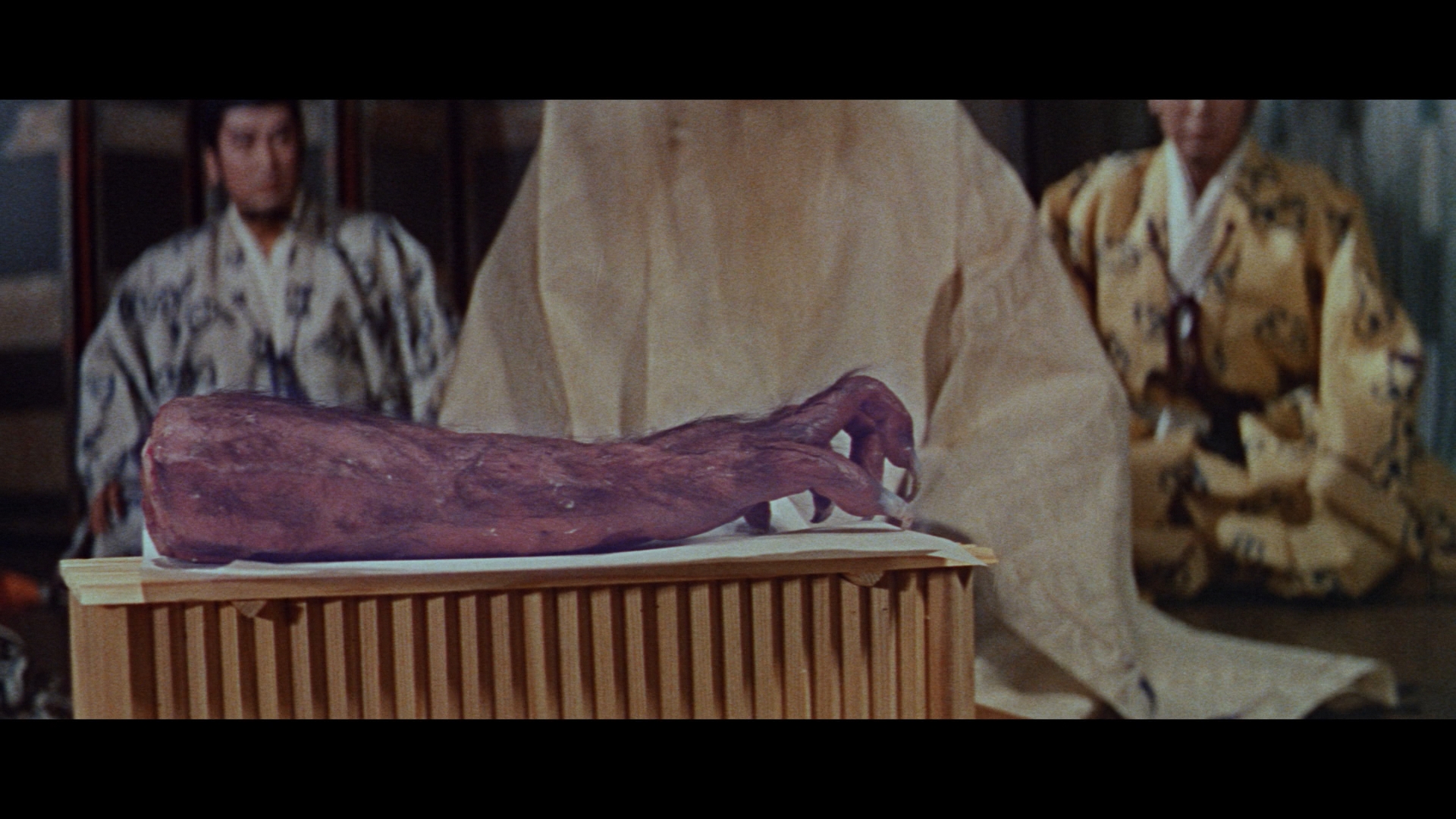 three-film collection Daiei Gothic: Japanese Ghost Stories, Radiance Films returns with
  another trio of atmospheric, often very surprising supernatural tales spanning a decade in the late, lamented studio's history all the way to one of its very last features before it was absored into Kadokawa Pictures. Cat ghosts, giant monsters, blood, treachery, and twists aplenty await, and you'll be clamoring for a third set by the time it's all done.
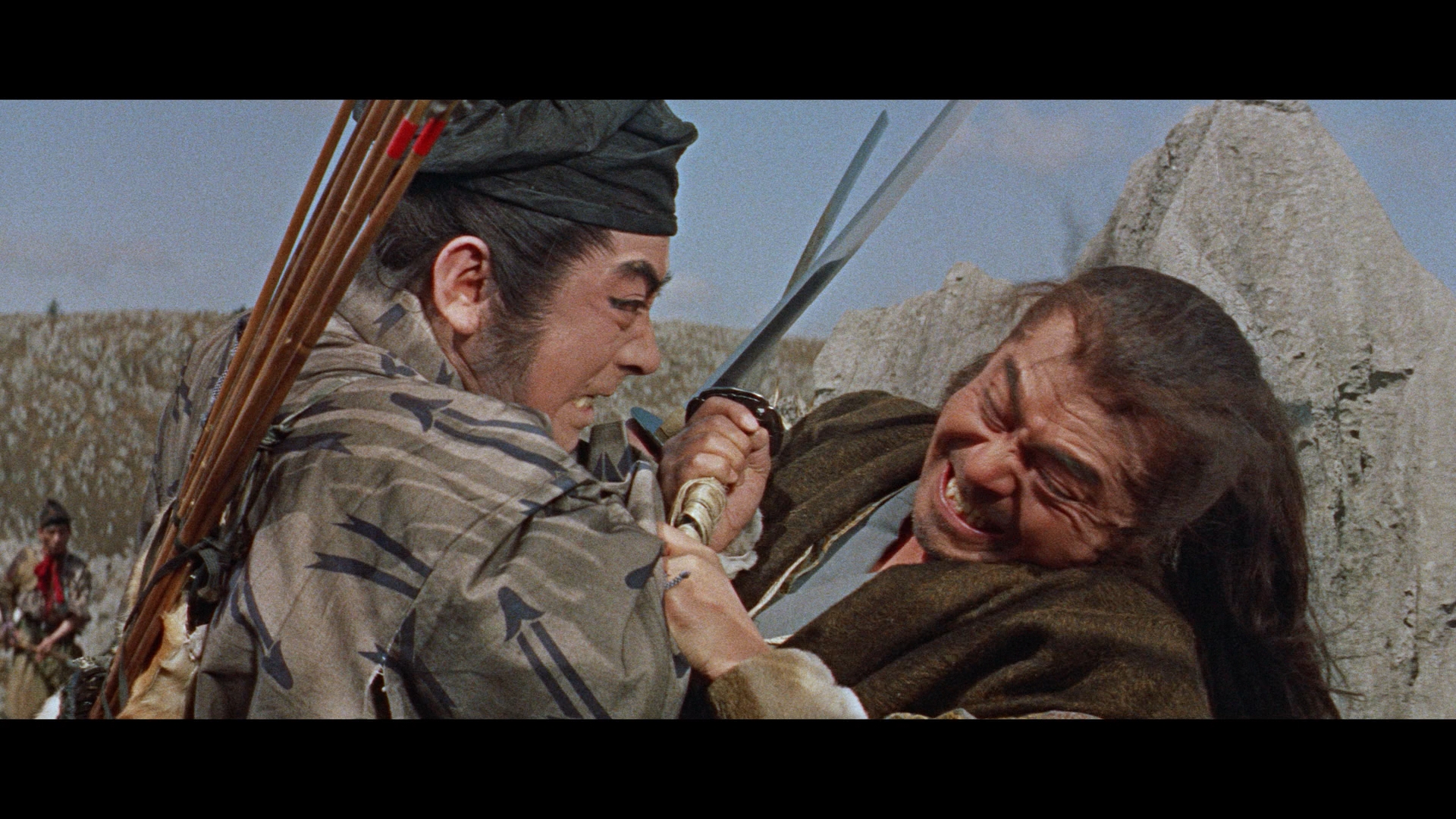
First up is the stylized and very wild The Demon of Mount Oe, the first of two films here from director Tokuzō Tanaka who made an appearance in the last box with The Snow Woman and helmed several Zatoichi and Sleepy Eyes of Death entries. Drawing on classical theater (namely the striking opener setting up the folklore basis for our tale) and the yokai monster popularity, it also packs in six of Daiei's biggest names at the time in an episodic sort of narrative that allows each to play to their specialty. Here we have an epic, very complex riff on the familiar legend about the demon Shuten Doji of Mount Oe and the men sent to kill him, here upended with the menace 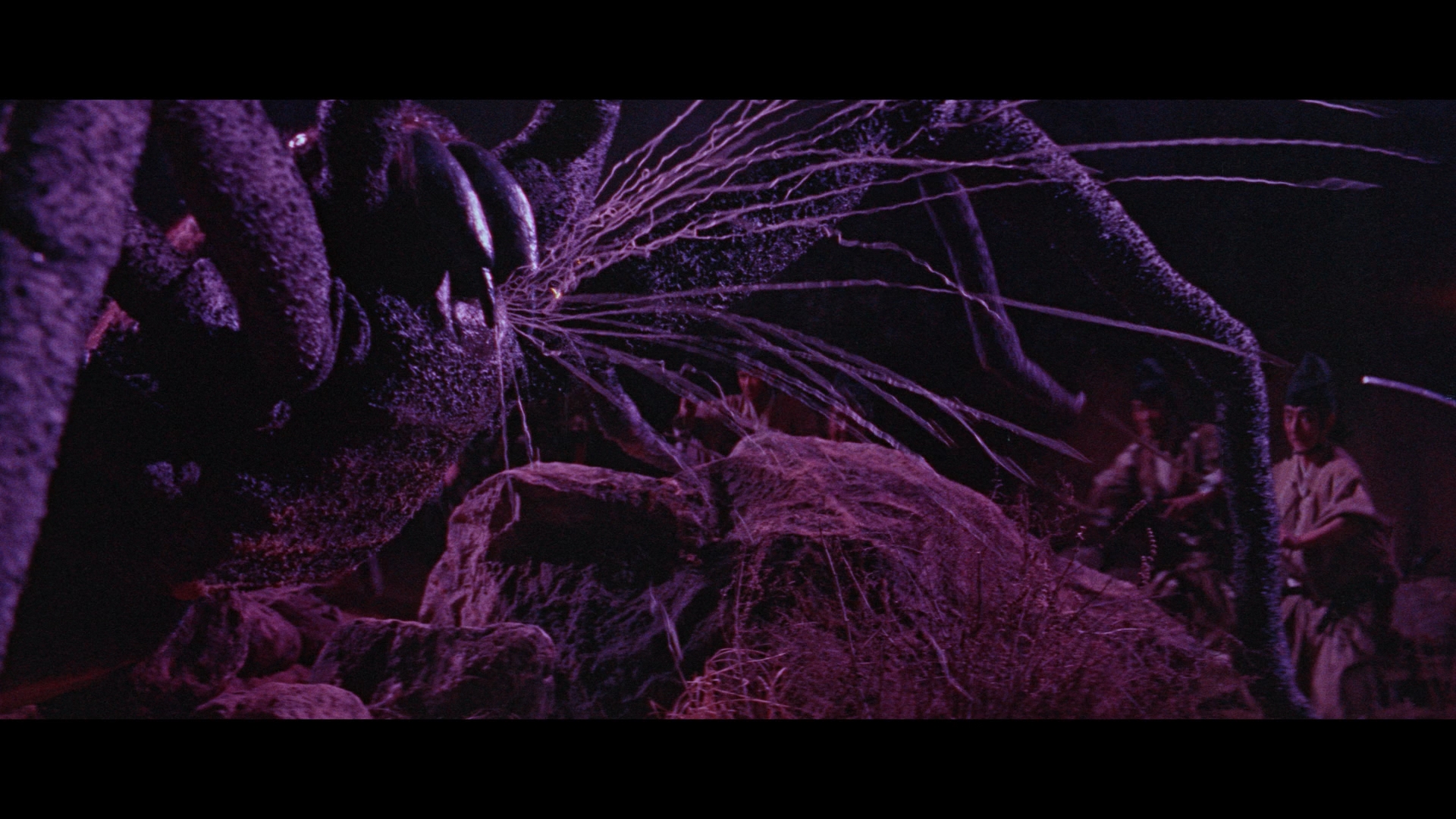 turned into a sympathetic revolutionary whose followers live on the mountain trying to overthrow the tyrannical local government. Young general Minamoto (An Actor's Revenge's Ichikawa) and his men possess the magic Genji sword which can detect a
 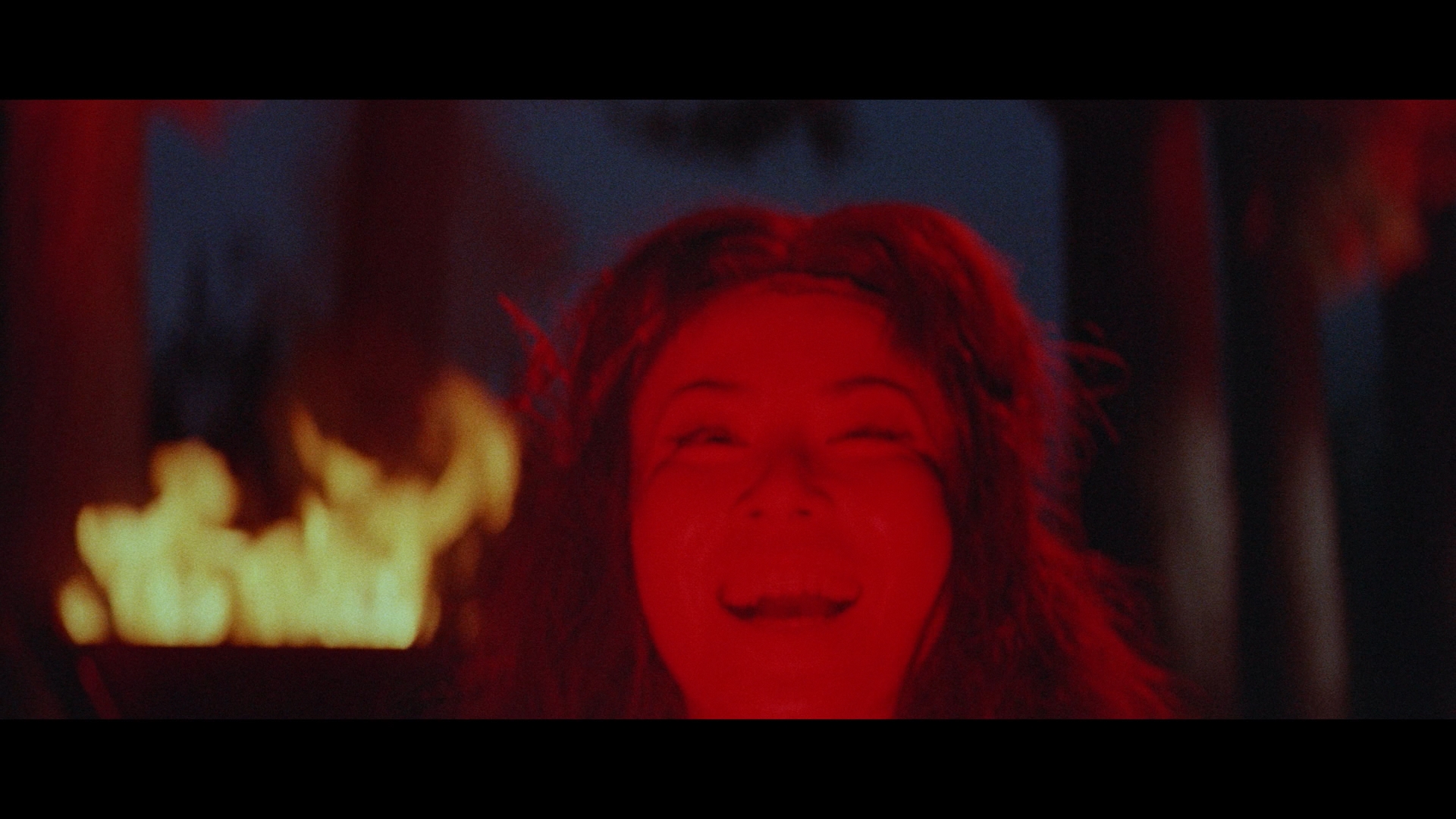 demonic presence, which comes in handy with scenarios like repeated apparent attacks on the Princess Nagisa (Yamamoto) by a supernatural cloud and giant ox. A twist encounter with chivalrous servant Tsuna (Katsu) leaves the clan in possession of a demon arm and a multi-day mission to raid the mountain, where the threats include a gigantic spider capable of shooting out oversized webs. That's just part of the madness going on here with massive battle scenes and extravagant monster encounters popping up every few minutes, plus Daiei heavy hitter Kazuo Hasegawa getting some grandiose speeches as a very flawed leader and spouse.
Like almost every other film in these sets, The Demon of Mount Oe was released on Japanese DVD ages ago and makes its official English-friendly debut with this Blu-ray release. Apart from the main titles which had to be pulled from an obviously well-loved print, the film looks great with extremely saturated colors and, thankfully as usual for Radiance, correct black levels which are usually an issue with Japanese-sourced masters. The Japanese LPCM 1.0 mono audio sounds solid and comes with excellent optional English subtitles. In a new video interview, period film historian Taichi Kasuga (18m54s) chats about the film's unique approach to period films which were highly popular across studios, the political significance of making this in 1960, and the edict to release this during the "Golden Week" Spring period for high box office returns that dictated a high budget and kind of kitchen sink approach here. Then 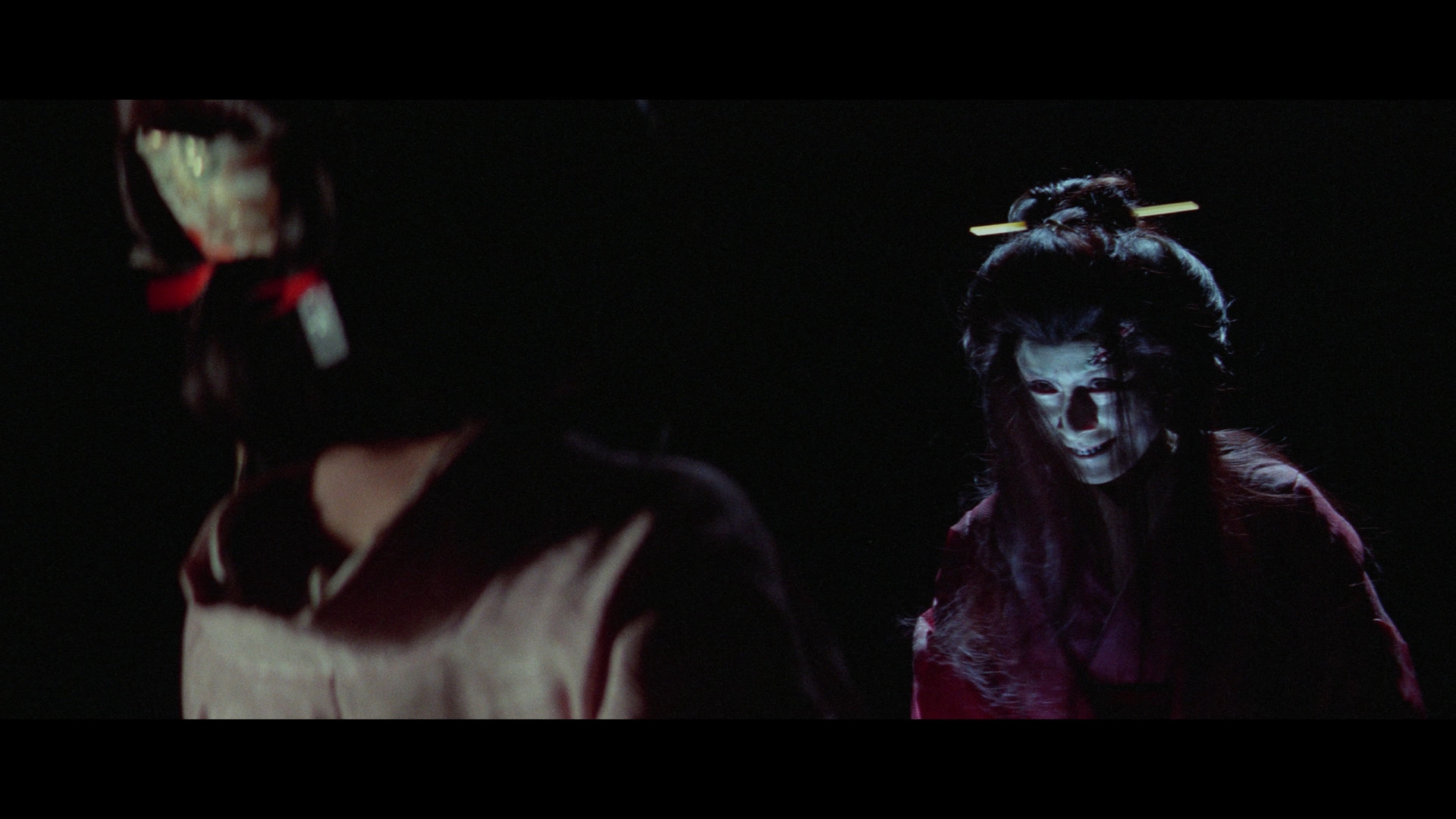 in
in 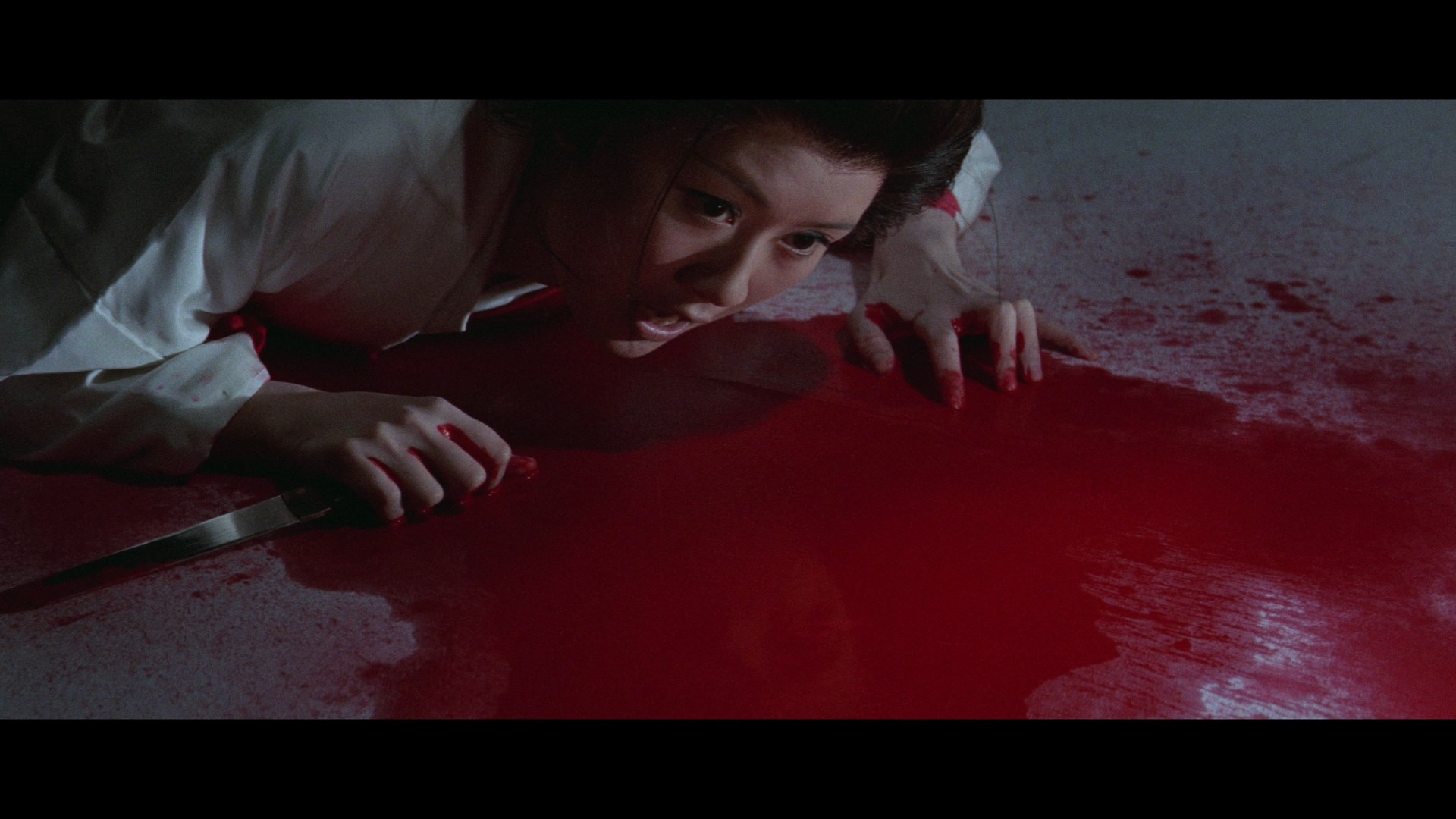 the quick "Blade of the Demon Slayer" (4m4s), Tom Mes covers the history of the mythical sword at the heart of the tale, its real-life inspiration, and its role in various tellings over the centuries. A subtitled theatrical trailer is also included.
If it's straight-up horror you want, the clear winner so far from either set comes next with Tanaka's The Haunted Castle, a magnificent spook show and one of the very best riffs on the ghost cat idea. Here the corrupt and entitled Lord Nabeshima (Uenoyama) decides to force the young Sayo (Kamei) to become his concubine, much to the displeasure of her and her blind brother, Matashichiro (Toda). A board game to determine the girl's fate turns homicidal after Nabeshima tries to cheat, and the young woman is driven to suicide and passing her vengeful spirit into a black cat that drinks her spilled blood. Soon a ghostly feline/human menace is stalking the castle, leaving royal consults Yabchi (Toura) and Komori (Hongô) to fend off the 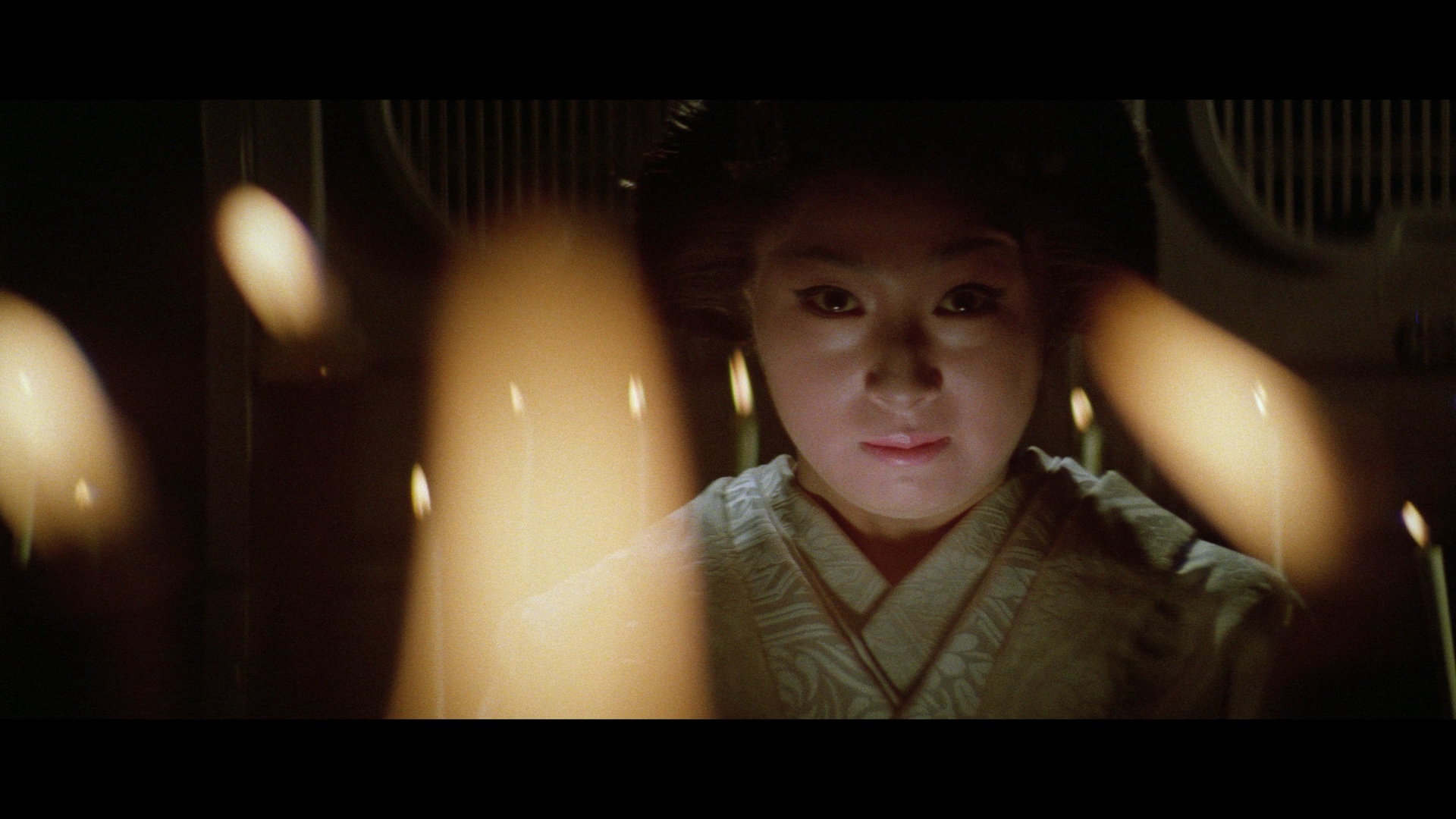 threat and defend their unworthy master.
Loaded with clever visual effects involving reflections, shadows, wire work, and very creepy makeup, this is a real treat from start to finish with some beautifully staged attack scenes that still pack a punch. 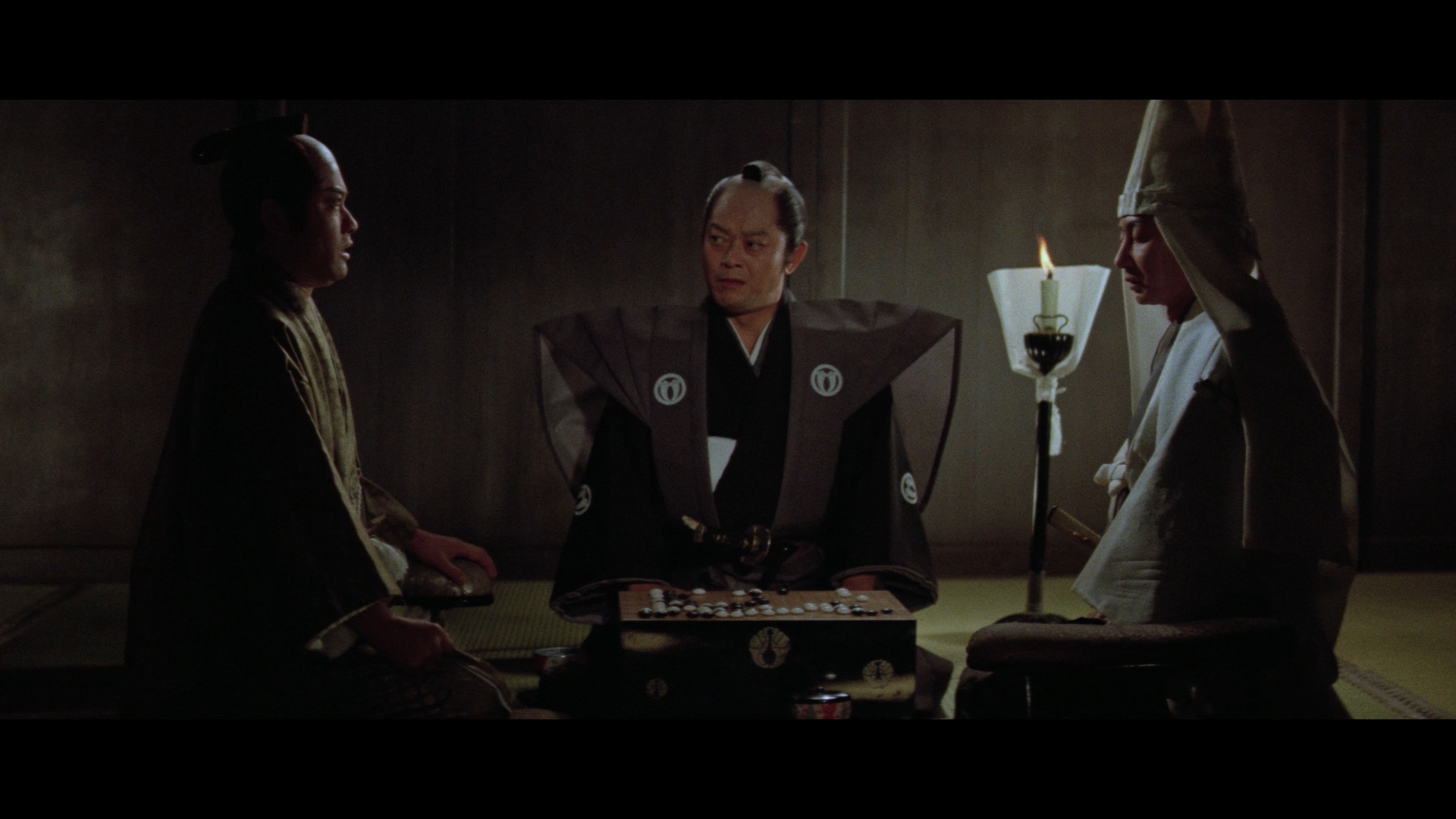 The revenge storyline is pulled off here effectively with a game cast and creative cinematography sealing the deal; it's exactly the kind of film to throw on late at night or especially around Halloween. Again this one was released on domestic DVD but never in an English-friendly edition until now, and it looks stunning with gorgeous blacks throughout that make the most of all those crafty camera tricks. Here the extras kick off with a new interview with filmmaker Mari Asato (17m8s) covers the history of the ghost cat film within classic Japanese genre cinema (such as Bakeneko and Black Cat Mansion) using various legends like Nabeshinma Disturbance in this film's case to explore a wide range of dramatic possibilities. In "The Strange Case of Ikuko Mori" (5m45s), Mes gives a thumbnail overview of the career and life of the actress who made her final appearance here and went through some truly hellish real-life experiences with the law and the mob. A subtitled trailer is also
 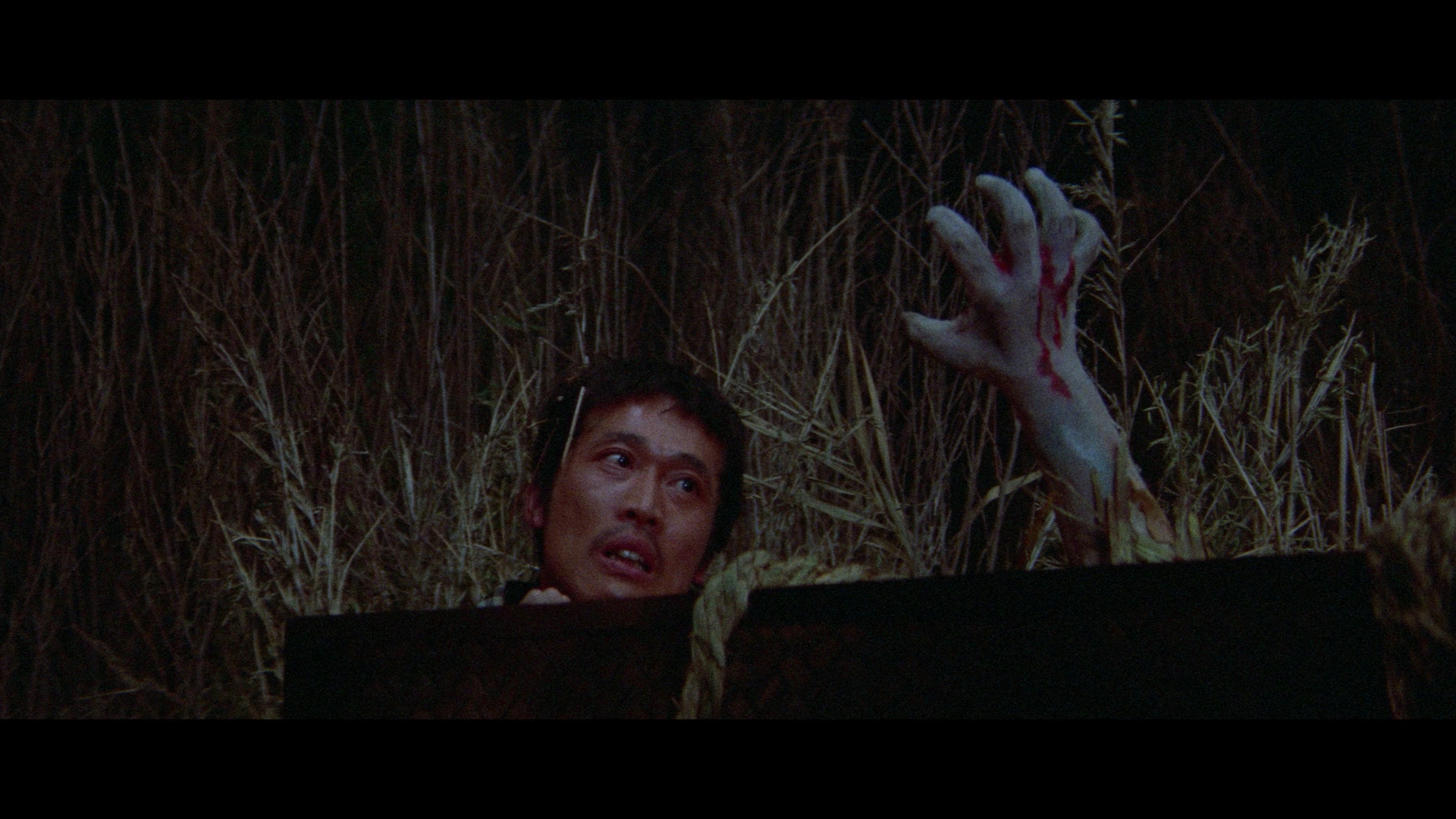 included.
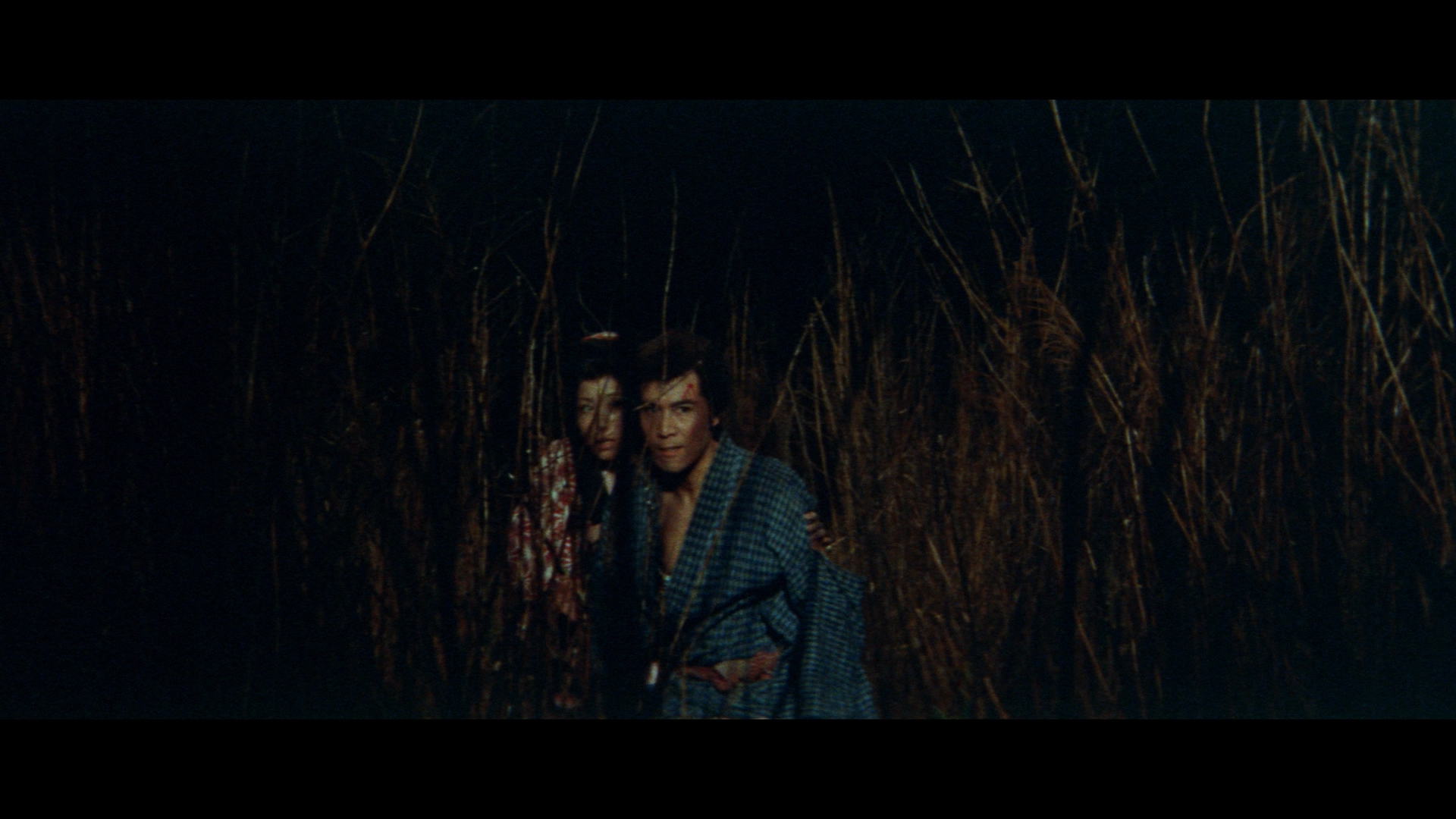
Finally we get to the end of the road for Daiei with The Ghost of Kasane Swamp, a remake of its 1960 hit (itself a revisit of a 1957 Shintoho production) with a lot more modern sex and violence. Here an impoverished samurai, Fukami (Ishiyama), comes home to find his wife Sawano (Tanaka) in the act with a blind masseuse and moneylender, Soetsu (Ishiyama), so he slays 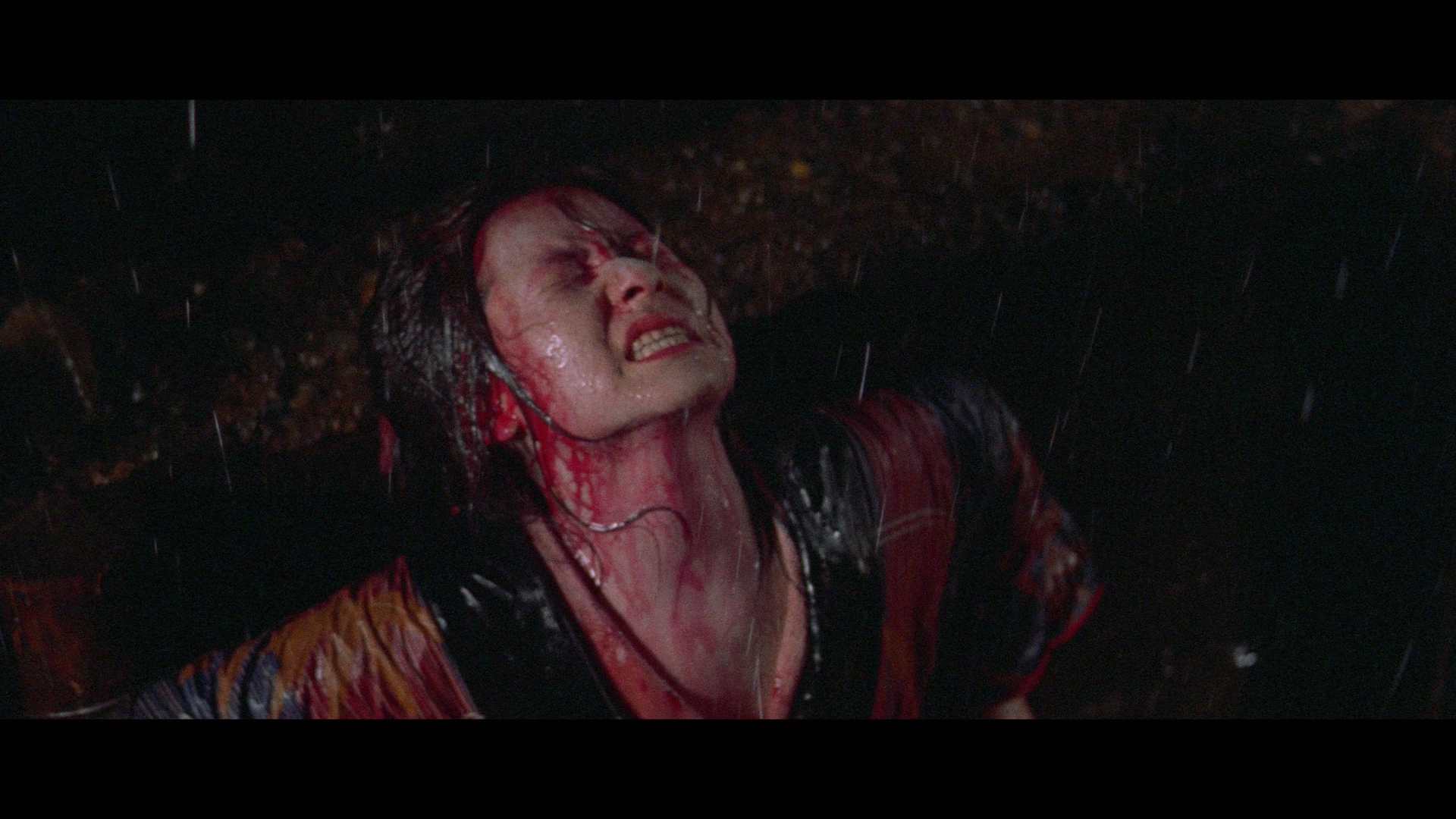 them both and arranges to have their bodies dumped in the adjoining swamp. Also unfaithful, Fukami is soon targeted by the specters of both of his victims which starts a chain reaction throughout the community, encompassing multiple children of those involved as well as enough greedy folks to populate multiple E.C. Comics issues.
A mixture of heated crime melodrama and spooky theatrics (with the masseur's signature flute figuring prominently in the ghost appearances), this isn't as flamboyant as the previous two films but does deliver good pulpy fun. The material was very familiar to local audiences by this point, so it's fun watching Daiei spice things up with a lot of illicit sex scenes and a couple of very bloody, borderline giallo-style murder scenes. Once again this wasn't given an official home video release outside of Japan until now (though it did get some subtitled international play sometimes 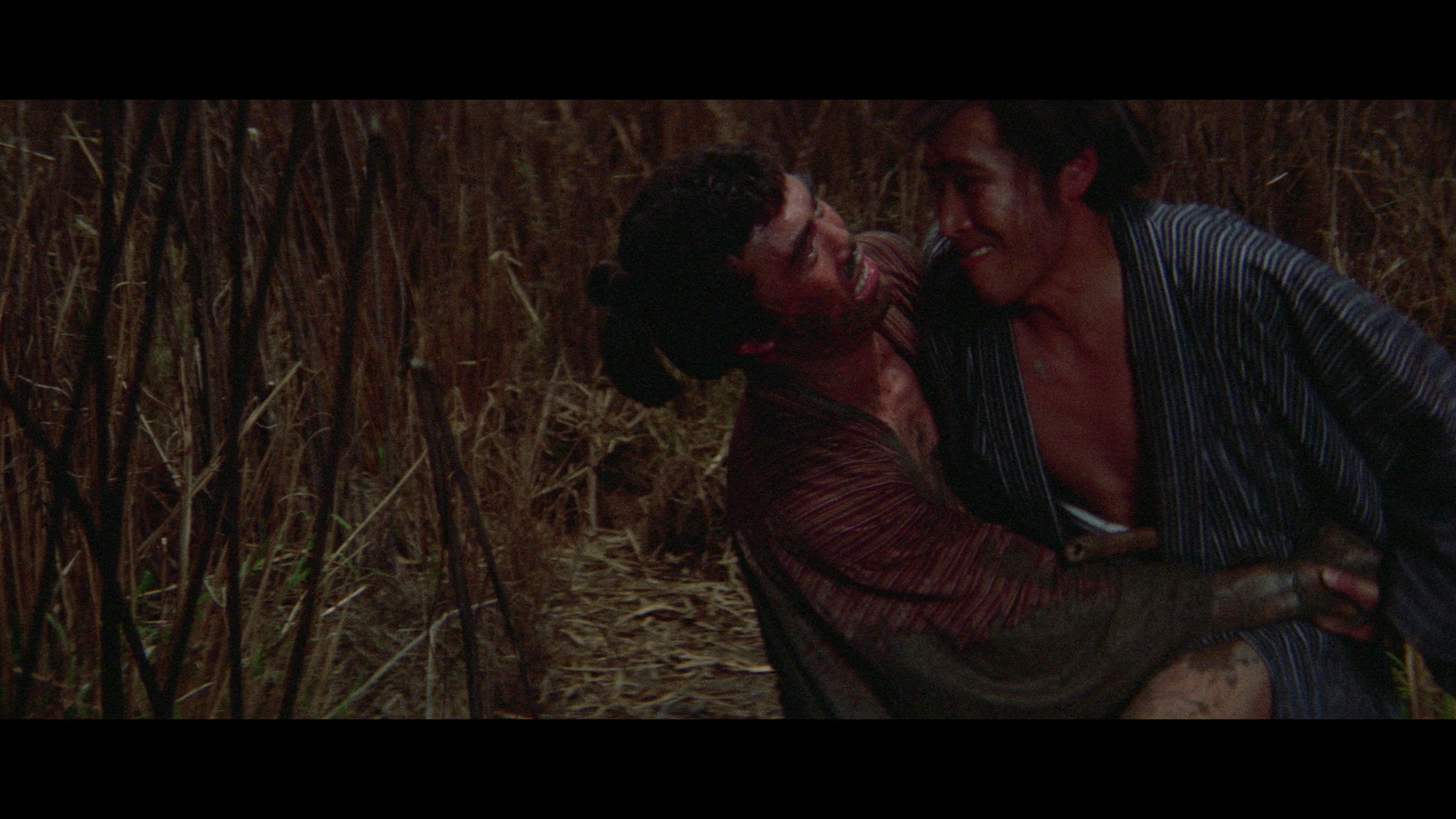 as The Masseur's Curse), so this Blu-ray is a fine way to finally see this in prime condition and with good English subtitles. The colors here are crazy at times with very red blood, and it looks excellent throughout. A select-scene audio commentary
  by horror film scholar Lindsay Nelson (24m24s) does a fine job of covering the story's stage origins, the use of tropes like long hair and facial disfigurement, the prior Nobuo Nakagawa film, the recurring use of money counting, and background about director Kimiyoshi Yasua (another Zatoichi vet). Then a new interview with Premonition filmmaker Norio Tsuruta (17m36s) covers the importance of Daiei and its role in developing what would go on to heavily influence the J-horror movement, including the distinctive traits of this film, as well as the essence of monster tales in general around the world. In "A Legacy of Ghosts" (12m16s), ghost story scholar Zack Davisson covers the multiple versions of this story across stage, folk tales, and cinema, including numerous ones after this in a variety of media with several story tweaks along the way. The limited edition set also comes with an 80-page book featuring new essays by Amber T, Jasper Sharp, and Tom Mes covering all three films and their cultural backgrounds, plus an archival piece by Daniel O’Neill and two ghost short stories, The Goblin of Oeyama and The Vampire Cat.
Reviewed on December 7, 2025
