Color, 1987, 92 mins. / Directed by Lamberto Bava / Starring Serena Grandi, Daria Nicolodi, Vanni Corbellini, David Brandon, George Eastman, Karl Zinny / Music by Simon Boswell / Media Blasters (US R0 NTSC) / WS (1.85:1) (16:9) / WS (1.85:1) (16:9)
Busty Tinto Brass starlet Serena Grandi (Miranda) stars as Gloria, a skinflick star and model whose glossy porn magazine business is disrupted by dirty prank calls from a wheelchair-bound teen fan (Karl Zinny) and a series of mysterious killings involving her models. Blood and Black Lace this ain't, however. One of the models is stabbed, while another - in one of the oddest killings you'll ever see - is stung to death by a swarm of bees inside her house. The bodies are then arranged stylishly in front of - you guessed it - giant pictures of Gloria. Meanwhile we occasionally jump to the killer's psychotic perspective as
Despite his technical proficiency, Lamberto Bava seems unable here to generate the commercial project for which he was so clearly aiming. Instead what we have is a truly cockeyed mishmash of sexploitation and audience friendly horror; devoid of the perverse sense of sadism which distinguishes Dario Argento's gialli, this is instead a strangely benign and inoffensive film which has already dated far more than its predecessors. That doesn't mean there isn't plenty of fun to be had, however; Grandi is always highly entertaining to watch as she and her breasts heave their way from scene to scene, and the delicious supporting cast includes a number of familiar Italian horror vets such as Daria Nicolodi (in what amounts to a glorified cameo). On the other hand, you'd be hard pressed to nail the soundtrack as the work of Simon Boswell (Demons 2), who went on to great mainstream success but provides little more than suspenseful Muzak here.
Whatever dubious merits the film itself may possess, Delirium has been given the red carpet treatment on DVD. Along with a sparkling anamoprhic transfer (marred only by the annoying inherent fuzziness - oops, "stylishness" - of late '80s cinematography), the disc contains fine video interviews with Bava and Brandon, both of whom put the film in perspective with their careers at the time and seem to have warm memories of working on the project. Though no trailer for this film seems to be floating around, the disc does include promos for other Shriek Show Euro horror titles, all of them worth seeking out. Curiously, the theatrical prints carrying the Gioia title boasted a Dolby Stereo credit, but all video transfers - including this one - have been in mono.
Color, 1980, 90 mins. / Directed by Lamberto Bava / Starring Bernice Stegers, Stanko Molnar, Veronica Zinny, Roberto Posse, Fernandino Orlandi / Music by Ubaldo Continiello / Cinematography by Franco Delli Colli / Anchor Bay (US R0 NTSC) / WS (1.85:1) (16:9), EC Entertainment (Holland R0 NTSC), Vipco (UK R2 PAL) / WS (1.66:1)
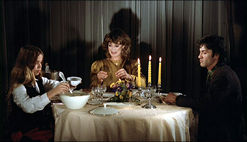
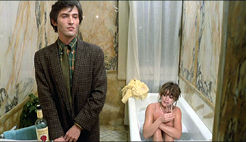
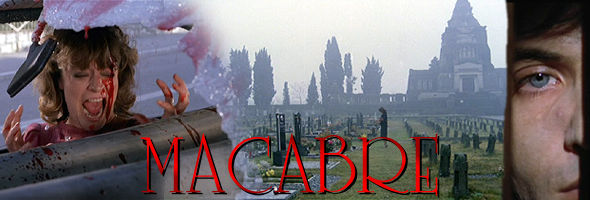
Jane (City of Women’s Bernice Stegers), a wife and mother of two,relieves the tedium of her New Orleans social life by dallying on theside with her passionate lover, Fred, in a boarding house inhabited bythe blind and unfortunately named Robert Duval (Stanko Molnar) and hismother. One day Jane’s erotic idyll is interrupted when her psychoticdaughter, Lucy (Veronica Zinny, sister of horror actor UrbanoBarberini), calls up her mom and then drowns her little brother in ajealous snit. Jane and Fred leap into the car and tear across town whenthey hear the news, only to ram straight into a construction site whichleaves Fred mangled beyond repair. One year later, Jane is released from a mental institution and takes aroom at Robert’s house. Lucy now lives only with her father butmaintains contact with her mother; however, Jane may not be quite allthere. Every night Robert hears his newest tenant engaging in hot andheavy sessions in her bedroom, always following the sound of somethingbeing unlocked from the refrigerator... Based very loosely on a newspaper story discovered by co-producer PupiAvati, Macabre was originally written as a kind of joke butquickly developed into a serious gothic chamber piece. Apart from theoccasional New Orleans exterior shot, this is unmistakably the work ofBava blood, First released in the U.S. by Lightning Video as Frozen Terrorand in Canada by CIC under its original title, this sick little gem hassuffered from some awfully bland transfers over the years which sappedaway much of its visual allure. The Lightning tape in particularfeatured weak colors and made this look like an especially drytelevision movie. Anchor Bay’s DVD corrects much of the damage andrestores the intricate, colorful production design to its properoverripe splendor. The screen is frequently oversaturated with acres ofred velvet, gold décor trim, and shimmering silk sheets, all of whichadd considerably to the film’s potent atmosphere. The disc also includesa nice 8 minute interview with Lamberto (entitled "A Head for Horror"),in which he discusses the genesis of the story, his father’s reactionafter the premiere, and more. Other goodies include the Europeantheatrical trailer (which blows the entire ending, so be careful!), some solid (and unfortunately well hidden) liner notes by Travis Crawford, and aLamberto bio. Color, 1983, 109 mins. Directed by Lamberto Bava Starring Andrea Occhipinti, Lara Naszinsky, Anny Papa, Michele Soavi, Stanko Molnar, Fabiola Toledo, Giovanni Frezza / Music by Guido & Maurizio De Angelis / Written by Dardano Sacchetti and Elisa Briganti Format: DVD - Anchor Bay (MSRP $29.98) Letterboxed (1.85:1) (16x9 enhanced) / Dolby Digital 2.0 Mono Bruno (Andrea Occhipinti), a young composer, is hired by his director friend Sandra (Anny Papa) to score her latest horror film. To get him into the mood, she sends him to stay at a rented villa which whose spooky atmopshere will hopefully inspire him to write a truly terrifying score. They both get more than they bargained for, however, when a killer starts stalking the grounds. On his first night, Bruno is startled by a ditzy young woman named Katia (shades of Black Sunday!) hiding in the cupboard; the girl dashes off and is quickly slashed to death by an assailant wielding a utility knife. Soon after, another girl who drops by to use the pool winds up disappearing as well. As the suspects begin to add up, even including Bruno's actress girlfriend, Julia (Lara Naszinsky), he begins to put together the pieces of the puzzle and comes to realize The true running time for A Blade in the Dark (original title: La Casa con la Scala nel Buio, or House of the Dark Stairway) has long been a matter of dispute among Italian horror followers. The film was originally shot for Italian television (hard to believe considering the extreme gore on display) and planned as four 27-minute installments. However, the final cut of the film slated for theatrical release, at least in its English language form, wound up at 96 minutes. Essentially the print which appeared on laserdisc from EC Entertainment and earlier on VHS by Lightning Video in the '80s was uncut in terms of being a final "director's cut" for international distribution; however, a somewhat longer version existed only in Italian and has floated through some bootleg tape dealers. While the packaging claims a running time of 104 minutes, Anchor Bay's DVD actually marks the first complete presentation in English of the 109 minute A Blade in the Dark; the extra footage doesn't add much in the way of plot development or gore, but it does achieve a more layered, character-motived approach than the consumer friendly earlier cut. Some of the restored scenes include Bruno making a pay booth call to Julia's boss, Despite the 16mm origins, Blade looks surprisingly good on DVD, some inherent graininess in the original negative notwithstanding. The disc easily blows away the EC laserdisc by several miles, and colors are strong and accurate throughout. The film itself has held up fairly well, thanks mainly to the shocking murder scenes (though the last killing is awfully gratuitous) and an appealing lead performance by Occhipinti, who also appeared in Lucio Fulci's New York Ripper and Conquest before achieving infamy as the bullfighter who chugs honey off of Bo Derek's navel in Bolero. Future horror director Michele Soavi makes a very amusing appearance here and even served as first unit director (hopefully out of costume at the time). The rest of the cast is somewhat less impressive, though this may be due to the ridiculous dubbing ("I love composers; so tell me, how are you in the feathers?" and "Is it possible you're a vacant nerd?" are two of the most oft-quoted offenders). As always, the De Angelis brothers deliver a top notch score, basically a repetitious electronic tune a la Halloween that weaves in and out of Bruno's keyboard performances and the murders themselves. Essential viewing for Italian horror fans and beautifully packaged; it's a shame they don't make 'em like this anymore. Extras include a 20 minute "Behind the Blade" interview with Lamberto Bava and writer Dardano Sacchetti, in which they discuss the genesis of the film and the low budget shooting process, some appreciative liner notes by Tim Lucas, and the gory European theatrical trailer.
Some audiences felt the giallo films of the '60s and '70s were more than a little absurd, but nothing could have prepared them for the direction the genre took in the '80s. While Miami Vice and MTV swallowed up
pop culture, directors scrambled to make their sexy murder mysteries more hip, more flashy, and more senseless, resulting in the obvious conclusion of Al Festa's unbelievable train wreck, Fatal Frames. Lamberto Bava helped with a few detours along the way such as the eccentric Body Puzzle and his slaphappy Le Foto di Gioia, released on video and DVD as Delirium.
each model assumes a surrealistic appearance, ranging from a giant eyeball head to a big beehive. Could the killer be Gloria's piggy former flame, Alex (Joe D'Amato favorite George Eastman)? Or how about her impotent brother, Tony (Vanni Corbellini)? Or how about her sadistic lead photographer, Roberto (Stage Fright's Tony Brandon)? Eventually she and her tormenter face off in a ridiculous finale best seen without any prior warning.

After years of working as an assistant director on his father Mario’sfilms, Lamberto Bava finally went solo in 1980 with Macabre, anatmospheric psychological study which joins The Beyond andCannibal Apocalypse for the largest number of Italian actorsimpersonating American
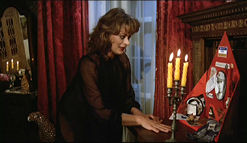
Southerners. The central gimmick of the film hasbeen spoiled by everything from reviewers to the U.S. video box cover,but for the uninitiated, we’ll leave it to the mysterious basics here.
steeped in the same overripe visual decay which earmarkedsuch masterpieces as Lisa and the Devil (another European poem tonecrophilia, by the way). The badly dubbed Southern accents becomegrating rather quickly, but Bava’s steady visual sense carries the filmover its rough spots and really crackles to life for the finale, inwhich Stegers’ unnerving, fragile beauty finally tips over the cliffinto full blown psychotic mania. The influence of Avati is evident aswell, mainly in the deliberate, restrained pacing and the emphasis onpsychological rifts forming beneath the surface of normality;unfortunately, this is the only Lamberto film that could ever really betermed "subtle," as it plays for the most part like a particularlyskewed episode of Night Gallery instead of the splatter-heavycontemporaries of its time. Apart from the aforementioned accents, thefilm’s only major misstep is a terribly conceived shock ending whichends the film on a ridiculous illogical note and renders its origin as a"true story" highly dubious at best.
One of the most violent and stylish entries in the Italian slasher cycle of the early '80s, A Blade in the Dark attempts to outdo Argento's Tenebre in a similar stalk and slash mode that eventually escalates into virtually wiping out the entire cast in the final half hour. Bava's
experience behind the camera as assistant director for both his father Mario and for Argento shines through here; amazingly, Blade was only his second film following his promising debut, Macabre (Frozen Terror), and here he cultivates his skills for dealing with irrational fantasy and gore which erupted full force in the later Demons films.
that there's more than a passing connection between the film he's scoring and the rising body count in real life.
more atmospheric night scenes of Bruno exploring the house, a longer build up to the second murder, and several extra red herring bits involving Stanko Molnar as the groundsman, fondling scissors and generally acting suspiciously.